
Fixed vs Mobile IBIS 150 Radar Mounts
The IBIS 150 radar system demands a mounting solution that ensures stability, rapid deployment, and mission adaptability. For B2B system integrators, the choice between fixed and mobile mounts directly impacts SWaP-C optimization, operational readiness, and compliance with MIL-STD-810H. This technical guide provides a detailed comparison to support informed procurement decisions.
Key Takeaways
- Fixed mounts deliver maximum stability for persistent surveillance in fixed-site operations.
- Mobile mounts enable rapid redeployment on tactical vehicles or tripods with minimal downtime.
- Both configurations meet MIL-STD-810H standards for shock, vibration, and environmental extremes.
- SWaP-C trade-offs: fixed mounts optimize power and payload, mobile mounts prioritize weight and transportability.
- System integrators must align mount selection with mission profile, power availability, and logistics constraints.
Fixed Mounts for IBIS 150 Radar
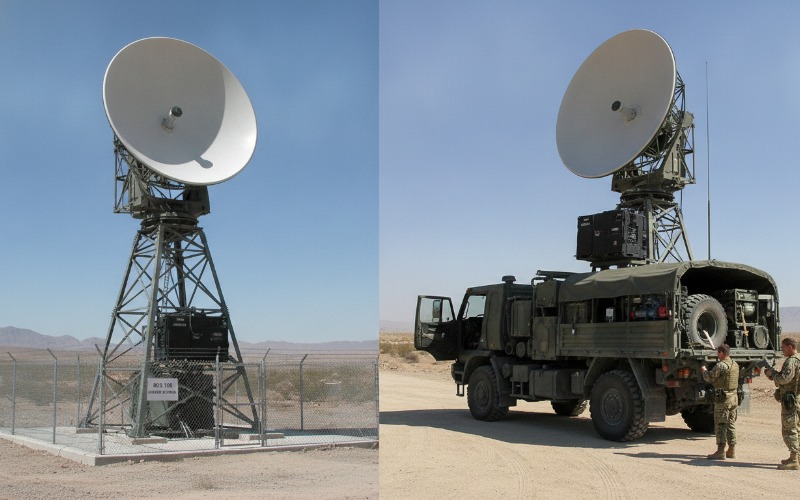
Fixed mounts are engineered for permanent or semi-permanent installation on buildings, towers, or reinforced ground pads. The base structure is typically a steel or reinforced concrete foundation with integrated vibration dampeners that exceed MIL-STD-810H Method 514.8 requirements. The mount assembly itself includes a precision azimuth-elevation pedestal capable of handling the IBIS 150’s 45 kg payload with dynamic wind loads up to 200 km/h.
Key technical features include:
- Stiffness: Resonant frequency above 50 Hz to avoid structural coupling with radar scanning mechanisms.
- Power integration: Direct line-power supply with battery backup capable of 48-hour autonomous operation.
- Environmental sealing: IP68-rated enclosure for the mount interface, protecting against dust and water ingress.
- Thermal management: Passive convection cooling designed for ambient temperatures from -40°C to +70°C.
Fixed mounts are ideal for border surveillance, critical infrastructure protection, and long-duration intelligence missions where continuous operation is paramount. For command-and-control integration, these mounts interface directly with rugged tablets via MIL-STD-1553 or Ethernet.
Mobile Mounts for IBIS 150 Radar
Mobile mounts are designed for rapid deployment across diverse terrains. The platform consists of a lightweight aluminum tripod or vehicle-mounted cradle that can be airlifted or man-packed. Total system weight (including radar) is under 70 kg, enabling two-person setup within 15 minutes.
Key specifications include:
- MIL-STD-810H Compliance: Tested for Method 514.8 (vibration) with a 5-500 Hz swept sine profile and Method 516.8 (shock) for 40g impact.
- Deployment speed: Hydraulic or manual leveling legs with integrated bubble levels and remote inclination sensors.
- Power flexibility: Battery packs (hot-swappable) or vehicle-mounted power inverters; typical runtime 8 hours on a single charge.
- Transportability: Fits in a standard MIL-SPEC transit case (dimensions 1200x600x600 mm) for helicopter or ground vehicle transport.
Mobile mounts are ideal for forward operating bases, reconnaissance units, and disaster response teams. Dismounted operators can carry the mount system alongside other equipment, including tactical vests with integrated communication gear.
Technical Comparison: Fixed vs Mobile Mounts
| Parameter | Fixed Mount | Mobile Mount |
|---|---|---|
| Weight (mount only) | 45 kg (concrete base optional) | 28 kg (including tripod) |
| Maximum wind load | 200 km/h (operational) | 100 km/h (operational) |
| Deployment time | 2-4 hours (with foundation) | <15 minutes |
| Power source | Mains + battery backup (48h) | Battery or vehicle (8h) |
| Vibration isolation | Passive dampeners, resonant freq >50 Hz | Active pneumatic isolators |
| Environmental ingress | IP68 | IP67 |
| Typical lifetime | 15 years | 10 years (with maintenance) |
Both mount types undergo rigorous qualification testing per MIL-STD-810H, including altitude, humidity, sand and dust, and temperature extremes. The choice often comes down to mission duration and mobility requirements.
Key Considerations for System Integrators
When selecting between fixed and mobile mounts for the IBIS 150, system integrators must evaluate:
- SWaP-C Trade-offs: Fixed mounts allow higher payload, better thermal management, and greater power budget but require permanent infrastructure. Mobile mounts sacrifice some stability for rapid deployment and lower transport weight.
- Operational Readiness: Mobile mounts reduce Mean Time to Deploy (MTTD) from hours to minutes, critical for time-sensitive missions.
- Logistics Chain: Fixed mounts require concrete, cranes, and civil works; mobile mounts rely on standard military transport and can be integrated into existing platforms.
- Interoperability: Both mount types support the IBIS 150’s digital interface (RS-422, GigE Vision), but fixed mounts are pre-wired for remote diagnostic and condition-based maintenance.
For hybrid missions, some integrators deploy mobile mounts on permanent hardstands, effectively combining the best of both worlds. Additionally, the mount selection impacts the choice of control terminals; rugged tablets provide portable command interfaces, while fixed installations may use rack-mounted servers.
Frequently Asked Questions
What is the typical deployment time for a mobile IBIS 150 mount?
A mobile mount can be fully deployed, leveled, and powered on in under 15 minutes by a two-person team. With practice, this can reduce to 10 minutes. The system is designed for rapid setup without special tools.
Can fixed mounts be used on temporary sites?
Fixed mounts can be installed on temporary structures such as reinforced steel towers or shipping containers that are anchored per military standards. However, this may require additional engineering for dynamic loads and may not meet the quick-disconnect requirements of pure mobile mounts.
What MIL-STD certifications apply to both mount types?
Both fixed and mobile mounts are tested to MIL-STD-810H for environmental stresses (Method 500.6 altitude, 501.7 high temp, 502.7 low temp, 507.6 humidity, 509.7 salt fog, 514.8 vibration, and 516.8 shock). Additional MIL-STD-461F EMI/EMC compliance is optional based on system integration.
How does power management differ between fixed and mobile mounts?
Fixed mounts typically use continuous mains power with an integrated Uninterruptible Power Supply (UPS) providing 48 hours of backup. Mobile mounts rely on rechargeable Li-ion batteries (hot-swappable) with typical runtime of 8 hours per battery pack. Vehicle power inverters can extend operation by tapping into the platform’s electrical system.