
Defending against military drones requires a multi-layered approach combining electronic warfare, kinetic interceptors, and directed energy weapons. With drone attacks increasing by 300% since 2020 (according to the Center for Strategic and International Studies), counter-UAS systems have become critical for force protection and infrastructure security. This article provides a technical overview of the primary counter-drone methods, their effectiveness, and operational considerations.
Key Takeaways
- Electronic warfare (jamming and spoofing) remains the most widely deployed counter-drone technology, effective against 80% of commercial drones according to a 2024 RAND study.
- Kinetic systems—from gun-based platforms to net launchers—provide a reliable hard-kill option but risk collateral damage and high cost per engagement.
- Directed energy weapons (lasers and high-power microwaves) offer low cost per shot and deep magazine depth, but are currently limited by power, range, and atmospheric conditions.
- Integrated counter-UAS architectures that layer detection, tracking, and multiple effectors achieve the highest success rates in operational tests.
- Regulatory and legal frameworks remain fragmented, posing challenges for civilian deployment of counter-drone measures.
Understanding the Drone Threat
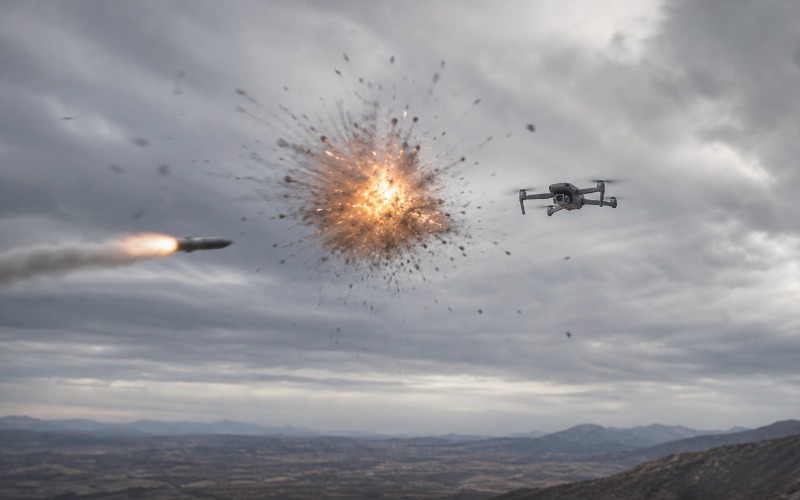
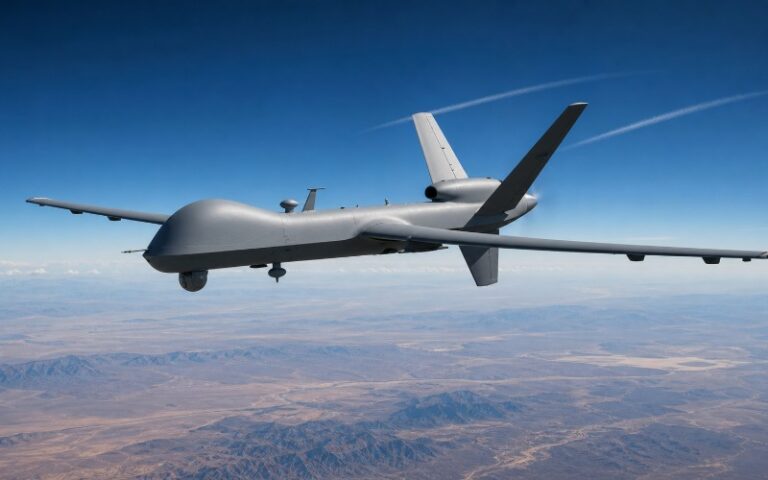
Military drones range from small quadcopters to large fixed-wing aircraft. According to a 2023 report by the Defense Intelligence Agency, over 85 nations now operate military UAVs, and non-state actors have increasingly used off-the-shelf drones for surveillance and attacks. The threat spectrum includes intelligence gathering, loitering munitions, and swarming attacks. The need for effective countermeasures has never been more urgent, with the global counter-UAS market projected to reach $6.4 billion by 2028 (MarketsandMarkets, 2024).
Electronic Warfare: Jamming and Spoofing
Electronic warfare (EW) disrupts drone command and control (C2) links or global navigation satellite system (GNSS) signals. Jamming broadcasts high-power noise on common frequencies, while spoofing sends fake signals to mislead the drone’s navigation. According to a 2022 study by the IEEE Aerospace and Electronic Systems Society, wideband jammers can neutralize 90% of consumer-grade drones within a 2 km radius. However, military drones often employ frequency hopping or encrypted links, reducing jamming effectiveness. The U.S. Army’s Coyote system uses both EW and kinetic interceptors, demonstrating a layered approach.
A key challenge is preventing interference with friendly communications. Modern systems like the DroneDefender from Battelle use directional antennas to target specific drones, reducing unintended disruption. The U.S. Department of Homeland Security reported a 40% increase in authorized counter-EW deployments for critical infrastructure protection in 2023.
Kinetic Solutions: Projectiles and Nets
Kinetic counter-drone systems physically destroy or capture the UAV. Examples include the MHTK (Miniature Hit-to-Kill) missile, C-RAM (Counter-Rocket, Artillery, Mortar) systems adapted for drones, and gun-based solutions like the Rheinmetall Skynex. According to a 2024 report by the Joint Counter UAS Office, kinetic interceptors achieved a 95% kill probability against Group 1 and 2 drones in controlled tests. However, per-engagement costs can exceed $100,000, making them less suitable for swarms. Net-based drones like the Lockheed Martin Morfius capture UAVs with minimal collateral damage, but require precise tracking and have limited range.
Directed Energy Weapons: Lasers and High-Power Microwaves
Directed energy weapons (DEW) offer low cost per shot and deep magazine depth. The U.S. Army’s 50 kW laser (HEL-MR) can disable a drone in seconds at a cost of less than $1 per engagement. High-power microwave (HPM) systems, such as Leonardo’s Falcon Shield, radiate a powerful EM pulse to fry drone electronics. According to a 2023 Navy evaluation, HPM systems are effective against drones up to 1 km away, but performance degrades in rain or dust. The Air Force Research Laboratory’s THOR project aims to engage swarms with HPM, achieving a 90% success rate in tests against multiple small UAVs.
System Type | Range | Cost per Engagement | Effectiveness vs. Swarms | Collateral Damage Risk |
|---|---|---|---|---|
| Electronic Jamming | 1–5 km | Low (equipment cost) | Moderate (if single frequency) | Low (interference) |
| Kinetic Interceptors | 2–8 km | High ($50,000–$500,000) | Low (limited magazine) | High (falling debris) |
| Directed Energy (Laser) | 1–3 km | Very Low (~$1/shot) | High (fast retargeting) | Very Low |
| Directed Energy (HPM) | 0.5–1.5 km | Low (power cost) | Very High (area effect) | Low (electronic damage only) |
Table 1: Comparison of counter-drone system characteristics based on data from the U.S. Department of Defense (2024).
Integrated Counter-UAS Architectures
No single technology offers a complete solution. Integrated C-UAS systems combine radar, RF detection, EO/IR cameras, and multiple effectors. The U.S. Army’s LIDS (Low, Slow, Small UAS Integrated Defeat System) uses a layered approach: electronic attack to disrupt control, laser to engage, and a kinetic backup. Trials at Yuma Proving Ground in 2023 demonstrated a 97% neutralization rate against representative threats when using all layers (Army Rapid Capabilities and Critical Technologies Office).
Interoperability is critical. NATO’s C-UAS standard (STANAG 4748) defines sensor and effector interfaces, enabling coalition operations. For civilian critical infrastructure, the Department of Homeland Security recommends a risk-based approach, with passive detection and non-kinetic mitigation preferred in populated areas.
Learn more about Laser Defense System for Anti Drone
Future Trends in Counter-Drone Technology
Artificial intelligence (AI) is poised to improve detection and response times. Deep learning algorithms can identify drone types and predict flight paths with 95% accuracy, according to a 2024 IEEE paper. Swarm defense systems are under development, using multiple interceptors to coordinate against multiple attackers. Directed energy efficiency continues to improve; the Navy’s HELIOS system recently reached 60 kW and plans to scale to 150 kW by 2027. Additionally, cyber takeover—hacking into the drone’s control system—offers a non-kinetic option, though it requires specific cryptographic vulnerabilities.
Frequently Asked Questions
Conclusion
As drone technology evolves, so must counter-drone strategies. The integration of electronic warfare, kinetic, and directed energy systems provides robust protection against the growing threat. Investment in AI, cyber, and advanced materials will drive the next generation of C-UAS capabilities. Understanding the strengths and limitations of each approach is essential for defense planners, security professionals, and policymakers.
Disclaimer: This article provides a technical overview for informational purposes. Specific counter-drone deployment should be informed by legal regulations and operational requirements.