
Maintaining air superiority requires more than just advanced aircraft and skilled pilots. The backbone of offensive capabilities lies in the complex, high-stakes world of Air-to-Surface Missile Logistics. From the moment a precision-guided munition (PGM) leaves the factory to its eventual release from a hardpoint, a massive logistical machine ensures that every component remains mission-ready. In modern warfare, the efficiency of the munitions supply chain determines the operational tempo and the overall success of tactical engagements.
Key Takeaways
- Adherence to MIL-STD-810H compliance ensures missile survivability in extreme environments.
- Digital tracking systems and SWaP-C optimization are revolutionizing munitions inventory management.
- Tiered maintenance structures from O-Level to D-Level maximize operational readiness.
- Specialized transportation protocols for Class 1.1 explosives are critical for safety and security.
- Integrated diagnostic tools shorten the turnaround time for sortie generation.
The Complexity of Precision Guided Munitions Supply Chains
Air-to-surface missiles (ASMs) are not static assets. They are sophisticated electronic and kinetic systems that require constant monitoring. Unlike traditional unguided bombs, an ASM contains sensitive seekers, guidance computers, and propulsion systems that degrade over time if not managed correctly. Logistics commanders must balance the immediate need for available ordnance with the long-term sustainment of expensive high-value assets.
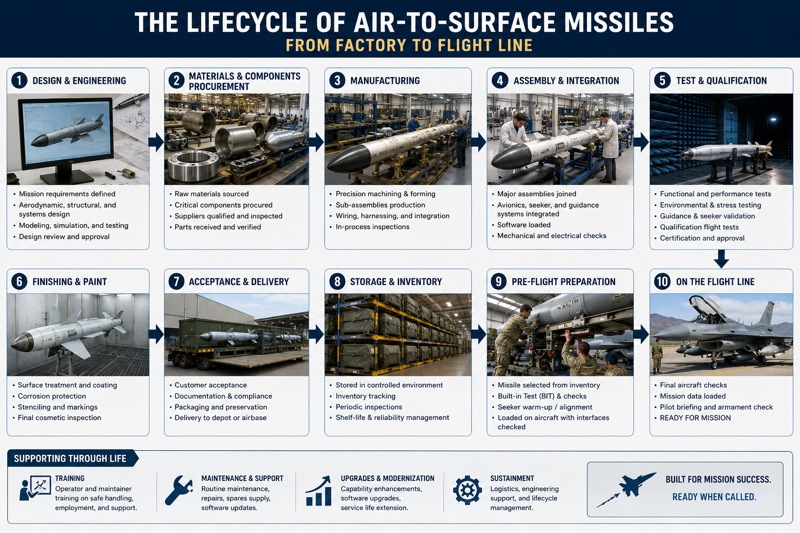
The procurement cycle starts with raw material sourcing and sub-component manufacturing. For a missile like the AGM-158 JASSM, the supply chain involves hundreds of vendors across multiple nations. Any disruption in the microelectronic or composite material pipeline can delay delivery and impact national security. Logistics specialists must implement resilient supply chain strategies that account for geopolitical shifts and manufacturing bottlenecks.
Lifecycle Sustainment of Modern Tactical Ordnance
Effective missile logistics spans several distinct phases. Initial induction involves the inspection and cataloging of incoming assets into the Munitions Storage Area (MSA). During this phase, logistics officers utilize rugged tablets to scan RFID tags and update central inventory databases in real-time. This digital thread remains attached to the missile throughout its service life.
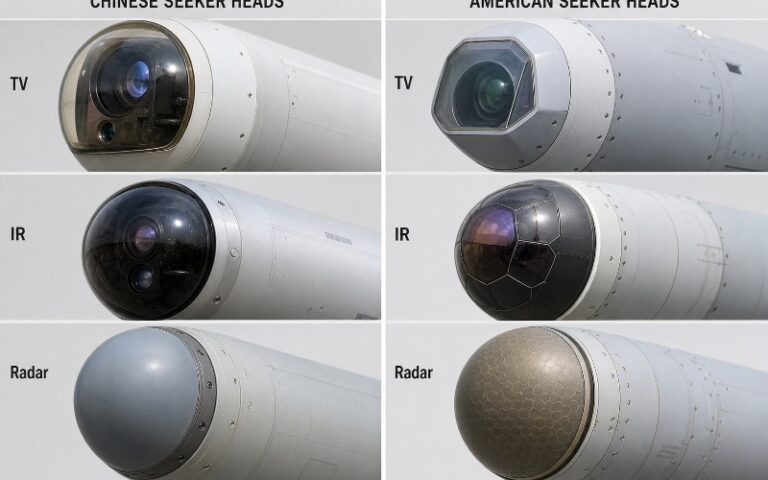
Storage environments are the most critical aspect of the lifecycle. Missiles must be kept in climate-controlled bunkers that mitigate the risks of corrosion and propellant degradation. Regular inspections, often referred to as periodic maintenance inspections (PMI), involve testing the electrical continuity of firing circuits and the integrity of seeker domes. Any deviation from standard performance parameters triggers a maintenance event, moving the asset from ‘Ready for Issue’ (RFI) status to ‘Unserviceable’.
Environmental Resilience and MIL-STD-810H Compliance
Military hardware must survive conditions that would destroy commercial electronics. Air-to-surface missiles are frequently subjected to rapid temperature changes as they transition from high-altitude flight to desert tarmac conditions. MIL-STD-810H compliance is the gold standard for testing these environmental stresses. It covers everything from solar radiation and sand ingestion to high-impact shock and vibration.
Temperature and Humidity Control Systems
Propellants and explosive fills are sensitive to thermal cycling. Logistics infrastructure must provide consistent cooling and heating to prevent the separation of chemical stabilizers. In forward-deployed locations, this requires ruggedized mobile storage units that can operate on local power grids or independent generators. These units are often equipped with remote sensors that alert logistics teams to any environmental breach.
Ruggedized Monitoring Electronics
To maintain data integrity during transport, environmental data loggers are often embedded within missile shipping containers. These devices record every shock and temperature spike, providing a forensic record of the asset’s journey. Logistics personnel can then use these records to determine if a missile requires recalibration before it is cleared for flight operations.
Transportation Logistics for Class 1.1 Explosives
The movement of air-to-surface missiles is a high-risk operation. Most ASMs are categorized as Class 1.1 explosives, meaning they present a mass explosion hazard. Logistics planning must involve meticulous route selection, security details, and coordination with civil authorities for overland transport. Maritime transport requires specialized vessels with automated fire suppression systems and blast-resistant storage holds.
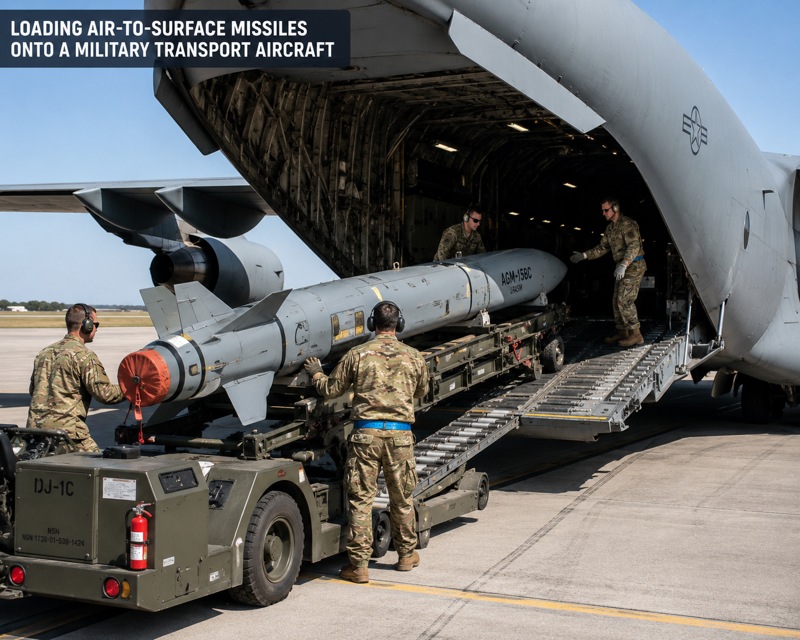
During tactical deployment, air transport via C-17 or C-130 aircraft is common. The loadmasters and ground crews, often equipped with tactical vests for safety and tool carriage, must ensure that all pallets are balanced and secured against the G-forces of takeoff and landing. The ‘Logistics Footprint’ of a missile system includes not just the weapon itself, but the trailers, testers, and specialized tools required to load it onto the aircraft.
Maintenance and Operational Readiness Strategies
Maintenance is divided into three primary levels to optimize resource allocation. Organizational Level (O-Level) maintenance occurs on the flight line and involves basic inspections and loading. Intermediate Level (I-Level) maintenance happens at the base’s back-shops, where technicians perform component replacement and more detailed diagnostic testing. Depot Level (D-Level) is the most comprehensive, involving complete teardowns and refurbishments at specialized facilities.
| Logistics Category | Short-Range Tactical (e.g. Maverick) | Long-Range Stand-off (e.g. JASSM) |
|---|---|---|
| Storage Footprint | Small, stackable containers | Large, climate-controlled specialized racks |
| Maintenance Intensity | Low (O-Level focused) | High (I-Level and D-Level heavy) |
| Environmental Control | Standard IP68 Ruggedization | High-precision thermal monitoring |
| Transportation Type | Standard Palletized Loads | Specialized Oversize Handling |
SWaP-C Optimization in Ground Support Equipment
Modern logistics emphasizes SWaP-C optimization (Size, Weight, Power, and Cost). This is particularly important for Ground Support Equipment (GSE). Legacy missile testers were often large, heavy units that required their own vehicles. Today, the focus is on miniaturized, software-defined testing platforms that can run on a single handheld device. Reducing the weight of support equipment allows for more munitions to be carried on a single transport flight, directly increasing the operational capability of the unit.
Digital Transformation in Missile Inventory Management
The integration of AI and machine learning into logistics platforms is enabling predictive maintenance. By analyzing the history of an individual missile—how many times it has been carried on a wing, the weather conditions it has faced, and its internal diagnostic reports—AI can predict when a component is likely to fail before it actually does. This shift from reactive to proactive maintenance ensures that every missile in the inventory is truly mission-ready.
Furthermore, blockchain technology is being explored for munitions supply chains to provide an immutable record of custody. This ensures that every part in the missile is authentic and meets the required military specifications, eliminating the risk of counterfeit components entering the system. For defense contractors, this level of transparency is becoming a standard requirement in procurement contracts.
Mission Critical Readiness in Austere Environments
In a Peer-to-Peer conflict, logistics must operate in contested environments. This concept, known as Agile Combat Employment (ACE), requires logistics teams to be mobile and capable of operating from austere airfields with minimal infrastructure. Portable power units, satellite-linked inventory systems, and rapid-reload vehicles are essential. The ability to quickly relocate munitions storage areas and maintain a high sortie rate while under threat is the ultimate test of a logistics commander’s strategy.
Future Trends in Air-to-Surface Missile Logistics
The next decade will see the rise of autonomous logistics vehicles and 3D-printed spare parts at the edge of the battlefield. Autonomous drones could potentially resupply forward-deployed units with smaller munitions like the GBU-53/B StormBreaker, reducing the risk to human personnel. As missiles become more intelligent and modular, the logistics chain must evolve to handle more frequent software updates and modular hardware swaps, treating the missile more like a flying server than a traditional explosive device.
Air-to-Surface Missile Logistics FAQ
What is the importance of MIL-STD-810H in missile logistics
MIL-STD-810H ensures that the missile and its associated transport equipment can withstand the rigorous environmental conditions of the battlefield including vibration, shock, and extreme temperatures.
How does SWaP-C affect tactical deployment
SWaP-C optimization reduces the physical footprint of support equipment, allowing more munitions and fewer support tools to be transported, which increases combat efficiency.
What is the difference between O-Level and I-Level maintenance
O-Level maintenance is performed on the flight line by squadron personnel, while I-Level maintenance involves more detailed repairs at a dedicated base shop facility.
Why is humidity control critical for missile storage
Excessive humidity can lead to corrosion of electronic contacts and degradation of explosive propellants, potentially causing a mission failure or safety hazard.
How are digital tracking systems improving readiness
Digital systems provide real-time visibility into inventory levels and asset health, allowing for predictive maintenance and faster resupply cycles.