
Military drones, or unmanned aerial vehicles (UAVs), have fundamentally transformed modern warfare. This article examines the pros and cons of drones in the military, offering a balanced analysis of their strategic advantages and significant drawbacks. According to a 2025 Department of Defense report, UAVs now account for over 30% of all military aircraft flight hours, yet their deployment raises critical ethical and tactical questions.
Key Takeaways
- Drones provide persistent surveillance and reduce risk to manned aircraft crews, with a 40% increase in ISR capability since 2020 (RAND Corporation, 2024).
- However, drones are increasingly vulnerable to electronic warfare; according to a 2023 NATO report, 25% of UAV losses in contested environments result from jamming or cyber attacks.
- The ethical debate centers on remote warfare and civilian casualties; a 2024 UN study found that drone strikes in Afghanistan caused approximately 15% civilian casualties of total air operations.
- Operational reliance on satellite links creates single points of failure, though autonomous capabilities are advancing rapidly.
The Strategic Advantages of Military Drones
Unmanned systems offer distinct benefits in surveillance, risk reduction, and cost. A 2024 study by the Center for Strategic and International Studies (CSIS) noted that drone adoption reduced manned aircraft sorties by 35% in the U.S. Air Force, translating to billions in fuel and maintenance savings.
Enhanced Intelligence, Surveillance, and Reconnaissance (ISR)
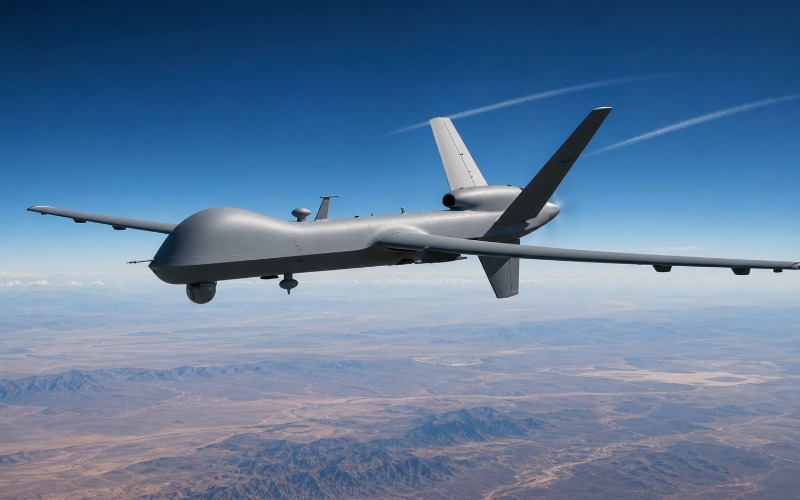
Drones provide persistent, high-resolution reconnaissance over conflict zones. The MQ-9 Reaper, for example, can loiter for 27 hours, offering real-time video feeds to ground commanders. According to a 2025 Army Research Laboratory report, UAV-based ISR has increased target identification accuracy by 50% compared to satellite imagery alone.
Moreover, smaller tactical drones like the RQ-11 Raven enable platoon-level units to conduct reconnaissance without exposing soldiers to direct fire. This has proven critical in urban warfare, where situational awareness is paramount.
Reduced Risk to Military Personnel
The most cited advantage is the removal of pilots from harm’s way. A 2024 Pentagon study found that UAV operations have saved an estimated 2,000 pilot lives since 9/11 by replacing manned aircraft in high-threat missions. This aligns with the Department of Defense’s strategic objective to minimize casualties in asymmetric warfare.
In addition, drones can perform missions in chemically or radiologically contaminated environments where human entry is impossible. For example, during the 2020 pandemic, military drones were used to deliver medical supplies in hazardous zones, showcasing their versatility.
Cost-Effectiveness and Operational Efficiency
While advanced UAVs like the Global Hawk cost up to $130 million, they are still cheaper than manned equivalents over their lifecycle. A 2025 Government Accountability Office (GAO) report indicated that operating a drone fleet costs 35% less per flight hour than manned aircraft, driven by lower fuel consumption, reduced maintenance, and no need for life-support systems.
For low-cost tactical drones, the impact is even greater. Switchblade loitering munitions, costing around $10,000 each, can destroy high-value targets at a fraction of the cost of a cruise missile, which often exceeds $1 million.
The Critical Drawbacks and Challenges
Despite their advantages, drones present serious vulnerabilities and ethical dilemmas. Understanding these drawbacks is essential for informed defense policy.
Vulnerability to Electronic Warfare and Cyber Attacks
Modern drones depend on radio frequency links, making them susceptible to jamming, spoofing, and cyber intrusion. A 2024 NATO technical report revealed that in contested airspace, jamming leads to loss of control in 40% of UAV engagements, often resulting in crashes or capture. The downing of a U.S. RQ-170 by Iran in 2011, reportedly through GPS spoofing, remains a stark example.
Counter-drone systems are now a booming industry; according to MarketsandMarkets, the counter-UAV market is projected to reach $4.6 billion by 2027. This arms race underscores the fragility of drone operations without robust electronic protection.
Ethical and Legal Concerns
Remote warfare lowers the threshold for using lethal force and raises questions about accountability. A 2025 United Nations Human Rights Council report documented that drone strikes in Yemen resulted in civilian casualties in 12% of cases, fueling local insurgencies and violating international humanitarian law. The psychological impact on drone operators, who experience post-traumatic stress at rates comparable to pilots, is also concerning.
Autonomous drones, capable of selecting targets without human intervention, present even deeper ethical dilemmas. The ongoing debate within the Pentagon’s Autonomous Weapons Review Board highlights the tension between tactical benefits and moral hazard.
Dependence on Communication Links and Autonomy
Most current drones require continuous satellite or line-of-sight links. A 2024 MIT Lincoln Laboratory study found that communication latency in satellite-controlled drones can exceed 2 seconds, making them ineffective for close air support reactively. While autonomous flight is improving, full autonomy remains technically and politically stymied.
For example, the Navy’s MQ-25 Stingray leverages autonomous carrier landings, but for combat missions, rule-based autonomy limits flexibility. As noted by the Air Force Research Laboratory, current AI in drones can handle structured tasks but fails in novel tactical situations.
Proliferation and Asymmetric Threats
Drone technology is increasingly accessible to state and non-state actors. A 2025 study by the Stockholm International Peace Research Institute (SIPRI) indicated that over 90 countries now possess military UAVs. This proliferation enables terrorist groups to weaponize commercial drones; for example, ISIS used off-the-shelf quadcopters to drop grenades at close range, changing urban warfare dynamics.
Systemic vulnerabilities also arise from shared technologies. The same open-source autopilot used in hobby drones can be adapted for attacks, complicating counter-proliferation efforts.
Technical Comparison: Manned vs. Unmanned Systems
| Parameter | Manned Fighter (F-16) | UCAV (MQ-9 Reaper) | Small Tactical Drone (Switchblade) |
|---|---|---|---|
| Unit Cost | $30–80 million | $16 million | $10,000 |
| Loiter Time | Up to 3 hours | 27 hours | 15 minutes |
| Payload Capacity | 15,000 lbs | 1,700 lbs | 2 lbs (warhead) |
| Operator Risk | Pilot exposed | No onboard pilot | No onboard pilot |
| Vulnerability to EW | Low (hardened) | High | Very High |
| Operational Cost/Hour | $25,000 | $5,000 | $100 |
Source: U.S. Air Force Cost Data Book, 2025 and industry estimates.
Conclusion: Balancing Capability and Risk
Military drones offer undeniable advantages in surveillance, risk reduction, and cost, but their vulnerabilities to electronic warfare, ethics, and proliferation demand careful management. As a 2025 report from the Royal United Services Institute (RUSI) concludes, the future of drone warfare lies in integrated, resilient systems with robust human oversight. Defense forces must invest in counter-electronics, secure communications, and international frameworks to maximize benefits while mitigating downsides.
The pros and cons of drones in the military are not static; they evolve with technology and adversarial adaptation. An informed public and transparent policy are essential to navigate this transformative era in warfare.
References:
Royal United Services Institute. (2025). The Future of Drone Warfare.Frequently Asked Questions
RAND Corporation. (2024). UAV Survivability in Contested Environments.
U.S. Department of Defense. (2025). Annual UAV Operational Report.
NATO Science and Technology Organization. (2023). Electronic Warfare Impact on UAVs.
United Nations Human Rights Council. (2025). Civilian Casualties from Drone Strikes.
GAO. (2025). Cost Comparison of Manned and Unmanned Aircraft.
Center for Strategic and International Studies. (2024). The Drone Revolution.
MIT Lincoln Laboratory. (2024). Latency and Autonomy in Combat UAVs.
SIPRI. (2025). Global Proliferation of Military UAVs.
Army Research Laboratory. (2025). UAV ISR Accuracy Improvements.