
An air-to-surface missile (ASM) is a precision-guided munition launched from aircraft to destroy or degrade ground and naval targets. These weapons have evolved from unguided rockets into highly sophisticated, network-enabled systems capable of striking with pinpoint accuracy at ranges exceeding 300 km. This article explores the fundamental characteristics, types, guidance systems, and future trends of ASMs, providing a comprehensive overview for defense professionals and enthusiasts.
Key Takeaways
- An air-to-surface missile (ASM) is a precision-guided munition launched from aircraft to engage ground or naval targets.
- ASMs range from anti-radiation missiles to cruise missiles, each tailored for specific mission profiles.
- Modern ASMs employ advanced guidance systems such as GPS, inertial navigation (INS), and infrared seekers for precise targeting.
- Launch platforms include fighter jets, bomber aircraft, helicopters, and unmanned aerial vehicles (UAVs).
- Future ASMs will leverage artificial intelligence, enhanced network integration, and hypersonic speeds to counter evolving threats.
What Defines an Air-to-Surface Missile?
An air-to-surface missile is defined by its launch platform (aircraft) and target domain (surface). ASMs are distinguished from other munitions by their propulsion systems, guidance capabilities, and mission adaptability. Unlike bombs, which rely on gravity, ASMs incorporate rocket or jet engines that enable extended range, high speed, and maneuverability. According to the RAND Corporation, modern ASMs achieve circular error probable (CEP) values under 5 meters, ensuring low collateral damage.
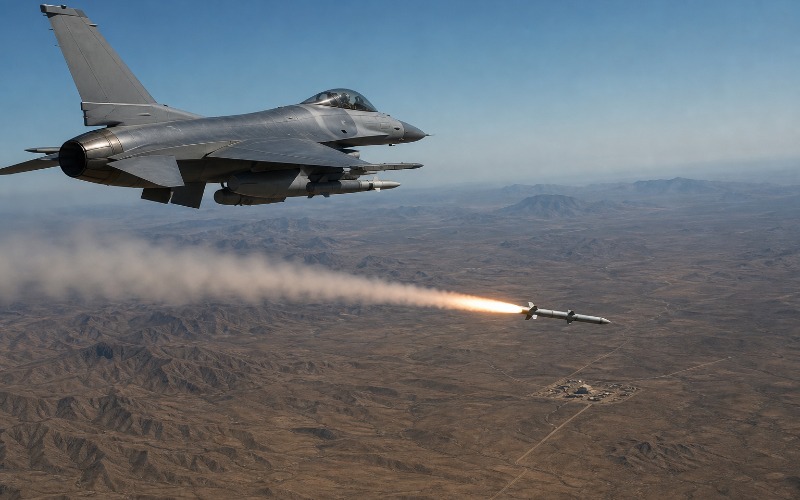
Main Types of Air-to-Surface Missiles
Air-to-surface missiles are categorized based on mission role, guidance, and target type. The five primary categories are:
- Anti-Radiation Missiles (ARMs): Designed to destroy radar emitters. Example: LD-10 Anti-radiation Missiles.
- Anti-Ship Missiles: Engage naval vessels with sea-skimming or high-dive profiles. Example: YJ-12 Anti-ship Missile.
- Precision-Guided Missiles (PGMs): Use laser, GPS, or IR guidance for point targets. Example: AFT-6A Precision Guided Bomb.
- Standoff Missiles: Long-range weapons launched outside enemy air defenses. Example: Storm Shadow / SCALP.
- Anti-Tank Guided Missiles (ATGMs): Specifically for armored vehicles. Example: HJ-8 Anti-tank Guided Missile
Each type uses a distinct warhead: blast/fragmentation, shaped charge, or penetrating. A 2022 study by the Journal of Military Technology indicates that ATGMs account for approximately 40% of ASM usage in current conflicts, especially in close air support missions.
| Type | Exemplar | Range | Guidance | Warhead |
|---|---|---|---|---|
| Anti-Radiation | AGM-88 HARM | 150 km | Passive radar | Blast fragmentation |
| Anti-Ship | AGM-84 Harpoon | 130 km | Active radar + INS | Penetrating blast |
| Precision-Guided | AGM-114 Hellfire | 11 km | Laser/SAL | Shaped charge |
| Standoff | Storm Shadow | 400 km | GPS + INS + IR | Penetrating |
| Anti-Tank | Brimstone | 20 km | Active Radar | Multipurpose |
How Air-to-Surface Missiles Work
Air-to-surface missiles function through a sequence of target detection, firing, mid-course guidance, and terminal homing. Upon launch, the missile separates from the aircraft and ignites its propulsion system—rocket or turbojet—accelerating toward the target. During flight, an onboard autopilot receives commands from the guidance system, correcting course while minimizing energy consumption. In the terminal phase, seeker activation locks onto the target’s signature. For example, the AGM-158 JASSM uses a combination of GPS and infrared seeker, enabling a CEP of less than 3 meters, as reported by the Air Force Technology.
Guidance Systems Explained
Guidance systems are the core of ASM precision. Three principal categories exist:
- Command Guidance: The launching aircraft transmits updates to the missile. Used in older systems like the AGM-65 Maverick.
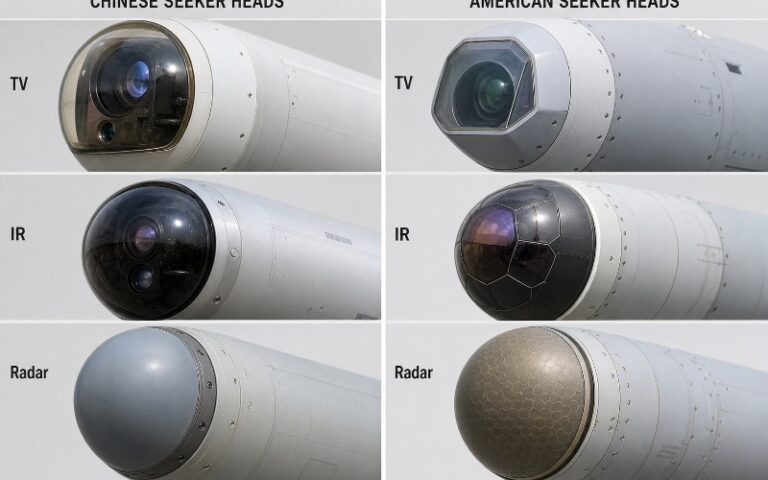
- Homing Guidance: The missile actively seeks the target using radar (ARH), laser (SAL), or infrared (IR). Most modern ASMs use homing in terminal phase.
- Inertial Navigation (INS) / GPS: Provides navigation waypoints without external emissions. The AGM-158C LRASM relies on GPS/INS for stealthy mid-course flight.
Hybrid systems are common. According to the DARPA Precision Strike Missile program, next-generation ASMs will fuse multiple sensors to resist jamming and improve accuracy in contested environments.
Typical Launch Platforms
Air-to-surface missiles can be launched from a variety of aerial platforms:
- Fighter jets (F-16, Su-57) for tactical strikes.
- Strategic bombers (B-2 Spirit) for heavy ordnance delivery.
- Attack helicopters (Apache, Mi-28) for anti-armor operations.
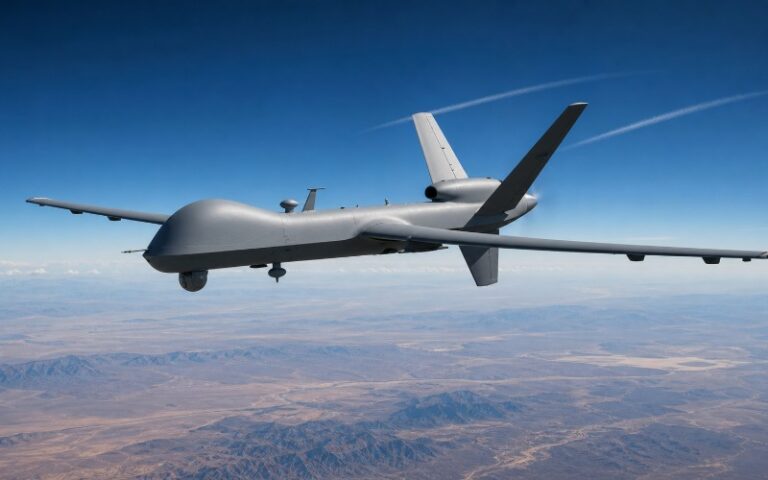
- Unmanned aerial vehicles (MQ-9 Reaper) employing lightweight ASMs.
- Maritime patrol aircraft (P-8 Poseidon) carrying anti-ship missiles.
Research from the International Institute for Strategic Studies (IISS) shows that over 75% of ASM deployments today come from multirole fighters, reflecting a trend toward asset versatility.
Common Combat Missions
ASMs are employed across a spectrum of missions:
- Strike / Interdiction: Destroying fixed infrastructure, command centers, and logistics hubs.
- Close Air Support (CAS): Engaging enemy forces in proximity to friendly troops.
- Defense Suppression (SEAD): Neutralizing air defenses with anti-radiation missiles.
- Maritime Strike: Sinking or disabling naval vessels with anti-ship missiles.
- Counter-WMD: Preemptive or preventive strikes on weapons of mass destruction facilities.
A 2022 analysis by the Center for Strategic and International Studies (CSIS) estimated that strike missions account for 45% of ASM usage in recent conflicts, followed by CAS at 30% and SEAD at 25%.
Advantages and Limitations
Air-to-surface missiles offer decisive combat advantages:
- Precision strike capability minimizing collateral damage.
- Standoff range allowing engagement from beyond enemy defenses.
- Adaptable guidance across multiple target types.
- Reduced risk to launch platform compared to direct overflight.
However, limitations include high per-unit cost (e.g., a JASSM-ER costs approximately $1.3 million per unit, according to U.S. DoD budget documents), vulnerability to electronic countermeasures, and logistical complexity for reloading aircraft. Additionally, adverse weather can degrade laser and imaging infrared seekers.
Future Development Trends
The future of air-to-surface missiles is driven by hypersonic speeds, artificial intelligence, and modular designs. Programs like the U.S. Army’s LRASM AI upgrade enable in-flight target reclassification using machine learning. Hypersonic ASMs, such as the AGM-183A ARRW, will compress engagement timelines. Furthermore, modular open architectures allow rapid integration of new seekers and warheads. According to a 2023 report by National Defense Magazine, the global ASM market is projected to grow at 5.2% CAGR through 2030, fueled by modernization programs worldwide.