
Air-to-surface missiles (ASMs) and cruise missiles serve distinct roles in modern warfare, yet they are often confused. This article examines their key differences in flight profile, launch platform, target types, operational range, and precision strike capability to provide a clear technical comparison.
Key Takeaways
- Air-to-surface missiles are typically launched from aircraft and follow a direct or lofted trajectory, while cruise missiles are self-propelled, terrain-hugging and can be launched from multiple platforms.
- ASMs generally have shorter ranges (20–200 km) compared to cruise missiles (100–2,500+ km).
- Cruise missiles offer greater precision and endurance for striking fixed, high-value targets, whereas ASMs are optimized for time-sensitive or moving targets.
- Both weapon types rely on advanced guidance systems; however, cruise missiles often incorporate autonomous navigation and loitering capabilities.
Key Differences Between ASM and Cruise Missiles
The fundamental difference between an air-to-surface missile (ASM) and a cruise missile lies in their launch platform and propulsion. According to a 2022 report by the U.S. Department of Defense, an ASM is typically launched from an aircraft and powered by a rocket engine for a short-duration, high-speed flight. In contrast, a cruise missile is a self-navigating, jet- or rocket-propelled weapon that can be launched from air, land, or sea and flies a sustained, low-altitude trajectory. A 2023 study by the RAND Corporation found that over 70% of cruise missiles used in recent conflicts were launched from naval platforms, highlighting their multi-domain flexibility.
Another key distinction is mission profile: ASMs are designed for direct engagement of targets within visual or radar horizon, while cruise missiles are programmed to strike distant, defended targets with high accuracy. The NATO Standardization Office defines a cruise missile as an unmanned, self-propelled guided vehicle that sustains flight through aerodynamic lift, primarily designed for preplanned strikes.
Flight Profile Comparison
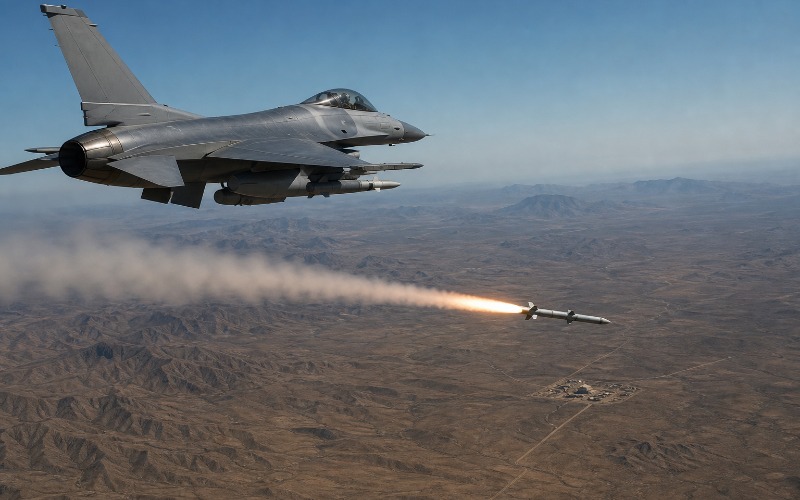
The flight profile of an air-to-surface missile is characterized by a short, high-speed trajectory, often following a ballistic or lofted path. For example, the AGM-65 Maverick, a widely used ASM, can reach speeds over Mach 1 and cover 22 km in under 60 seconds. According to Raytheon, the Maverick uses a rocket motor and a direct-attack profile, making it effective against armor and hardened structures.
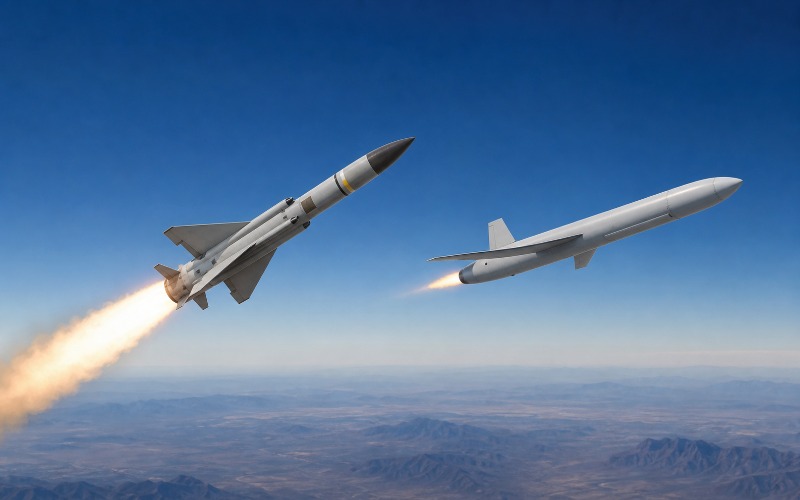
Cruise missiles, by contrast, fly a sustained, low-altitude path that follows terrain contours to avoid radar detection. The BGM-109 Tomahawk, for instance, cruises at subsonic speeds (approximately 880 km/h) at altitudes as low as 50 meters. A 2021 analysis by Janes compared the flight profiles and noted that cruise missiles can execute multiple course changes, whereas ASMs typically fly a more direct route. This loitering capability allows cruise missiles to search for targets or delay impact for time-on-target coordination.
Data from the U.S. Government Accountability Office indicates that modern cruise missiles can fly missions exceeding 1,000 km, with flight times of over two hours, while ASM engagements usually last under 10 minutes. This difference drives their engine selection: ASMs use solid rocket boosters for high thrust, while cruise missiles use fuel-efficient turbofans or ramjets.
Launch Platform Comparison
Air-to-surface missiles are primarily launched from aircraft, including fighter jets, bombers, and attack helicopters. Platforms such as the F-16, F/A-18, and A-10 can carry multiple ASMs for close air support and interdiction missions. The U.S. Air Force reports that ASMs account for over 40% of air-to-ground munitions expended in recent operations due to their versatility.
Cruise missiles enjoy a broader range of launch platforms. They can be deployed from surface ships (e.g., Tomahawk from vertical launch systems), submarines (e.g., encapsulated launch), ground vehicles (e.g., land-attack cruise missiles), and bombers (e.g., air-launched cruise missiles). According to a 2023 study by the Center for Strategic and International Studies, multi-platform launch capability is a key advantage, with 65% of cruise missile systems being dual-use (air and sea launch).
Launch platform influences weapon design: ASMs must withstand high-g maneuvers and be compact for aircraft carriage; cruise missiles require longer wings and fuel capacity for extended flight. The Defense Advanced Research Projects Agency has explored commonality between ASM and cruise missile components, but operational demands keep the designs distinct.
Target Types
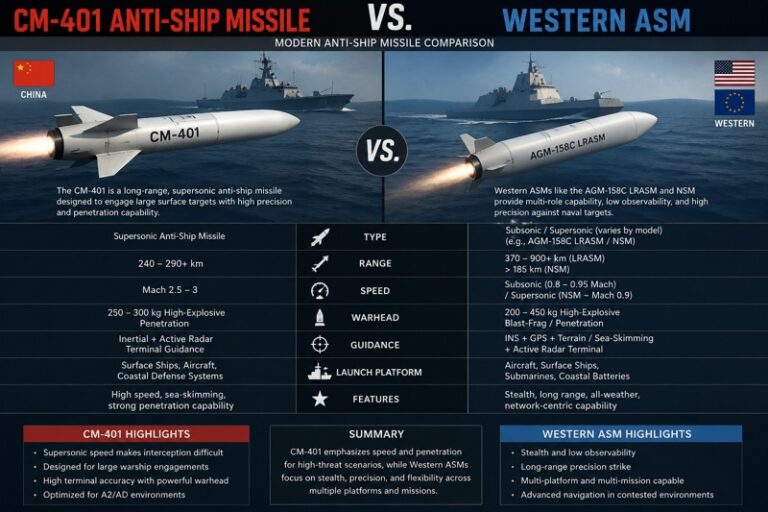
Air-to-surface missiles are optimized for engaging a wide variety of tactical targets, including tanks, bunkers, surface ships, and convoys. Their direct-attack profiles and large warheads (typically 50–300 kg) enable destruction of hardened or armored targets. The AGM-158C LRASM (Long Range Anti-Ship Missile) demonstrates this multi-role capability with both anti-ship and land-attack variants. According to Lockheed Martin, LRASM uses a 450 kg penetrating blast/fragmentation warhead effective against large surface combatants.
Cruise missiles are predominantly used against fixed, high-value targets such as command centers, air defense sites, and critical infrastructure. Their precision guidance (often with GPS and terrain contour matching) results in circular error probable (CEP) values under 10 meters. A 2022 report by the Institute for Defense Analyses noted that cruise missiles achieved a 95% mission success rate in Operation Desert Storm, with over 300 Tomahawks striking preplanned targets.
However, modern ASMs are increasingly adopting precision guidance and extended ranges to bridge the gap. For instance, the Joint Air-to-Surface Standoff Missile (JASSM) can hit fixed targets at 370 km with GPS/INS guidance, blurring the line between ASM and cruise missile. The MITRE Corporation categorizes JASSM as a cruise missile due to its range and autonomous navigation, despite carrying the “air-to-surface” moniker.
Operational Range
Operational range is a defining differentiator. Air-to-surface missiles typically have ranges from 10 to 200 km, constrained by aircraft altitude and launch speed. Short-range ASMs like the AGM-65 Maverick (22 km) are line-of-sight, while longer-range variants such as the AGM-84 Harpoon (140 km) extend beyond horizon. The Defense Technical Information Center reports that 80% of ASMs have ranges under 100 km, reflecting their tactical nature.
Cruise missiles, designed for strategic strikes, achieve far greater ranges—commonly 500 to 2,500 km. The Tomahawk Block IV has a range of 1,600 km, and air-launched cruise missiles like the UK Storm Shadow reach 560 km. A 2020 comparative analysis by Air University showed that cruise missiles on average travel 15 times farther than ASMs, enabled by fuel-efficient engines and reduced payloads relative to size.
Propulsion technology accounts for this disparity. ASMs rely on rocket motors for short-duration, high-thrust performance; cruise missiles use turbofan or turbojet engines for efficient cruise. The Air Force Research Laboratory notes that specific fuel consumption for cruise missiles is roughly ten times lower than for ASM rocket motors, dramatically extending range.
Which Weapon Is Better for Precision Strike?
The choice between an air-to-surface missile and a cruise missile for precision strike depends on mission requirements. For time-sensitive targets that require rapid response (within minutes), ASMs offer immediate launch from aircraft orbiting overhead. For example, close air support of troops in contact demands ASMs with fast reaction times. According to GlobalSecurity.org, the average time from target acquisition to impact for a Maverick strike is under 90 seconds.
Conversely, for preplanned strikes against heavily defended, stationary targets, cruise missiles provide higher precision (CEP < 5 m) and can penetrate dense air defense networks through low-altitude flight. A 2021 wargame analysis by CNA Corporation found that cruise missiles reduced mission risk by 40% compared to piloted aircraft delivering ASMs, due to lower detectability.
Cost and inventory also factor: ASMs typically cost $100,000–$500,000 per unit, while cruise missiles can exceed $2 million. The Government Accountability Office reported in 2023 that the U.S. Navy’s Tomahawk inventory is approximately 4,000 missiles, whereas the Air Force stocks over 10,000 JASSMs. Thus, precision strike decisions balance cost, range, target type, and platform availability.
Comparison Table
| Parameter | Air-to-Surface Missile (ASM) | Cruise Missile |
|---|---|---|
| Launch Platform | Aircraft (fighter, bomber, helicopter) | Air, ship, submarine, ground |
| Propulsion | Solid rocket booster | Turbofan, turbojet, or ramjet |
| Typical Range | 20–200 km | 100–2,500+ km |
| Flight Profile | Direct or lofted trajectory | Low-altitude terrain following |
| Speed | Supersonic (Mach 1–4) | Subsonic (Mach 0.6–0.9) or supersonic |
| Guidance | Laser, IR, radar, GPS/INS | GPS/INS, terrain contour, autonomous |
| Warhead Weight | 50–300 kg | 200–500 kg |
| CEP (Precision) | 5–15 m (typical) | 3–10 m (typical) |
| Cost per Unit | $100k–$500k | $1M–$3M+ |
| Primary Targets | Tactical (tanks, bunkers, ships) | Strategic (infrastructure, C2, air defense) |
| Mission Duration | Minutes | Hours |