
Defining HALE: The Tier 1 of Unmanned Aerial Reconnaissance
In the hierarchy of unmanned systems, **High-Altitude Long-Endurance (HALE)** platforms sit at the apex. These aircraft operate at altitudes above 60,000 feet, well above commercial air traffic. Specifically, they offer a unique vantage point that bridges the gap between tactical drones and orbital satellites. Consequently, HALE platforms provide persistent, wide-area surveillance that changes how commanders view the battlefield.
Persistence Over Orbit: The HALE Advantage
Satellites move in fixed orbits and suffer from “revisit gaps.” In contrast, a HALE fixed-wing drone can loiter over a specific target area for over 30 hours. This creates a “staring” effect. Moreover, HALE platforms fly much closer to the Earth than satellites. As a result, their optical and electronic sensors capture much higher resolution data. This allows for the real-time tracking of mobile missile launchers or carrier strike groups [1].
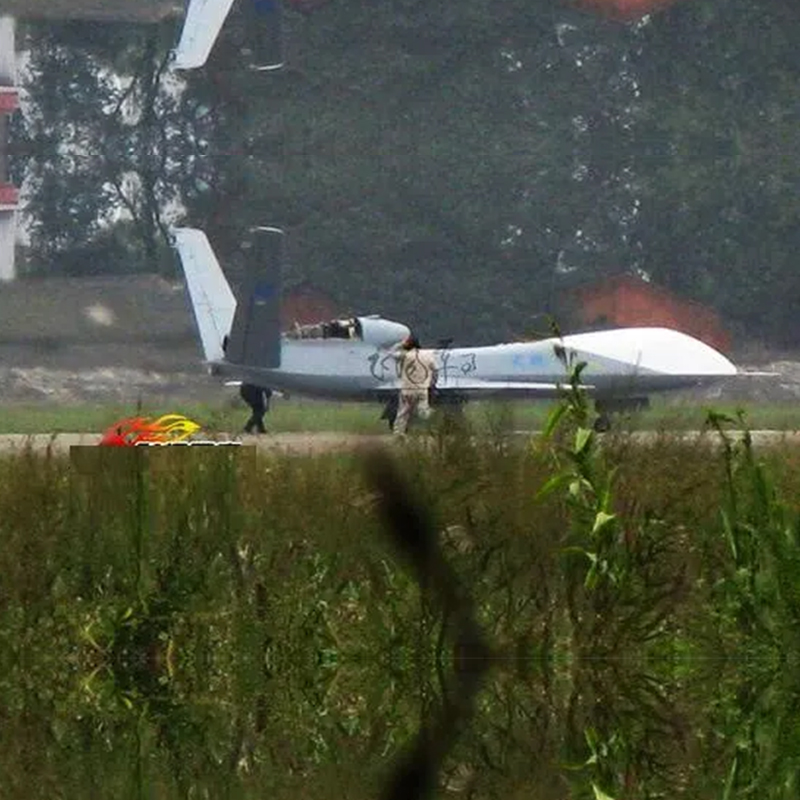
The fixed-wing design is essential for this mission. High-aspect-ratio wings provide the necessary lift in the thin stratospheric air. Furthermore, these wings house massive fuel reserves. Notably, China’s WZ-7 (Soaring Dragon) utilizes a unique joined-wing design to increase structural rigidity at these altitudes. This engineering choice reduces weight while maintaining the aerodynamic efficiency required for long-endurance missions [3].
Technical Anatomy: Sensors and Survival at the Edge of Space
Operating in the stratosphere requires specialized hardware. The air is thin, and temperatures drop below -50°C. Therefore, HALE drones use high-bypass turbofan engines optimized for low-oxygen environments. Specifically, the US RQ-4 Global Hawk uses the Rolls-Royce F137 engine. Similarly, Chinese HALE platforms utilize domestic high-efficiency turbofans to maintain cruise speeds at 60,000 feet.
Multi-Spectral Intelligence Gathering
The value of a HALE drone lies in its payload. These aircraft carry Synthetic Aperture Radar (SAR), which can “see” through clouds and smoke. Additionally, they use long-range Electro-Optical/Infrared (EO/IR) cameras. Moreover, HALE platforms are primary tools for Signals Intelligence (SIGINT). They intercept enemy communications and radar emissions from hundreds of miles away [4].
Because HALE drones fly so high, their “sensor horizon” is massive. A single drone can monitor thousands of square miles in one pass. Consequently, they act as the “eyes” for long-range strike systems like the DF-21D or DF-26. In addition, they utilize high-bandwidth satellite links to beam this data back to command centers in real-time. This ensures that decision-makers have the most current “Common Operational Picture” (COP) available.
Strategic Comparison: WZ-7 Soaring Dragon vs. RQ-4 Global Hawk
The US and China represent the world leaders in HALE technology. However, their design philosophies reflect different regional priorities. The **RQ-4 Global Hawk** focuses on maximum endurance and sensor variety. It serves as a global asset for the US Air Force. On the other hand, China’s **WZ-7** focuses on high-speed cruise and integration with regional “Anti-Access/Area Denial” (A2/AD) networks [2].
The Battle of the Stratosphere: Comparing Specs
| Feature | WZ-7 (China) | RQ-4 Global Hawk (USA) |
|---|---|---|
| Wing Design | Joined-Wing (Diamond) | Traditional High-Aspect Ratio |
| Endurance | ~10-12 Hours (High Speed) | ~32+ Hours |
| Mission Focus | Maritime Surveillance / Targeting | Global Strategic Reconnaissance |
| Radar | Advanced SAR / SIGINT | HISAR / Multi-Platform Radar |
Specifically, the WZ-7’s joined-wing design allows it to handle the stresses of higher speeds better than the RQ-4. Consequently, the WZ-7 can reach a target area faster. In contrast, the RQ-4 is built to stay over a target for over a day. Ultimately, the WZ-7 is a tactical tool for the Western Pacific. Meanwhile, the RQ-4 is a strategic tool for global surveillance. Both platforms are essential for their respective military doctrines [5].
Maritime Domain Awareness: Tracking the Blue Water Fleets
The Western Pacific is a vast maritime theater. Therefore, HALE fixed-wing ISR is vital for **Maritime Domain Awareness (MDA)**. A WZ-7 flying over the South China Sea can track every ship moving through the region. Specifically, it identifies Carrier Strike Groups (CSGs) while staying outside the range of most ship-based air defenses. As a result, it provides the target coordinates for anti-ship ballistic missiles.
The Kill Chain Link
HALE drones are the critical link in the “Kill Chain.” Without these eyes, long-range missiles are blind. Consequently, the PLA uses HALE drones to create a transparent battlespace. Moreover, these drones can guide other assets, such as the J-20 or H-6K, toward their targets. In addition, they monitor the results of a strike to perform “Battle Damage Assessment” (BDA). This ensures that commanders know if they need to launch a second strike [2].
Furthermore, HALE drones perform “Electronic Warfare” (EW) roles. They can jam enemy communications or spoof radar signals from high altitudes. Specifically, their height allows them to broadcast signals over a wider area than low-altitude drones. Therefore, they protect friendly forces by degrading the enemy’s ability to coordinate. This multi-role capability makes the HALE drone an indispensable asset in modern high-end conflict.
FAQ: Understanding HALE Fixed-Wing Operations
References
[1] International Institute for Strategic Studies (IISS). The Evolution of HALE Platforms. https://www.iiss.org/
[2] US Naval Institute (USNI). China’s WZ-7 and the Future of Pacific ISR. https://news.usni.org/
[3] Janes Defence Weekly. Technical Analysis of the Soaring Dragon Joined-Wing Design. https://www.janes.com/
[4] Air Force Technology. RQ-4 Global Hawk: Sensor Integration and Mission Capability. https://www.airforce-technology.com/
[5] Defense News. HALE vs. MALE: Strategic Persistence in Modern Conflict. https://www.defensenews.com/
This report was generated by China HK Aerospace Military Defense Group Corporation Limited (CAMD).