
The Evolving Challenge of Modern Air Defense
The proliferation of unmanned aerial vehicles (UAVs), commonly known as military drones, has fundamentally reshaped modern warfare and security paradigms. From reconnaissance and surveillance to targeted strikes and swarm attacks, military drones offer unprecedented capabilities, often operating with minimal human risk. However, this advantage simultaneously presents a significant challenge for air defense systems: how effectively can these increasingly sophisticated aerial assets be detected by radar? The answer, while affirmative, is far from simple. Military drones can be detected by radar, yet their inherent design characteristics and operational tactics often render traditional radar systems insufficient, necessitating advanced detection methodologies.

How Radar Interacts with Drones
To comprehend the complexities of drone detection, one must first grasp the underlying principles of radar technology. Radar operates by transmitting electromagnetic waves into the atmosphere and subsequently analyzing the echoes that return after striking an object. The characteristics of these returning waves—such as their intensity, timing, and frequency shift—enable a radar system to determine an object’s range, bearing, altitude, and velocity.
Central to an object’s detectability by radar is its Radar Cross-Section (RCS). RCS ($\sigma$) serves as a composite measure of an object’s ability to reflect radar signals in a given direction, effectively quantifying how “visible” an object is to radar. A larger RCS indicates a strong radar signature, making an object easily detectable, whereas a smaller RCS signifies a weak signature, presenting a significant detection challenge. For instance, a large manned bomber might possess an RCS measured in tens of square meters. Conversely, many military drones, particularly smaller reconnaissance or tactical models, exhibit an RCS closer to that of a large bird or insect, often in the range of 0.01 to 0.1 square meters. This stark difference in RCS is the primary reason why drones pose such a formidable detection problem for traditional air defense systems.
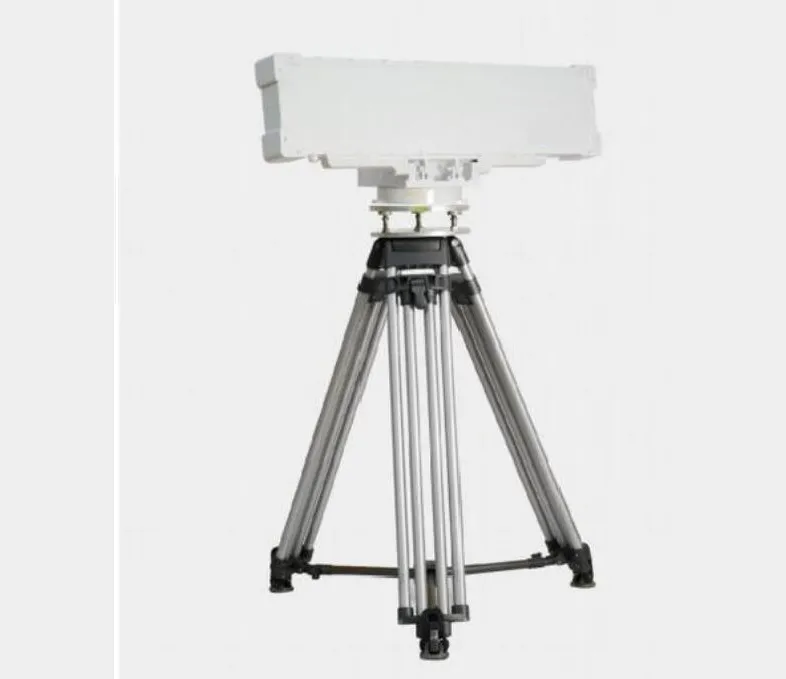
Why Traditional Radar Struggles with Drones
Despite the fundamental efficacy of radar, several intrinsic characteristics of military drones inherently limit the effectiveness of conventional radar systems:
Firstly, the small physical size of most military drones is a critical factor. Unlike larger manned aircraft, drones possess minimal surface area to reflect radar waves. This small footprint means that the radar returns are often weak, challenging the radar’s ability to differentiate them from ambient environmental noise or false positives.
Secondly, the strategic use of stealthy construction materials further compounds the detection problem. Modern military drones frequently incorporate composite materials such as carbon fiber and advanced plastics, which are inherently less reflective of radar energy than traditional metallic airframes. Furthermore, advanced stealth drones, such as the RQ-170 Sentinel, utilize specialized Radar-Absorbent Materials (RAM) on their surfaces. These materials are engineered to absorb incoming radar waves rather than reflecting them, dramatically reducing the drone’s RCS and rendering it nearly invisible to many radar bands.
Thirdly, the tactical advantage of low-altitude flight places drones within a complex radar environment. Drones often operate at very low altitudes to evade detection and exploit terrain masking. In this low-altitude regime, the radar’s emitted signals frequently encounter and reflect off numerous ground objects, including buildings, trees, and varied terrain. This phenomenon, known as ground clutter, generates a cacophony of unwanted radar returns that can completely obscure the faint signature of a small, low-flying drone, making it indistinguishable from the background noise.
Finally, the slow or hovering speeds characteristic of many drone operations present a unique challenge. Traditional pulsed-Doppler radar systems rely on the Doppler shift—a change in the frequency of the radar signal caused by an object’s movement relative to the radar—to filter out stationary ground clutter. By identifying objects that exhibit a significant frequency shift, the radar can effectively distinguish moving targets from static background elements. However, drones that fly very slowly, or those capable of hovering in a fixed position, generate a minimal or even zero Doppler shift. Consequently, these targets appear to the radar as static clutter, causing them to be inadvertently filtered out and remain undetected.
Counter-UAS Solutions for Drone Detection
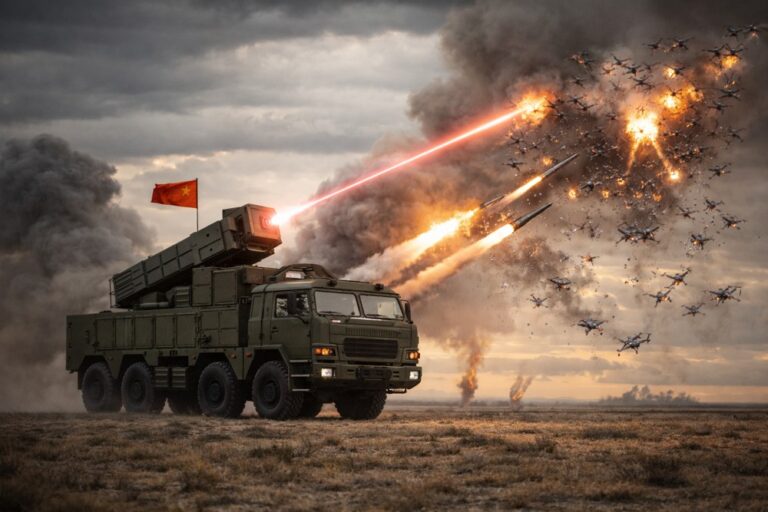
Recognizing the limitations of conventional radar, significant research and development efforts have focused on creating specialized Counter-Unmanned Aerial System (C-UAS) technologies tailored for drone detection and neutralization. These advanced solutions often integrate multiple sensor types and sophisticated processing algorithms:
One pivotal advancement is micro-Doppler radar. Unlike conventional radar that primarily detects the overall velocity of a target, micro-Doppler radar is sensitive to minute, high-frequency speed variations within the target itself. For drones, this means detecting the distinct motion of rapidly spinning propeller blades. This unique “micro-Doppler signature” allows the radar to differentiate between a drone and other small, slow-moving objects like birds, which would otherwise be indistinguishable. The rhythmic, rotational motion of propellers creates a specific frequency modulation that micro-Doppler radar can identify, even if the drone itself has a low overall velocity.
Furthermore, modern C-UAS strategies heavily emphasize multi-layered sensor fusion systems. It is increasingly rare for a single radar system to operate in isolation against drone threats. Instead, air defense systems integrate various detection technologies to create a comprehensive picture of the aerial environment. This typically includes:
- Radio Frequency (RF) detection systems: These passively listen for the unique control signals and telemetry broadcasts emitted by drones, providing an early warning of their presence and direction, even before visual or radar contact.
- Electro-Optical/Infrared (EO/IR) cameras: These high-resolution cameras, operating in visible and infrared spectrums, provide visual confirmation and precise tracking of drones, particularly at closer ranges or when radar is ineffective.
- Acoustic sensors: Microphones arranged in arrays can detect the distinct sound signatures of drone propellers, especially smaller models, offering another layer of passive detection.
Looking ahead, emerging technologies promise to further revolutionize drone detection. Concepts such as Quantum Radar, though still in early developmental stages, propose using quantum entanglement to detect objects with unprecedented sensitivity. Such a breakthrough could theoretically bypass the limitations of stealth technology by identifying objects based on their quantum properties rather than just their classical radar cross-section, potentially rendering current stealth materials less effective.
The Unending Technological Race
In conclusion, while military drones inherently possess characteristics that challenge traditional radar systems, they are by no means undetectable. The ongoing technological arms race between drone developers, striving for enhanced stealth and autonomy, and C-UAS engineers, creating more sophisticated detection and neutralization capabilities, is a testament to the critical importance of this domain. As drone technology continues to advance, so too will the methods employed to detect, track, and ultimately counter these increasingly pervasive and potent aerial assets. The future of air defense will undoubtedly be defined by integrated, multi-modal systems capable of adapting to the ever-evolving threat landscape posed by unmanned aerial systems.
For robust airspace security, CAMD offer a comprehensive array of anti UAV system designed to neutralize the spectrum of modern drone threats. Our selection includes advanced anti-drone systems, featuring multi-layered defense capabilities such as sophisticated RF-Cyber Takeover technologies that seize control of unauthorized drones, precision Drone Signal Jammers to disrupt communication, and high-accuracy Drone Detection Radars for immediate threat identification. We provide both fixed-site installations for permanent protection and man-portable, rapidly deployable units for tactical operations.