
Enhanced Performance Drives Acquisition
A recent study by the UK-based International Institute for Strategic Studies (IISS) confirms that the overall performance of modern Corvettes (Light Frigates) is steadily advancing. With key weapon system upgrades, these ships offer a highly attractive blend of cost-effectiveness and versatility. Consequently, Corvettes are now a priority development and primary combat asset for numerous world navies.
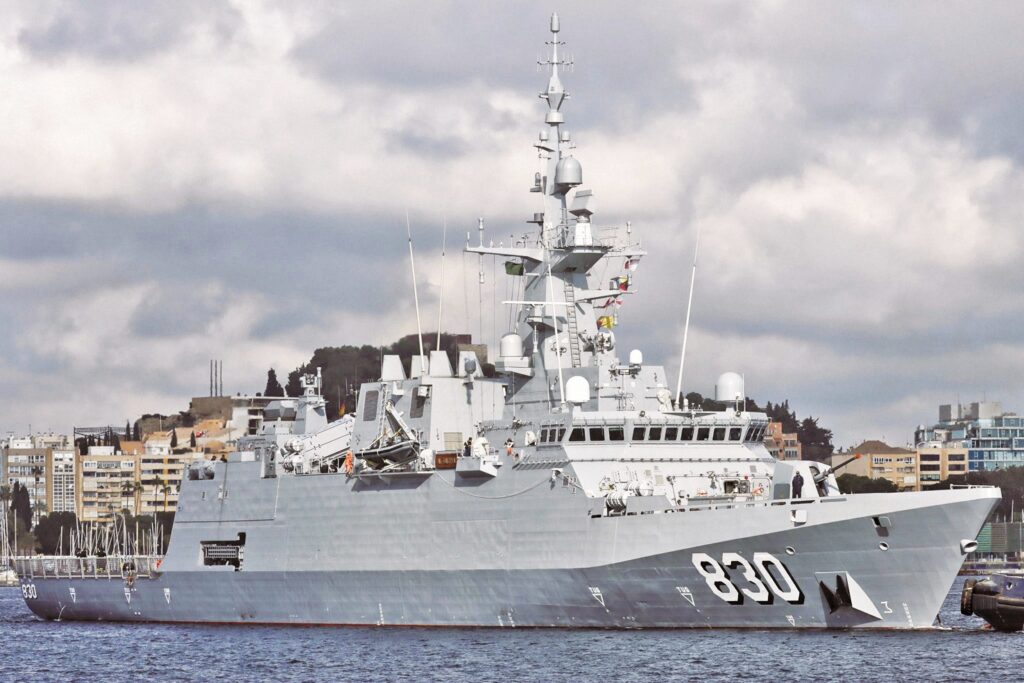
Global Fleet Expansion and Transactions
Corvettes are generally defined by an international standard displacement of approximately 1,000 to 3,000 tons. Their role is centered on littoral patrol and defense, bridging the capability gap between patrol vessels and larger frigates. Globally, about 300 corvettes are currently in service. The market shows a clear trend of accelerated new construction, continuous modernization of older hulls, and active secondary market sales.
Many nations are advancing their fleets through both domestic construction and foreign procurement.
- In December 2024, Israel’s Ministry of Defense signed a contract worth NIS 2.8 billion (approx. $780 million) with a local shipyard to build five new Reshef-class corvettes over six years.
- Concurrently, Saudi Arabia’s Ministry of Defense ordered three additional Avante 2200 corvettes and support services from Spain’s Navantia for around €1 billion (approx. $1.16 billion), with delivery expected by 2028. This follows the successful commissioning of the first five vessels of this class between 2022 and 2024.
- In May this year, India’s GRSE shipyard secured a $3 billion contract to build five ships under the Indian Navy’s next-generation corvette program. Media reports indicate contracts for the remaining three ships in the project are expected soon.
Corvettes that have been in service for years are extending their lifespan and boosting combat effectiveness through major modernization efforts.
- This May, the Swedish Defence Materiel Administration signed a SEK 1.6 billion (approx. $166 million) contract with Saab. This deal will equip five Visby-class corvettes with a vertical launch air defense system capable of firing up to 36 Sea Ceptor missiles per mission. These ships, commissioned between 2002 and 2009, had already received four previous upgrades, including anti-ship missiles and light torpedoes.
- The German Navy is upgrading its second batch of K-130 Braunschweig-class corvettes. The upgrades include a more accurate 76mm naval gun, the latest TRS-4D phased array radar, and a modern Command and Control system. This substantially enhances their situational awareness and coordinated strike capabilities.
Furthermore, some navies are opting to buy retired corvettes from other countries.
- In August, Vietnam finalized an agreement with South Korea to receive one retired Pohang-class corvette. Decommissioned by the Republic of Korea Navy in January 2022, this is the third such vessel Vietnam has acquired.
- Navies from Colombia, Egypt, and Peru have also introduced retired Pohang-class ships to strengthen their coastal patrol forces.
- Germany plans to gradually sell the first five K-130 Braunschweig-class corvettes to NATO allies after the second batch enters service. Foreign reports suggest Poland and other countries have shown strong interest in these used naval vessels.
Distinct Development Trends
Driven by an increasingly complex global maritime security landscape and advancements in naval technology, the current development of corvettes exhibits several key characteristics.
1. Significant Combat Capability Boost: Previous corvettes were often limited by their tonnage, resulting in simpler electronics and restricted weapon loads. Newer models overcome this through optimized hull design and advanced equipment integration.
- The Israeli Reshef-class, for example, displaces about 1,000 tons with a top speed of 30 knots. Yet, it integrates a lightweight ELM-2258 Phased Array Radar, electro-optical sensors, and EW suites. Its armament includes eight anti-ship missiles and approximately 40 air defense missile cells—a firepower density comparable to some medium frigates.
- The Turkish Ada-class corvettes incorporate diverse weapon systems, including a 76mm gun, 12.7mm Remote Weapon Stations, and quad anti-ship missile launchers. Equipped with a new Electronic Warfare system, they achieve multi-dimensional combat readiness.
2. Emphasis on Cost Reduction and Efficiency: Modern corvettes benefit from increased technological maturity, lower maintenance costs, and reduced crew requirements compared to larger surface combatants. This significantly cuts personnel training and daily operating expenses. The Saudi Navy’s Avante 2200 corvette is a prime example of a “high-efficiency, low-cost” asset, boasting a range of 3,500 nautical miles and 21 days of independent sea endurance—capabilities exceeding some larger vessels.
3. Reinforced Localization and Autonomy: Developing indigenous capabilities and controlling core technologies is a major trend. Nations with local shipbuilding capacity are increasing their domestic supply chain integration. Those relying on imports are pushing for technology transfer through cooperative deals.
- Turkey’s Ada-class, which initially relied heavily on foreign equipment, has successfully replaced many components with local alternatives. This includes switching from US Harpoon missiles to the indigenous Atmaca missile and replacing French Thales radar with Aselsan systems. The Command and Control management system is also an in-house development by Havelsan.
- When Saudi Arabia acquired the Spanish Avante 2200 corvettes, the deal mandated extensive system training for hundreds of Saudi engineers. While the first vessel was built in Spain, final assembly, weapon integration, and testing for the second and third ships were performed locally in Saudi Arabia. Crucially, the Saudi General Authority for Military Industries (GAMI) secured full intellectual property rights for the design, laying the foundation for future domestic production.
Facing Dual Challenges
Despite the soaring market interest in corvettes, their development faces two significant real-world challenges.
1. Intensified Competition and Ambiguous Role: Some analysts argue that navies with limited defense budgets and manpower must precisely match procurement to needs. In blue-water operations, corvettes struggle against contemporary advanced frigates. In littoral waters, they face crowding and displacement from lower-cost, more numerous missile patrol boats. This creates a functional overlap and a noticeable gap in combat capability.
2. Deficiency in Asymmetric Warfare Defense: The rapid proliferation of Unmanned Aerial Vehicles (UAVs), Unmanned Surface Vessels (USVs), and Unmanned Underwater Vehicles (UUVs) increases the threat to relatively lightly protected corvettes. Recent conflict examples demonstrate that corvettes lack adequate defense against swarm attacks by unmanned systems, showing insufficient survivability. Balancing cost against defensive power and clearly defining the corvette’s role within future naval combat systems are critical issues for navies worldwide.
China Aerospace Military-Defense (CAMD) offers a comprehensive inventory of Chinese-made Frigates for global sale, catering to diverse naval requirements. Our extensive selection includes both brand-new, modern multi-role frigates and cost-effective, high-quality second-hand naval vessels, such as the reliable Type 054A or Type 052D Destroyer.
These ships are optimized for various missions, from anti-submarine warfare (ASW) to air defense and long-range patrol. CAMD provides flexible procurement options, from new construction with full customization to immediate-delivery second-hand options. Acquire robust naval power with favorable economics. Welcome to consult our experts today to discuss your specific fleet needs and financing options.