
Key Takeaways: Multirole Aircraft Functionality
- Definition: A Multirole Combat Aircraft (MRCA) is a fixed-wing military platform designed to execute multiple mission types—including air-to-air combat, ground attack, and reconnaissance—within the same sortie or via rapid reconfiguration.
- Swing-Role Capability: Advanced multirole platforms can switch mission profiles mid-flight, adapting to dynamic battlefield threats without returning to base.
- Economic Efficiency: Consolidating fleets into multirole airframes reduces logistical footprints, maintenance overhead, and pilot training costs compared to operating specialized interceptors and bombers.
- Technological Enablers: Success relies on Sensor Fusion, Active Electronically Scanned Array (AESA) radar, and modular hardpoint configurations compliant with NATO and global interoperability standards.
Defining the Multirole Aircraft in Modern Defense
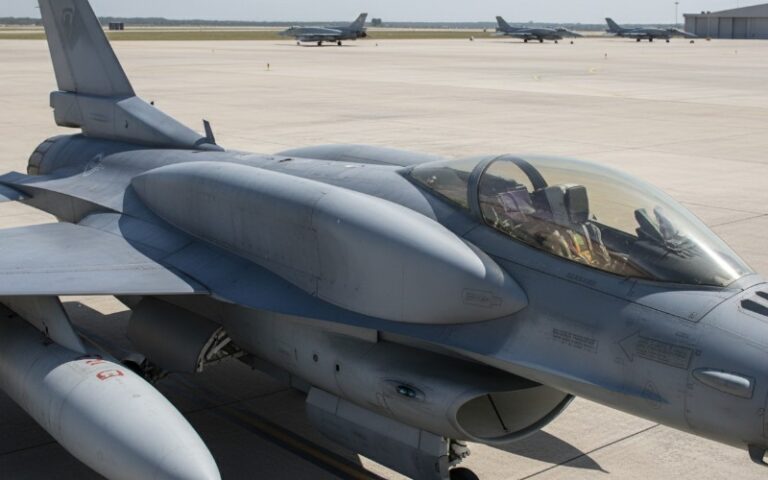
A multirole aircraft is a combat aviation platform engineered to perform different roles in combat, typically combining the speed and maneuverability of an air superiority fighter with the payload capacity and targeting systems of a ground-attack aircraft. In the context of modern defense procurement and military strategy, the shift toward multirole platforms represents a critical optimization of SWaP-C (Size, Weight, Power, and Cost).
Historically, air forces maintained specialized fleets: dedicated interceptors for air defense, bombers for strategic strikes, and reconnaissance planes for intelligence gathering. The modern multirole aircraft renders this segregation obsolete by utilizing advanced avionics and modular weapon systems to perform all these tasks. This consolidation allows defense agencies to streamline supply chains and standardize maintenance protocols (MRO), significantly lowering the Total Cost of Ownership (TCO) over the airframe’s lifecycle.
Core Operational Capabilities
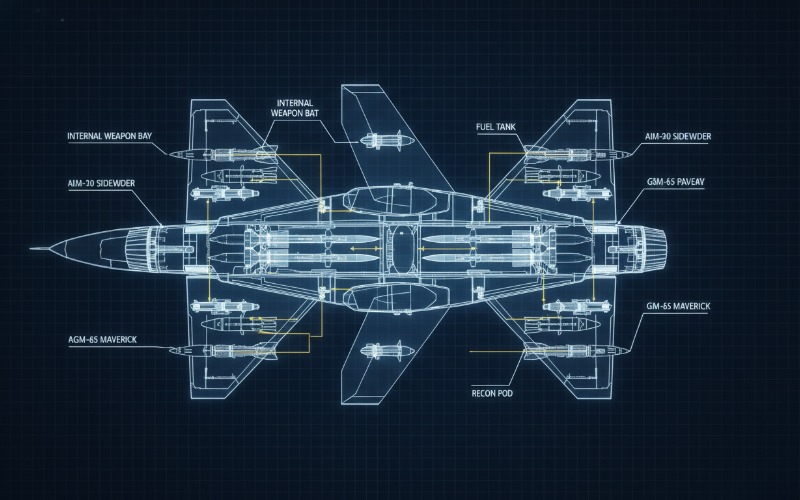
To be classified as a true multirole platform, an aircraft must demonstrate proficiency in at least three primary domains. These capabilities are not merely theoretical; they must be supported by integrated fire-control systems and MIL-STD-1760 compliant weapons interfaces.
Air Superiority and Interception
First and foremost, the platform must be capable of establishing air dominance. This requires high thrust-to-weight ratios, supersonic maneuverability, and the integration of Beyond Visual Range (BVR) missiles. The avionics suite must support long-range detection via AESA radar, allowing the pilot to track and engage multiple airborne threats simultaneously while maintaining situational awareness.
Close Air Support (CAS) and Interdiction
The secondary primary role is air-to-ground engagement. This involves the delivery of precision-guided munitions (PGMs), such as JDAMs or laser-guided bombs. The aircraft must feature robust targeting pods (e.g., AN/AAQ-33 Sniper) capable of identifying ground targets in adverse weather conditions. Ruggedization of the airframe is essential to withstand the structural stress of low-altitude maneuvers often required during CAS missions.
Intelligence, Surveillance, and Reconnaissance (ISR)
Modern 4.5 and 5th-generation multirole fighters act as sensor nodes in a networked battlespace. Through high-bandwidth datalinks (such as Link 16), these aircraft gather and transmit real-time tactical data to command centers and other assets. This ISR capability transforms the aircraft from a mere weapons carrier into a strategic intelligence asset.
The Evolution of Swing-Role Technology
It is vital to distinguish between “multirole” and “swing-role.” An older multirole aircraft might be configured on the ground for a specific mission—loaded with bombs for a strike mission or missiles for an air patrol. Once airborne, its role is fixed.
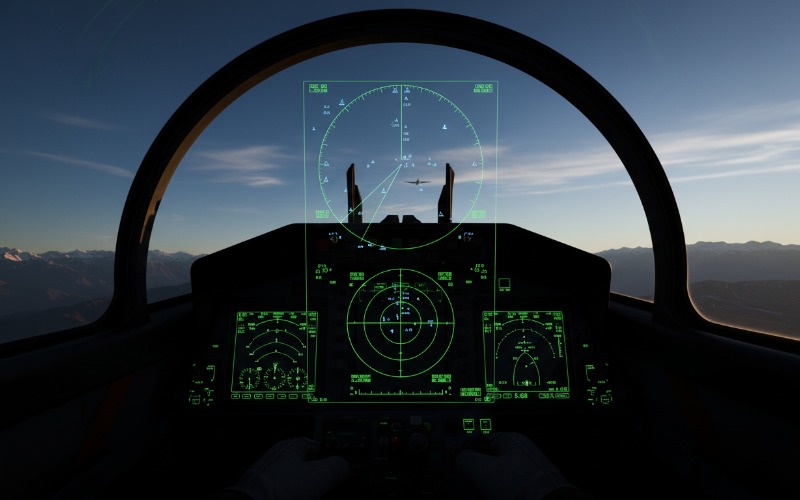
Swing-role aircraft, a standard in modern procurement, can adapt instantly. For example, a pilot on a ground-attack mission can immediately switch to an air-combat mode if intercepted by enemy fighters, utilizing onboard software to re-prioritize radar tracking and weapon selection. This capability is driven by advanced Mission Computers (MC) and Sensor Fusion algorithms that manage high-volume data streams to present the pilot with a unified tactical picture.
Technical Comparison of Aircraft Roles
The following table outlines the technical distinctions between specialized legacy platforms and modern multirole architectures, highlighting the procurement advantages of the latter.
| Feature | Dedicated Interceptor | Dedicated Strike/Bomber | Modern Multirole (MRCA) |
|---|---|---|---|
| Primary Mission | Air-to-Air Combat | Ground Attack | Full Spectrum Dominance |
| Payload Configuration | Air-to-Air Missiles only | Heavy Munitions/Bombs | Mixed (Missiles + PGMs) |
| Avionics Focus | Long-range Air Search | Ground Mapping/Targeting | Sensor Fusion (Air & Ground) |
| Agility | High (Supersonic) | Low to Medium | High (High G-load capable) |
| Logistics Footprint | Single Supply Chain | Single Supply Chain | Unified Supply Chain |
| Example Platforms | F-15C Eagle, MiG-31 | A-10 Thunderbolt II, Su-25 | F-35 Lightning II, Rafale, Typhoon |
Strategic Procurement Considerations
For defense integrators and government procurement officers, selecting a multirole platform involves complex tradeoffs between unit cost, operational flexibility, and lifecycle sustainability.
Fleet Consolidation and Logistics
Operating distinct aircraft types for different missions multiplies logistical burdens. Each platform requires specific ground support equipment, spare parts inventories, and specialized mechanic training. By transitioning to a multirole fleet, defense forces can achieve massive economies of scale. A unified fleet means that engines, avionics modules, and structural components are interchangeable, drastically reducing the Mean Time to Repair (MTTR) and increasing fleet availability rates.
Interoperability and Standardization
Multirole aircraft are increasingly designed with open architecture avionics. This facilitates easier upgrades and integration with allied forces. For NATO members and partners, the ability to share data via standardized protocols (like Link 16 or MADL) is non-negotiable. Procurement contracts now heavily weight the “growth potential” of an aircraft—its ability to accept new software and sensor packages without extensive structural modification.
Future Trends: 5th and 6th Generation Integration
The definition of “multirole” continues to expand with the advent of 5th and impending 6th generation fighters. The focus is shifting from kinetic capabilities to electronic warfare (EW) and cyber operations.
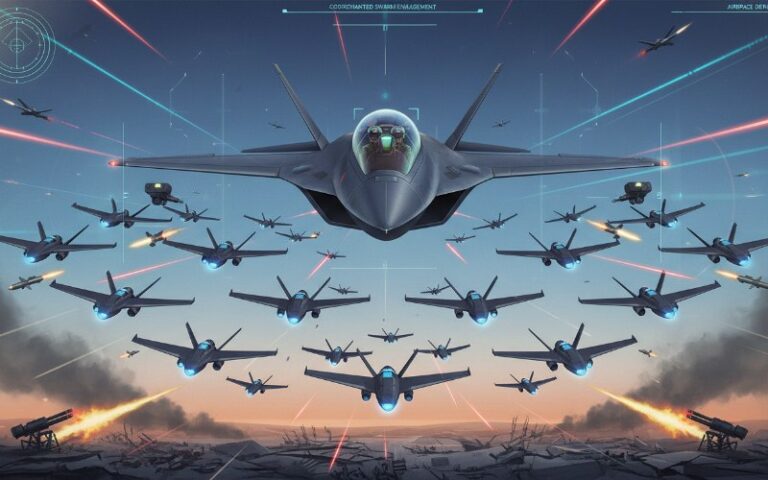
Manned-Unmanned Teaming (MUM-T): Future multirole aircraft will serve as “motherships” controlling swarms of unmanned combat aerial vehicles (UCAVs). The pilot will manage the mission objectives while AI-driven wingmen execute dangerous reconnaissance or suppression of enemy air defenses (SEAD) tasks. This evolution requires the multirole platform to possess immense processing power and secure, jam-resistant communication links.
Frequently Asked Questions
An Air Superiority Fighter is designed exclusively to engage other aircraft and secure control of the airspace (e.g., F-15C). A Multirole Fighter is designed to perform that mission plus ground attack, electronic warfare, and reconnaissance (e.g., F-15EX or F-35). While specialized fighters may have a slight edge in their specific domain, multirole fighters offer superior strategic flexibility.
“Omnirole” is a marketing term, notably used by Dassault for the Rafale, to describe advanced swing-role capabilities. It emphasizes the aircraft’s ability to perform air-to-air, air-to-ground, and reconnaissance tasks simultaneously during a single sortie, rather than just being configurable for different roles prior to takeoff.
While the initial acquisition cost of advanced multirole aircraft is high, they generally lower long-term defense spending. By replacing multiple legacy airframes (e.g., replacing F-16s, A-10s, and F-18s with the F-35), militaries reduce training infrastructure, supply chain complexity, and personnel requirements.
Yes. Modern multirole aircraft like the F-35 and EA-18G Growler (a specialized variant) have integrated EW suites. They can jam enemy radar and communications while remaining stealthy, a capability previously reserved for dedicated EW aircraft.