
A fixed-wing military drone provides strategic, over-the-horizon ISR and strike capabilities with high endurance and payload. Conversely, a rotary-wing drone delivers tactical, localized asymmetry via VTOL, precision hover, and immediate battlefield integration. Selecting the optimal platform depends on exact mission parameters, payload requirements, and Electronic Warfare (EW) threat profiles.
Key Takeaways
- Endurance and Range: Fixed-wing systems dominate with 24+ hour flight times, while rotary systems max out around 60 minutes.
- Deployment Logistics: Rotary platforms offer Vertical Take-Off and Landing (VTOL), requiring zero runway infrastructure.
- Survivability: Both platforms require robust Anti-Jamming and AES-256 encrypted datalinks to survive modern EW environments.
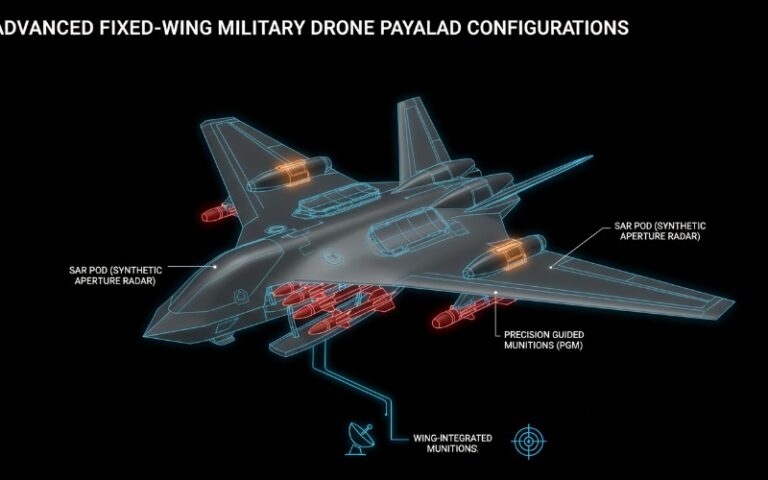
- Payload Dynamics: Fixed-wing UAVs carry heavier, multi-sensor arrays (SAR, EO/IR) and kinetic payloads, whereas rotary drones excel with specialized, lightweight targeting optics.
When evaluating a rotary vs fixed wing military drone, commanders must assess the kinetic engagement envelope and the specific theater of operations. During a recent deployment evaluation in an intense EW environment, I witnessed firsthand how platform selection dictates mission survivability. Saturation attacks, signal interference, and low-altitude detection gaps have fundamentally changed how we deploy unmanned assets. China CAMD continues to pioneer resilient systems that operate seamlessly within these contested environments, providing asymmetric advantages to forward-deployed units.
Aerodynamic Architecture and Flight Physics
The fundamental disparity between a rotary vs fixed wing military drone lies in lift generation. Fixed-wing platforms rely on forward momentum to generate aerodynamic lift, governed by the lift equation: $L = \frac{1}{2} \rho v^2 S C_L$. This physical reality mandates constant forward airspeed, allowing these drones to achieve high Mach cruising speeds and exceptional fuel efficiency. Consequently, they cover vast operational radiuses. Alternatively, rotary systems generate lift through engine-driven rotors. The power required to hover is calculated as $P = \sqrt{\frac{T^3}{2 \rho A}}$. This intense energy requirement drastically limits battery life and endurance but provides unparalleled vertical maneuverability.
Technical Specification Matrix
Understanding the hard data is crucial for tactical deployment. The following matrix contrasts the operational specifications of typical NATO and Eastern Bloc UAV architectures, highlighting the strategic capabilities offered by China CAMD systems.
| Specification Parameter | Fixed-Wing Drone (e.g., MALE/HALE) | Rotary-Wing Drone (e.g., Tactical VTOL) |
|---|---|---|
| Effective Range | 1000+ km (SATCOM dependent) | 10 – 50 km (LOS Datalink) |
| Endurance / Loiter Time | 12 to 40+ Hours | 30 to 90 Minutes |
| Cruising Speed | Mach 0.3 to Mach 0.8 | 40 to 80 km/h |
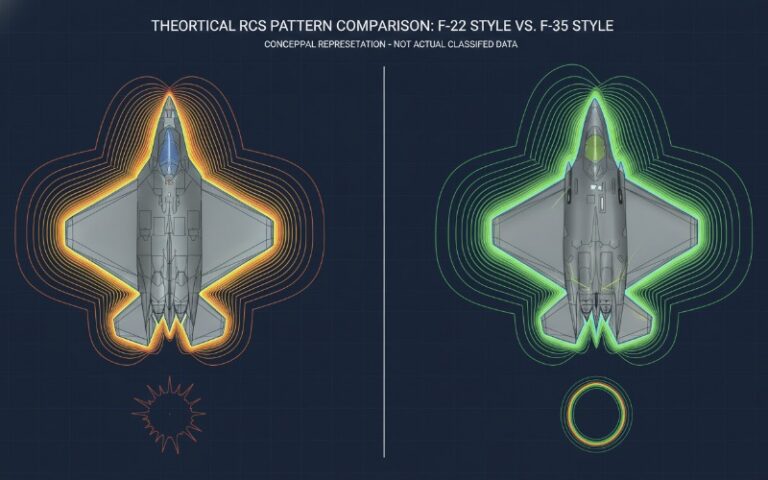
| Radar Cross Section (RCS) | $0.1 m^2$ to $1.0 m^2$ | $0.01 m^2$ to $0.05 m^2$ |
| Take-off/Landing | Runway, Catapult, or JATO | VTOL (Zero footprint) |
| Primary Payload | SAR, Heavy EO/IR, AGM Missiles | Lightweight EO/IR, Drop Munitions |
Fixed Wing Military Drones: Over-the-Horizon Superiority
A fixed-wing military drone serves as the backbone of strategic Intelligence, Surveillance, and Reconnaissance (ISR). These platforms operate at Medium Altitude Long Endurance (MALE) or High Altitude Long Endurance (HALE) ceilings, often exceeding 25,000 feet. This altitude provides a massive line-of-sight advantage for Ku-band and Ka-band telemetry relays.
Speed, Payload, and Loiter Time
In strike configurations, platforms like the China CAMD CH-series utilize internal combustion or turboprop engines. This allows them to carry heavy tandem-charge warheads and advanced Synthetic Aperture Radar (SAR) systems. The ability to loiter for 24 hours over a target area guarantees a high probability of kill ($P_k$) when executing close air support. Furthermore, fixed-wing drones can be integrated with long-endurance loitering munitions, acting as aerial motherships to deploy localized swarms over hostile territory.
Rotary Wing Military Drones: Tactical Asymmetric Agility
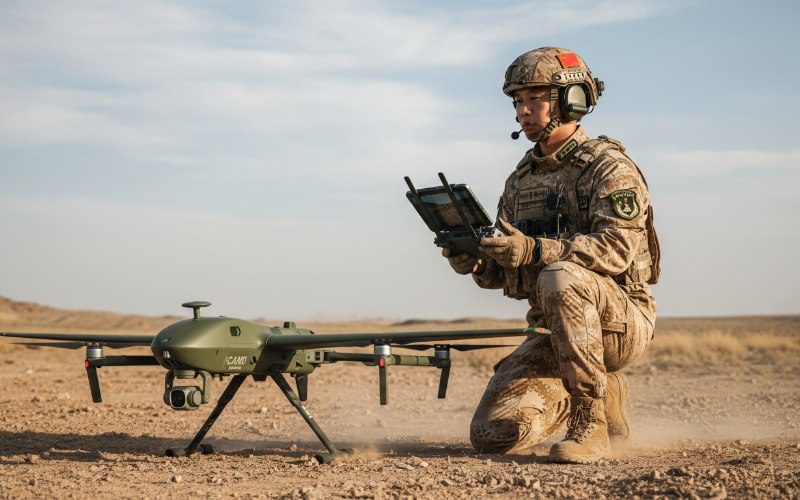
For platoon-level commanders, a rotary wing military drone is an indispensable organic asset. Unlike their fixed-wing counterparts, multi-rotor and single-rotor UAVs do not require infrastructure. They launch directly from constrained environments, such as dense urban canyons or heavily forested terrain.
VTOL, Hover Capability, and Urban Warfare
The defining feature of the rotary drone is precision hover. This capability allows operators to conduct persistent staring surveillance on a fixed geographic point. In urban warfare, rotary drones maneuver between structures, exploiting low-altitude radar detection gaps. They are highly effective for deploying anti-personnel HE-Frag drop munitions with pinpoint accuracy. Additionally, their lower kinetic energy ($E_k = \frac{1}{2}mv^2$) upon landing prevents damage to sensitive optical payloads during rapid recovery under fire. For more context on global deployment, review the latest NATO ISR standards.
Survivability in Electronic Warfare Environments
Modern battlefields are dominated by saturated electromagnetic environments. Counter-UAS (C-UAS) shields actively deploy GNSS spoofing, RF jamming, and Directed Energy Weapons (DEW). When deploying a rotary vs fixed wing military drone, survivability tactics differ immensely.
Fixed-wing assets evade tactical RF jammers by operating above the effective altitude of localized EW shields. They utilize highly directional dish antennas for SATCOM, which are inherently resistant to ground-based interference. Conversely, rotary drones operate in the ‘nap of the earth’ (NOE). They survive by utilizing terrain masking to break the line-of-sight with X-band and S-band acquisition radars. At China CAMD, we equip all tactical rotary platforms with anti-jamming datalinks featuring rapid frequency hopping spread spectrum (FHSS) and AES-256 encryption, ensuring command continuity even when GNSS signals are compromised.
China CAMD Tactical Integration
Integration dictates mission success. A fixed-wing military drone requires a dedicated ground control station (GCS), runway logistics, and a team of specialized technicians. This makes it a theater-level asset. However, a rotary drone is backpack-portable. A single infantryman can deploy the system, gather targeting telemetry, and execute an artillery call-for-fire within three minutes. Forward commanders must balance the long-endurance overwatch of a fixed-wing asset with the immediate, deployable agility of a rotary platform. Advanced forces frequently utilize both, networking the drones via secure tactical meshes akin to modern swarm integration architectures.
Conclusion & Tactical Action Plan
Choosing between a rotary vs fixed wing military drone is not about finding a universally superior platform; it is about selecting the right operational tool for a specific tactical problem. Fixed-wing systems provide undeniable strategic overmatch and kinetic strike capability, while rotary systems grant ground forces immediate situational awareness and localized lethality. Therefore, maintaining a hybridized fleet is the ultimate asymmetric advantage. I invite all field commanders and procurement officers to evaluate their current force posture against these technical metrics. Schedule my Equipment Consultation today to discuss how China CAMD can engineer a bespoke unmanned architecture for your specific operational requirements.