
In the evolving landscape of modern warfare, the persistency of Intelligence, Surveillance, and Reconnaissance (ISR) assets is paramount. Consequently, military drone flight endurance has become a critical metric for defense contractors and government procurement officers worldwide. Determining exactly how long military drones fly is not a matter of simple averages. Instead, it involves a complex calculation of aerodynamics, propulsion efficiency, and mission payload requirements. This comprehensive guide analyzes the technical factors influencing UAV longevity and explores high-endurance solutions available in the current market.
Defining Military Drone Flight Endurance
Flight endurance refers to the maximum time an unmanned aerial vehicle (UAV) can remain airborne without refueling or recharging. Unlike range, which measures distance, endurance measures time on station. For strategic planners, this metric dictates the continuity of data streams. A higher endurance rating reduces the frequency of launch and recovery cycles. Therefore, it minimizes the risk of accidents and lowers operational costs.
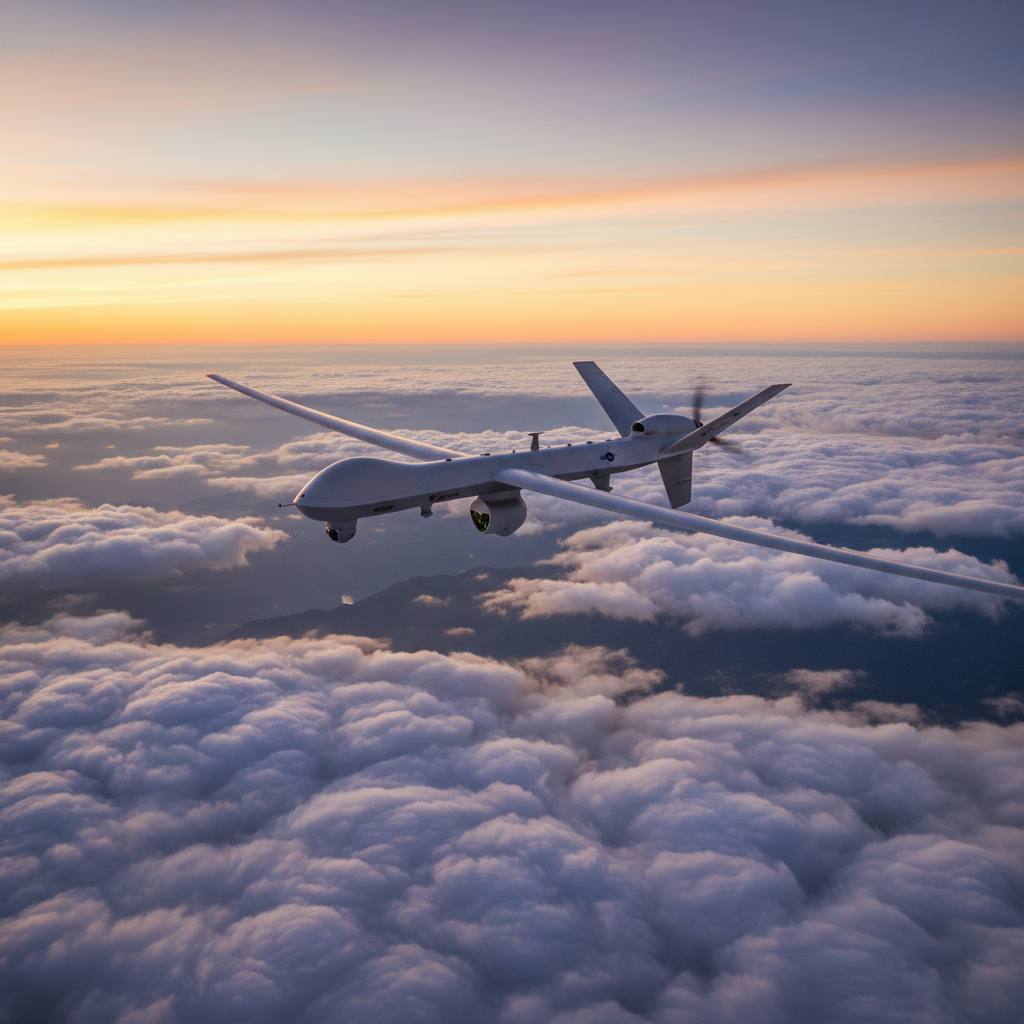
Modern Chinese military drones have made significant strides in this area. Through advanced composite materials and efficient propulsion, these platforms now rival Western counterparts. Procurement officers must understand the nuances between different UAV classes to make informed acquisition decisions. Moreover, understanding the trade-off between payload weight and flight time is essential for mission success.
UAV Classification by Endurance Capabilities
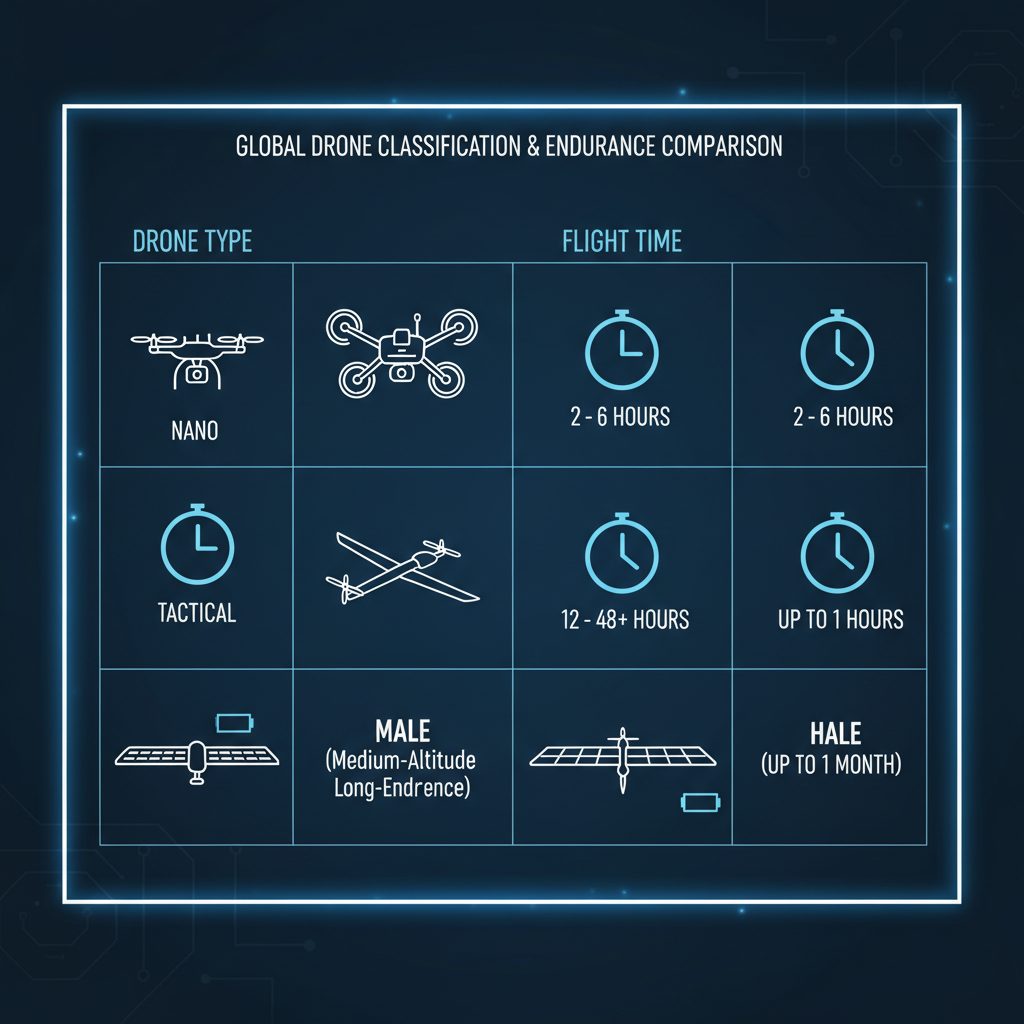
Military drones are generally categorized by their size, altitude, and endurance. Each tier serves a specific tactical or strategic purpose. Consequently, flight times vary drastically across these categories.
1. Micro and Mini UAVs (Tactical)
These small systems are typically used for “over-the-hill” reconnaissance by infantry squads. Because they rely on small electric batteries, their endurance is limited. Typically, they fly for 30 to 60 minutes. While short-lived, they offer rapid deployment capabilities. Furthermore, their low acoustic signature makes them difficult to detect during short missions.
2. Small Tactical UAS (STUAS)
Designed for brigade-level support, these drones often utilize catapult launches or VTOL (Vertical Take-Off and Landing) systems. Their flight time ranges from 2 to 10 hours. Many platforms in our military drone catalog fall into this versatile category. They often utilize hybrid propulsion or high-density lithium polymer batteries to extend loitering time.
3. Medium Altitude Long Endurance (MALE)
MALE drones are the workhorses of modern air forces. Platforms like the Wing Loong series exemplify this class. They operate at altitudes up to 30,000 feet. Crucially, their flight endurance spans 20 to 40 hours. This allows for persistent surveillance over vast border regions or maritime zones. In addition, they can carry weaponized payloads without sacrificing significant loiter time.
4. High Altitude Long Endurance (HALE)
HALE systems operate in the stratosphere. They are designed for strategic intelligence gathering. Their endurance is measured in days, not hours. Some advanced models can fly for 30+ hours, while solar-powered variants aim for weeks of continuous flight. However, these systems require substantial logistical footprints for operation.
Technical Factors Influencing Flight Time
Several technical variables dictate the maximum endurance of a military platform. Understanding these helps buyers evaluate specifications sheets accurately.
- Propulsion System: Internal combustion engines generally offer higher energy density than batteries. Heavy fuel engines (running on Jet-A1) provide consistency for MALE drones. Conversely, electric motors offer stealth but lower endurance.
- Aerodynamics: High aspect ratio wings (long and slender) reduce induced drag. This design maximizes lift and improves gliding efficiency. Consequently, most long-endurance drones resemble gliders.
- Payload Weight: There is a direct inverse relationship between payload and endurance. Adding heavy optical sensors or munitions reduces fuel capacity. Therefore, modularity is key.
- Environmental Conditions: High winds and extreme temperatures degrade performance. However, robust Chinese manufacturing standards ensure reliability in harsh climates.
Comparative Analysis: Propulsion vs. Endurance
The following table illustrates typical performance metrics based on propulsion technology. This data helps align procurement needs with technical realities.
| Propulsion Type | Typical Platform Class | Fuel/Energy Source | Estimated Flight Endurance |
|---|---|---|---|
| Electric (Li-Po) | Micro / Mini / VTOL | Lithium Polymer Battery | 30 min – 2 hours |
| Hydrogen Fuel Cell | Tactical / Light MALE | Compressed Hydrogen | 4 – 10 hours |
| Internal Combustion (ICE) | Tactical / MALE | Gasoline / Heavy Fuel | 10 – 24 hours |
| Turboprop / Turbofan | MALE / HALE | Jet-A1 Fuel | 20 – 40+ hours |
| Solar Electric | Stratospheric HALE | Solar Arrays + Battery | Days to Weeks |
The Role of Power Management Systems
Advanced Power Management Systems (PMS) are the unsung heroes of military drone flight endurance. A sophisticated PMS optimizes energy consumption in real-time. It balances the power draw between the avionics, datalinks, and propulsion motors. For example, during loitering phases, the system may throttle down the engine to conserve fuel.
Furthermore, rapid advancements in battery technology are changing the landscape. Solid-state batteries promise higher energy density with reduced fire risk. As a result, electric tactical drones are slowly closing the gap with their combustion-engine counterparts. For current sourcing requirements, hybrid systems often provide the best balance of stealth and longevity.

Chinese Manufacturing: A Leader in Endurance
China has established itself as a global leader in UAV production. The supply chain integration in China allows for rapid prototyping of aerodynamic designs. Additionally, access to high-grade lithium and advanced composites reduces manufacturing costs. Consequently, international buyers can acquire MALE-class performance at a fraction of the cost of Western competitors.
Many systems featured on our platform are rigorous counter-measure tested and export-compliant. Reliability is ensured through strict ISO quality control standards. Whether for border security or pipeline monitoring, these platforms deliver the persistence required for modern security challenges.
Operational Trade-offs: Mission Profile Planning
When selecting a drone, one must consider the mission profile. A drone capable of flying for 24 hours is unnecessary for a 30-minute target acquisition mission. Excessive capability often leads to excessive maintenance and logistical drag. Therefore, defining the concept of operations (CONOPS) is the first step in procurement.
For instance, long-endurance drones require larger ground control stations. They also demand more skilled pilots and maintenance crews. According to defense analysis sources like Janes, logistical support costs can exceed the initial platform cost over a 10-year lifecycle. Thus, balancing endurance with logistical feasibility is critical.
Future Trends in UAV Endurance
The future of military drone flight endurance lies in alternative energy. Hydrogen fuel cells are currently being tested for mid-sized tactical drones. These cells offer the clean energy of batteries but with the rapid refueling capabilities of gas. Moreover, solar-glider hybrids are pushing the boundaries of perpetual flight.
However, combustion engines remain the standard for heavy payloads. Until battery density improves significantly, heavy fuel engines will dominate the MALE and HALE sectors. Procurement officers should focus on modular platforms that can accept upgrades as technology matures.
Conclusion
To answer “how long do military drones fly,” one must look at the specific class and propulsion type. From 30-minute tactical sprints to 40-hour strategic loitering, the capabilities are vast. For B2B buyers, the key is matching endurance specifications to operational realities. High-quality Chinese manufacturing offers accessible, high-endurance solutions for global defense needs.
Are you looking to upgrade your fleet with long-endurance UAVs? Our team specializes in connecting international contractors with top-tier manufacturers. We ensure full compliance and technical superiority.