
The ubiquity of unmanned aerial systems (UAS) has fundamentally transformed modern warfare. Consequently, defense analysts, procurement officers, and military enthusiasts often ask a critical question: how many drones does the US military have? While exact figures fluctuate due to classified programs and rapid procurement cycles, recent reports indicate the United States operates over 11,000 active unmanned systems across all service branches. However, this number only tells part of the story. To truly understand the scope of American air superiority, one must analyze the diverse classifications, capabilities, and strategic deployments of these assets.
Understanding these figures is vital for global defense contractors and government entities aiming to benchmark their own capabilities. Furthermore, analyzing the composition of the US fleet offers valuable insights into the future of aerial combat and logistics. In this comprehensive guide, we will break down the inventory by group and branch, providing data-driven insights for industry professionals.

The Classification of US Military Drones
Before diving into raw numbers, it is essential to understand how the Department of Defense (DoD) categorizes these assets. The US military organizes its drone fleet into five distinct groups based on weight, operating altitude, and speed. Therefore, when asking how many drones does the US military have, the answer depends heavily on whether you include micro-drones or focus solely on large combat aircraft.
- Group 1: Small UAS (0–20 lbs). These are typically hand-launched and operate at low altitudes.
- Group 2: Medium-sized (21–55 lbs). These systems offer greater endurance and sensor capabilities.
- Group 3: Tactical UAS (55–1320 lbs). These require a distinct logistical footprint but offer significant range.
- Group 4: Larger airframes (Over 1320 lbs). These operate at medium to high altitudes.
- Group 5: Strategic assets (Over 1320 lbs). These fly at high altitudes and include platforms like the MQ-9 Reaper.
Consequently, the vast majority of the total count comes from Group 1 assets used for tactical reconnaissance. Conversely, Group 5 assets, while fewer in number, represent the bulk of the financial investment and strategic firepower.
Inventory Breakdown by Service Branch
The distribution of unmanned systems varies significantly across different branches of the armed forces. Each service requires specific capabilities tailored to their operational doctrine. For instance, the Army requires massive numbers of small surveillance drones, whereas the Air Force prioritizes long-range strike capabilities.
United States Army
The US Army possesses the largest number of drones, numerically speaking. This is primarily due to the widespread deployment of the RQ-11 Raven. The Raven is a hand-launched Group 1 UAV used at the squad level for over-the-hill reconnaissance. Estimates suggest the Army maintains an inventory of roughly 7,000 to 10,000 small UAS platforms alone. In addition, they operate the RQ-7 Shadow, a tactical Group 3 drone that supports brigade-level operations.
United States Air Force (USAF)
While the Army holds the volume, the Air Force holds the tonnage and firepower. The USAF fleet is dominated by Medium-Altitude Long-Endurance (MALE) and High-Altitude Long-Endurance (HALE) systems. Key platforms include the MQ-9 Reaper and the RQ-4 Global Hawk. Currently, the Air Force operates approximately 300 to 350 of these high-end strategic assets. Although this number seems low compared to the Army’s thousands, a single MQ-9 carries more firepower and advanced sensors than hundreds of smaller drones combined.

Strategic Shifts: The Rise of Replicator
Recent strategic initiatives are set to change the answer to “how many drones does the US military have” dramatically. Specifically, the DoD’s “Replicator” initiative aims to field thousands of autonomous systems within the next two years. The goal is to counter the mass-production capabilities of near-peer adversaries by leveraging low-cost, attritable platforms.
This shift highlights a crucial trend in global defense markets: the move toward cost-effective mass. For international buyers, this validates the strategy of procuring accessible, high-performance military drones that can be deployed in swarms. Rather than relying solely on expensive, legacy platforms, modern militaries are diversifying their fleets.
Data Analysis: Estimated Active Inventory
To provide a clearer picture, we have compiled an estimated breakdown of major systems based on open-source intelligence and defense budget reports. Note that these figures are approximate estimates as operational numbers change frequently.
| Platform Name | Classification | Primary Operator | Estimated Count |
|---|---|---|---|
| RQ-11 Raven | Group 1 | Army / Marines | 5,000+ |
| RQ-20 Puma | Group 1/2 | Army / Navy | 1,000+ |
| RQ-7 Shadow | Group 3 | Army | 400+ |
| MQ-1C Gray Eagle | Group 4 | Army | 200+ |
| MQ-9 Reaper | Group 5 | Air Force | 300+ |
| RQ-4 Global Hawk | Group 5 | Air Force | 30+ |
| MQ-4C Triton | Group 5 | Navy | 60+ |
Furthermore, there are classified programs such as the RQ-170 Sentinel and the forthcoming B-21 Raider accompaniments (Collaborative Combat Aircraft). These classified systems are not included in standard inventory counts but represent a significant portion of future combat power.
Global Implications for Defense Procurement
For international defense contractors and government procurement officers, the US inventory serves as a benchmark for fleet composition. However, replicating this exact mix is often financially unfeasible for many nations. Consequently, there is a surging demand for cost-effective alternatives that deliver similar tactical advantages.
For example, Chinese-manufactured military drones have gained traction globally because they offer competitive specifications at a fraction of the cost of NATO-standard equivalents. These platforms allow nations to rapidly scale their Group 3 and Group 4 capabilities without exhausting their defense budgets. If you are looking to expand your inventory with reliable, export-compliant systems, understanding these market dynamics is crucial.
Counter-Drone Considerations
As the number of drones increases globally, so does the need for effective countermeasures. The proliferation of Group 1 and Group 2 drones has led to a parallel rise in the market for electronic warfare and kinetic interception systems. Military planners must now balance their offensive procurement with robust defensive strategies.
Moreover, the sheer volume of US drones has forced adversaries to develop sophisticated jamming and spoofing technologies. In response, modern UAVs must now incorporate hardened data links and anti-jamming navigation modules. If you are interested in protecting your airspace, explore our solutions for anti-drone systems designed to neutralize hostile threats efficiently.

Future Trends in Unmanned Aviation
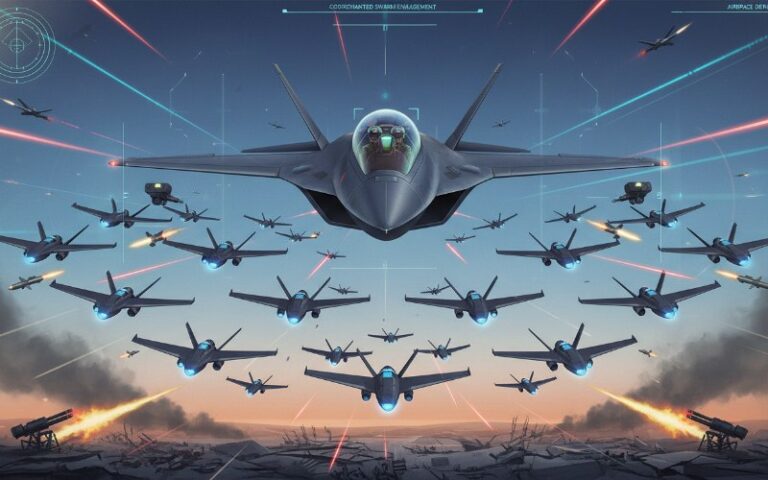
Looking ahead, the question “how many drones does the US military have” will become less relevant than “how autonomous are they?” The future lies in Artificial Intelligence (AI) and collaborative swarming. The US Air Force is actively pursuing the Collaborative Combat Aircraft (CCA) program, which envisions autonomous drones flying alongside manned fighters.
This evolution signifies a move from “remote control” to “mission command.” Operators will no longer fly a single aircraft; instead, they will manage a team of autonomous systems. For B2B importers and defense analysts, keeping abreast of these technological leaps is essential for maintaining a competitive edge in the market.
Additionally, logistics drones are poised for explosive growth. The ability to resupply frontline troops using heavy-lift autonomous copters reduces risk to human convoys. This sector represents a significant opportunity for procurement officers looking to modernize their logistics chains.
Conclusion
In summary, the US military operates a vast and diverse fleet of over 11,000 unmanned systems, ranging from pocket-sized reconnaissance tools to strategic bombers. This inventory reflects a doctrine that values situational awareness, precision strike, and pilot safety. However, the landscape is shifting rapidly toward swarms and autonomous wingmen.
For nations and contractors aiming to enhance their defense capabilities, analyzing the US model highlights the importance of a balanced fleet. Whether you need tactical surveillance or heavy-lift logistics, sourcing the right equipment is paramount. For detailed insights on global defense trends, reputable sources like U.S. Department of Defense provide continuous updates.
Are you ready to upgrade your tactical capabilities with high-performance, cost-effective military solutions? Our team specializes in sourcing advanced UAVs and armored systems for international clients.