
In the modern theater of war, the question — “how far can a military drone fly” — is not merely a matter of technical curiosity. Rather, it is a critical logistical parameter that defines mission success, border security, and strategic surveillance capabilities. For defense contractors and government procurement officers, understanding the variables that dictate Unmanned Aerial Vehicle (UAV) range is essential. This guide provides a deep dive into the operational reach of various military drone classes, emphasizing Chinese manufacturing capabilities available for export.
Defining Operational Range in Modern Warfare
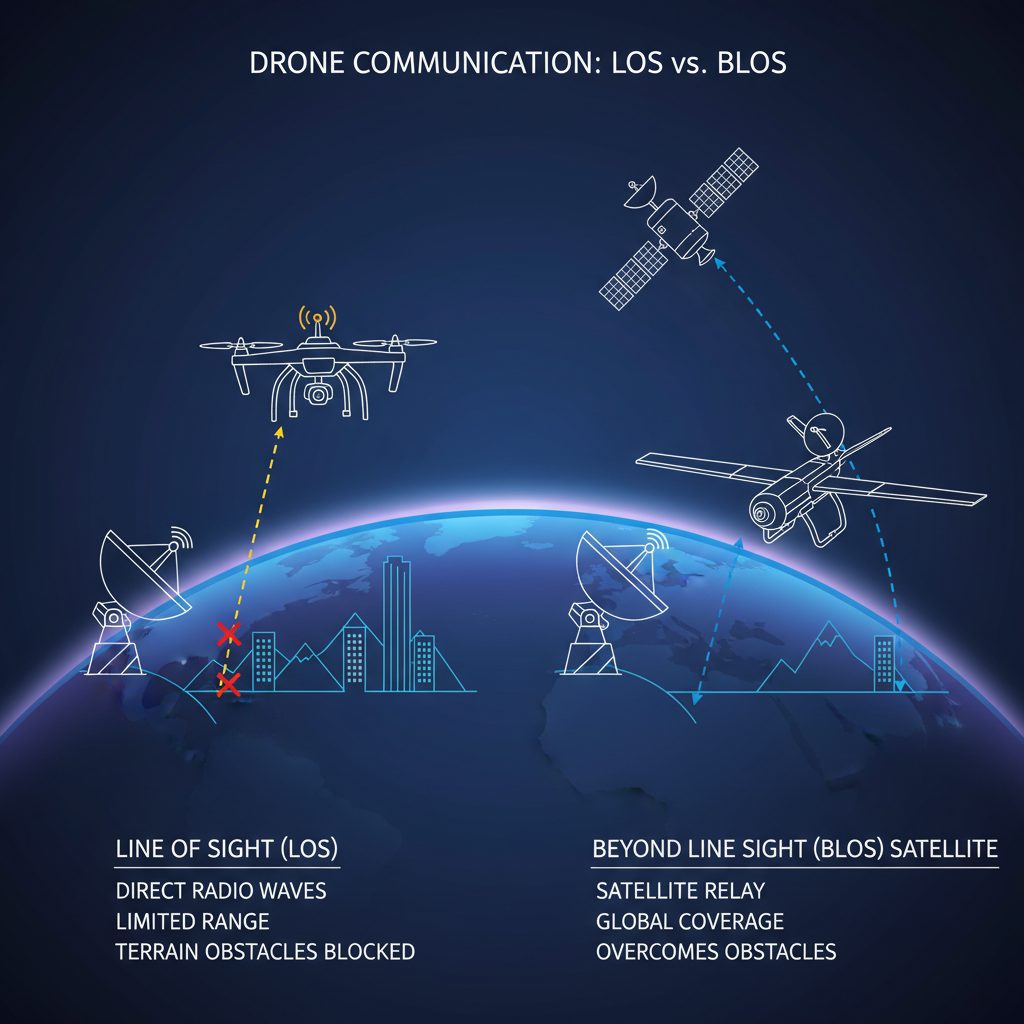
When analyzing UAV specifications, the flight range is rarely a single static figure. Instead, it is a complex calculation involving aerodynamics, payload weight, and communication technologies. Furthermore, range must be distinguished from endurance. Endurance refers to the time a drone can remain airborne, whereas range dictates the maximum distance it can travel from its launch point. Consequently, a drone with high endurance may have a limited operational radius if it relies on Line-of-Sight (LOS) communication.

Typically, military drones are categorized into distinct tiers based on their operational reach. These tiers allow commanders to select the appropriate asset for specific missions, ranging from “over-the-hill” reconnaissance to intercontinental surveillance. Therefore, selecting the right platform requires a clear understanding of these classifications.
Factors Influencing How Far a Military Drone Can Fly
Before examining specific distances, it is vital to understand the technological constraints that limit flight. Several core factors determine the maximum operational radius of any unmanned system.
1. Communication Systems: LOS vs. BLOS
The most significant limiter for tactical drones is the radio link. Standard radio frequencies operate on a Line-of-Sight (LOS) basis. Due to the curvature of the earth and terrain obstructions, LOS is typically limited to approximately 150 to 200 kilometers, even at high altitudes. However, advanced systems utilize Beyond Line-of-Sight (BLOS) technology. BLOS systems rely on satellite links (SATCOM) to control the aircraft globally. As a result, drones equipped with SATCOM are limited only by their fuel capacity, not by their distance from the Ground Control Station (GCS).
2. Propulsion and Fuel Type
Power sources dictate endurance. Electric propulsion, used primarily in smaller tactical units, offers silent operation but limited range, usually under 50 kilometers. Conversely, internal combustion engines and turboprop engines provide the energy density required for long-range missions. For example, heavy fuel engines allow larger UAVs to traverse thousands of kilometers without refueling. In addition, recent advancements in hydrogen fuel cells are bridging the gap between silent operation and extended range.
3. Payload and Aerodynamics
The physics of flight applies strictly to UAVs. A drone carrying heavy munitions or advanced surveillance payloads will burn fuel faster, reducing its overall range. Furthermore, the airframe design significantly impacts efficiency. Fixed-wing drones utilize lift generated by wings, allowing them to glide and fly efficiently over vast distances. In contrast, rotary-wing drones (multicopters) must expend constant energy to fight gravity, severely restricting their range to local tactical operations.
Detailed Breakdown: Flight Ranges by Drone Class
To accurately answer “how far can a military drone fly,” we must analyze specific categories defined by military standards. Below is a breakdown of the standard operational ranges for current generation technology.
Nano and Micro UAVs (Close Range)
These units are designed for squad-level deployment. They are portable, often hand-launched, and used for immediate situational awareness. Typically, their range is restricted by battery life and small radio transmitters.
- Maximum Range: 2 to 10 kilometers.
- Primary Use: Urban warfare, scouting around corners, and short-perimeter security.
Tactical UAVs (Short to Medium Range)
Tactical drones serve brigade or division-level commanders. These platforms are larger, often requiring catapult launchers or small runways. They usually employ powerful internal combustion engines or hybrid systems.
- Maximum Range: 150 to 300 kilometers.
- Primary Use: Target acquisition, artillery correction, and convoy protection.
MALE (Medium Altitude Long Endurance)
This category represents the backbone of modern strategic drone operations. MALE drones, such as the Chinese Wing Loong series (comparable to the US MQ-9 Reaper), are designed for persistent surveillance and strike capabilities. Because they utilize satellite data links, their range is extensive.
- Maximum Range: 3,000 to 5,000 kilometers (ferry range).
- Operational Radius: 1,000+ kilometers with loitering time.
- Primary Use: Counter-terrorism, border patrol, and precision airstrikes.
HALE (High Altitude Long Endurance)
The pinnacle of drone technology, HALE systems fly at altitudes above 60,000 feet, often higher than commercial air traffic. They function similarly to satellites but offer the flexibility of return and redeployment. Their jet or advanced turboprop engines allow for intercontinental travel.
- Maximum Range: 10,000 to 22,000 kilometers.
- Primary Use: Strategic intelligence gathering, signals intelligence (SIGINT), and oceanic surveillance.
Comparative Data: Operational Ranges by Class
To assist procurement officers in selecting the correct platform, the following table compares typical specifications for export-grade military drones.
| UAV Class | Propulsion Type | Max Range (km) | Endurance (Hours) | Communication |
|---|---|---|---|---|
| Nano / Micro | Electric Battery | < 10 km | 0.5 – 1 hr | LOS (UHF/VHF) |
| Small Tactical | Electric / Hybrid | 50 – 100 km | 2 – 10 hrs | LOS / Encrypted Radio |
| Medium Tactical | Internal Combustion | 150 – 300 km | 10 – 18 hrs | LOS / Relay |
| MALE | Turboprop | 3,000 – 5,000 km | 20 – 40 hrs | SATCOM (BLOS) |
| HALE | Jet / Turbofan | > 12,000 km | 30+ hrs | SATCOM (BLOS) |

The Strategic Advantage of Long-Range Chinese UAVs
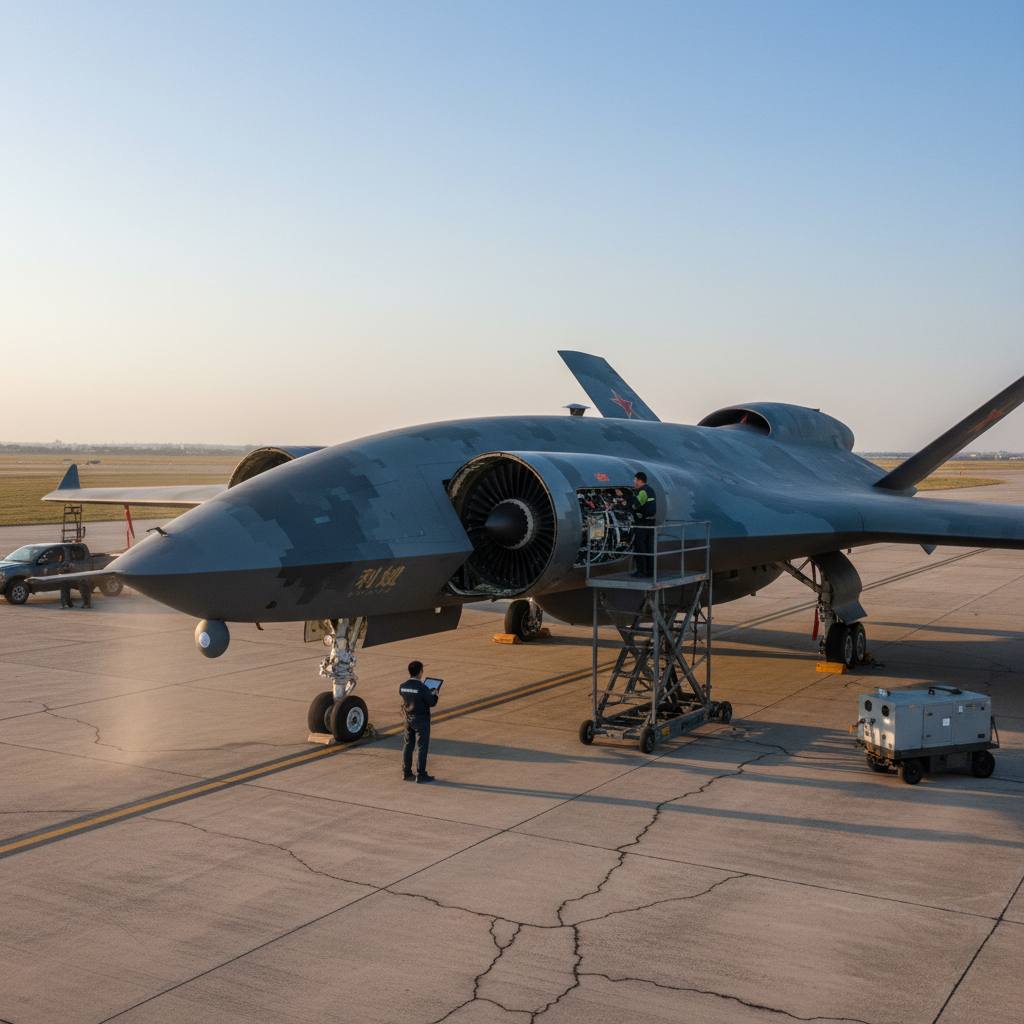
China has emerged as a global leader in the export of long-range military drones. Unlike many Western competitors that have strict export restrictions, Chinese manufacturers offer sophisticated MALE and HALE systems to a broader range of international clients. Platforms available through authorized channels often feature range capabilities that rival NATO standards at a fraction of the cost.
For instance, heavy-class tactical drones from China integrate advanced anti-jamming navigation systems. This ensures that even at the maximum operational limit, the drone maintains a stable connection in hostile electronic warfare environments. Furthermore, the modular design of these aircraft allows for the installation of auxiliary fuel tanks. Consequently, this customization extends mission time significantly, allowing for deep-penetration reconnaissance missions that were previously impossible for non-tier-one militaries.
Why Range Matters for Procurement
When evaluating “how far can a military drone fly,” buyers must consider the “Loiter-to-Range” ratio. A drone that can fly 1,000 kilometers is useless if it must return immediately upon reaching its target. Therefore, the ideal procurement choice balances transit speed with on-station endurance.
For border security applications, a fleet of medium-range UAVs is often superior to a single long-range asset. This ensures continuous coverage without gaps. However, for naval operations or deep-sea monitoring, HALE systems are indispensable due to the vast distances involved. For more insights on securing airspace against unauthorized long-range threats, consider exploring our anti-drone systems solutions.
Additionally, logistics play a role. Long-range drones require substantial ground infrastructure. This includes larger runways, hangars, and sophisticated data centers to process the intelligence streamed from thousands of kilometers away. Defense contractors must ensure their infrastructure matches the capabilities of the hardware they purchase.
Conclusion: Choosing the Right Range for Your Mission
In summary, the answer to “how far can a military drone fly” varies from a few kilometers for tactical quadcopters to over 20,000 kilometers for strategic HALE assets. The technology driving these ranges—specifically satellite communication and efficient propulsion—continues to advance rapidly. For international defense forces, sourcing reliable, long-range UAVs is a cornerstone of modern sovereignty.
For detailed specifications on specific long-range platforms available for export, or to discuss custom procurement needs, credible data is vital. We recommend consulting reputable industry reports, such as those from Janes Defense Intelligence, to verify capability claims.
Ready to enhance your aerial defense capabilities? Contact our team of experts today for a consultation on high-endurance Chinese military drones tailored to your operational requirements.