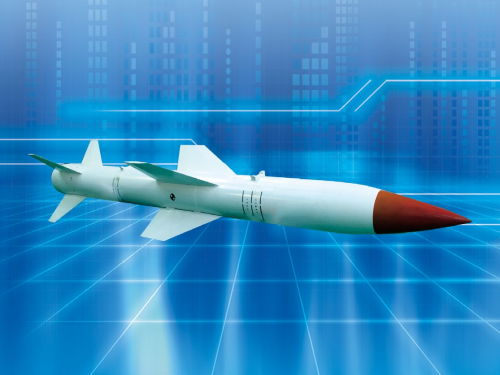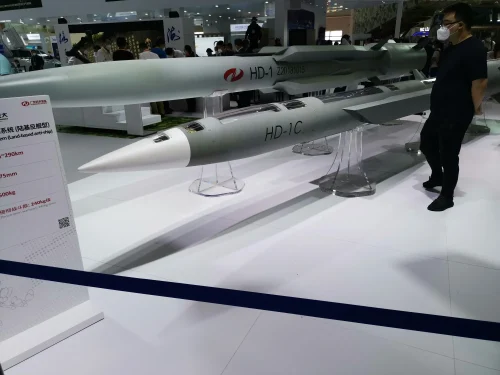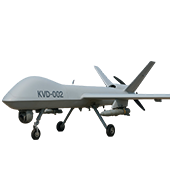

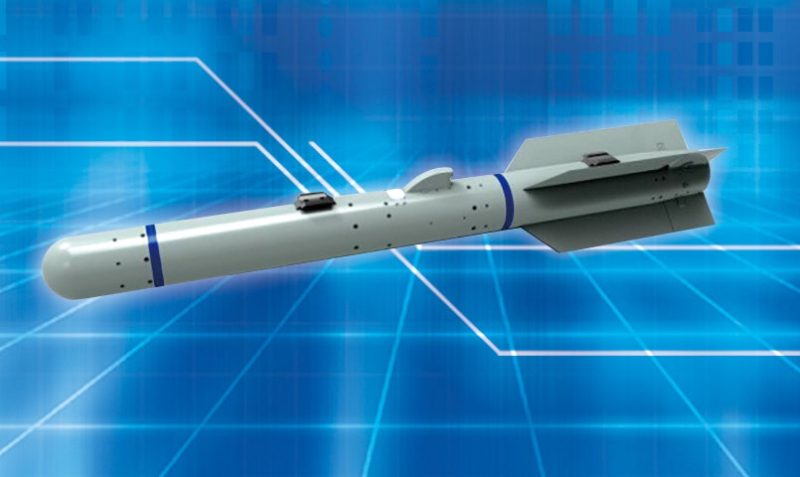
The FT-8 (Fei Teng , meaning “Soar” or “SkyRocket”) is part of a family of Chinese precision-guided munitions (PGMs). It is a GPS/INS-guided glide bomb kit that can be attached to a standard general-purpose bomb, converting it into a highly accurate, all-weather smart weapon.
Key Characteristics and Capabilities:
-
Guidance System: Its core guidance is GPS/INS (Global Positioning System/Inertial Navigation System).
-
This allows it to hit pre-programmed coordinates with a high degree of accuracy, regardless of weather conditions (day, night, rain, fog).
-
Some variants may also incorporate a laser seeker for terminal guidance, enabling it to engage moving targets or for even greater precision against specific points.
-
-
Warhead: The FT-8 is a guidance kit, not a complete bomb. It is designed to be attached to a 250 kg (550 lb) general-purpose bomb warhead (similar to the US Mk-82).
-
Range: As a glide bomb, it has fins that extend to provide lift. This allows it to glide a significant distance after being released. Its reported range is approximately 18-25 kilometers (11-15 miles). This range depends on the release altitude and speed of the aircraft.
-
Launch Platform: It can be integrated on a wide variety of Chinese fighter aircraft, including the Chengdu J-10, Shenyang J-11/J-16, and the Xian JH-7 fighter-bomber. Its purpose is to give these platforms a modern, precise bombing capability.
Comparison with Similar Weapons:
The FT-8 is China’s equivalent to early-generation Western precision-guided glide bombs. The most direct comparison is to the US JDAM (Joint Direct Attack Munition).
| Feature | Chinese FT-8 | US GBU-38 JDAM (500lb) | Chinese TL-2 Missile |
|---|---|---|---|
| Type | Guidance Kit (Glide Bomb) | Guidance Kit (Glide Bomb) | Air-to-Ground Missile |
| Guidance | GPS/INS | GPS/INS | GPS/INS + (Optional Laser) |
| Propulsion | None (Glides) | None (Glides) | Rocket Motor (Powered) |
| Range | Medium (~20 km) | Medium (~15 km) | Long (>50 km) |
| Cost | Relatively Low | Relatively Low | Higher |
-
vs. a JDAM: The FT-8 and a JDAM are very similar in concept, function, and cost. Both are inexpensive kits that convert unguided bombs into GPS-guided weapons. The performance and accuracy are comparable.
-
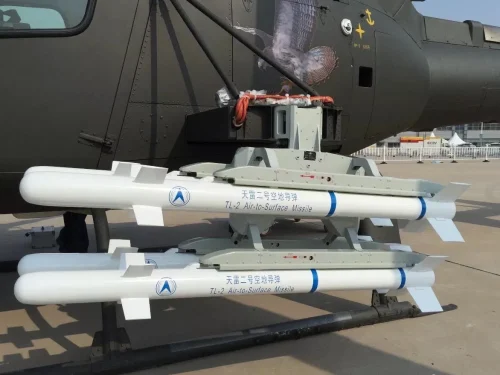
vs. the TL-2 Missile: This is a key difference. The FT-8 is unpowered; it simply glides. The TL-2 has a rocket motor, giving it much longer range and the ability to fly more complex trajectories. The TL-2 is also more expensive. The FT-8 is for cheaper, shorter-range strikes, while the TL-2 is for high-value, long-range, preemptive strikes.
Strategic Significance:
The FT-8 is significant because it:
-
Massively Upgrades Legacy Airpower: It allows a vast stockpile of old, unguided bombs to be used with modern precision, dramatically increasing the effectiveness of an air force without the cost of buying all-new missiles.
-
Is Cost-Effective: GPS/INS kits are relatively cheap to produce and allow for widespread deployment across a fleet. A single aircraft can carry multiple FT-8s to strike several targets in one pass.
-
Enables All-Weather Operations: Unlike laser-guided bombs (which require clear weather and a laser lock), the GPS/INS guidance means missions are not canceled due to poor visibility.
-
Reduces Risk: The glide capability allows the launching aircraft to release the weapon from outside the effective range of many short-range air defense systems, increasing pilot and aircraft survivability.
In summary, the FT-8 is a cost-effective GPS-guided glide bomb kit that forms the backbone of the PLAAF’s and PLANAF’s (Naval Air Force’s) general-purpose precision strike capability. It is the Chinese equivalent of the US JDAM and represents the standard “workhorse” smart bomb for modern Chinese tactical aircraft.