
Key Takeaways for Defense Procurement
- Generational Evolution: Modern procurement focuses on the transition from Gen 4.5 capabilities to Gen 5 stealth and sensor fusion, with Gen 6 systems currently in R&D.
- Role Consolidation: Economic constraints and technological advancements have shifted the market from specialized interceptors to versatile multirole platforms optimized for SWaP-C (Size, Weight, Power, and Cost).
- Avionics Dominance: Contemporary aerial warfare relies less on dogfighting kinematics and more on Active Electronically Scanned Array (AESA) radars and Low Probability of Intercept (LPI) data links.
- Strategic Fit: Selecting an airframe requires balancing immediate air superiority needs with long-term lifecycle costs and interoperability within coalition networks.
The classification of fighter aircraft is a rigorous discipline within defense acquisition, governed by mission profiles, technological epochs (generations), and aerodynamic capabilities. For defense contractors and government procurement officers, understanding these distinct categories is critical for assessing force structure requirements and interoperability standards. This technical analysis breaks down the primary types of fighter jets, evaluating them through the lens of operational doctrine and engineering standards.
Defining Fighter Aircraft Generations
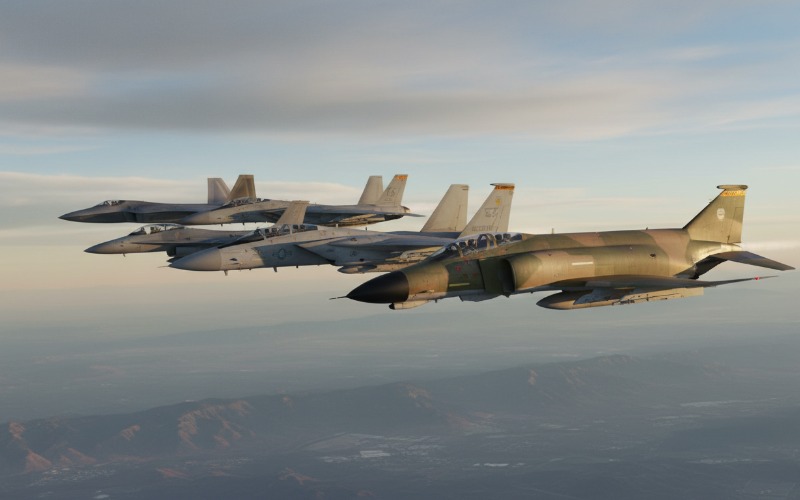
Military aviation categorizes fighter development into “generations.” Each generation represents a quantum leap in propulsion, avionics, and structural materials. While early generations (1st through 3rd) are largely retired from frontline service in major powers, they set the foundation for the current procurement landscape which is dominated by 4th, 4.5, and 5th generation assets.
Fourth Generation and Multirole Versatility
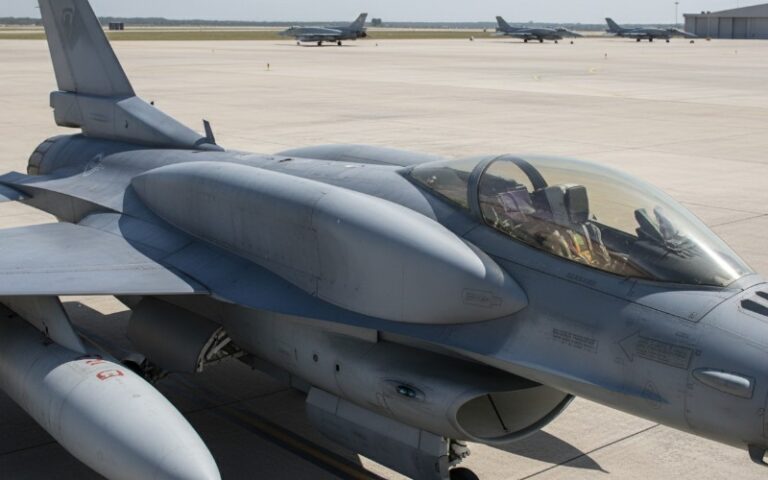
Emerging in the late 1970s and 1980s, the fourth generation marked the transition to fly-by-wire control systems and high maneuverability. These aircraft were designed to be unstable aerodynamically to allow for rapid direction changes, corrected constantly by flight computers. Key characteristics include pulse-doppler radars and the ability to engage in both air-to-air and air-to-ground combat.
Prominent Examples: F-15 Eagle, F-16 Fighting Falcon, Su-27 Flanker.
Generation 4.5 and Avionics Retrofitting
This category acts as a bridge, incorporating fifth-generation avionics into fourth-generation airframes. This approach offers a cost-effective solution for nations requiring advanced sensor capabilities without the high acquisition and maintenance costs of stealth coatings. These aircraft feature AESA radars, high-capacity data links, and reduced radar cross-sections (RCS) compared to their predecessors, though they are not truly “stealth.”
Prominent Examples: Dassault Rafale, Eurofighter Typhoon, F/A-18E/F Super Hornet.
Fifth Generation and Stealth Dominance
The fifth generation is defined primarily by Low Observable (LO) technology—stealth. These airframes are designed from the ground up to minimize RCS across multiple spectrums (radar and infrared). Beyond stealth, the critical differentiator is sensor fusion. The aircraft’s computer systems aggregate data from onboard sensors and offboard data links to present the pilot with a unified tactical picture, reducing cognitive workload.
Prominent Examples: Lockheed Martin F-35 Lightning II, F-22 Raptor, Chengdu J-20.
Sixth Generation and Future Systems
Currently in the research and development phase (e.g., NGAD in the US, FCAS in Europe), the sixth generation focuses on “systems of systems.” These platforms will likely feature optional manning (capable of flying autonomously), control over “loyal wingman” drones, directed energy weapons compatibility, and advanced variable-cycle engines for optimized thermal management.
Operational Role Categorizations
Beyond generational distinctions, fighter jets are classified by their primary mission profiles. While modern doctrine favors multirole platforms to streamline logistics, specialized roles still dictate airframe design and procurement specifications.
Air Superiority Fighters
The primary objective of an air superiority fighter is seizing and maintaining control of the airspace. These aircraft prioritize speed, altitude, climbing rate, and maneuverability. Their weapon systems are optimized for Beyond Visual Range (BVR) engagements and close-in dogfighting.
- Technical Focus: High thrust-to-weight ratio, long-range radar detection, and maximizing missile payload.
- Operational Context: Deployed first to clear enemy aircraft before bombers or strike aircraft enter the theater.
Interceptors
Historically significant, interceptors are specialized aircraft designed to scramble quickly and intercept incoming enemy bombers or reconnaissance aircraft. They prioritize straight-line speed and rate of climb over agility. While pure interceptors are becoming rare, the role remains relevant for border defense.
Multirole Combat Aircraft
The dominant type in modern inventories, multirole fighters can switch between air-to-air and air-to-ground missions, sometimes within the same sortie. This flexibility significantly reduces the logistical burden of maintaining different aircraft types.
- Technical Focus: Modular hardpoints capable of carrying ordnance ranging from air-to-air missiles (AAMs) to laser-guided bombs (LGBs) and anti-radiation missiles.
- Strategic Value: Provides commanders with flexible assets that can adapt to the shifting tactical requirements of a campaign.
Close Air Support and Strike Aircraft
Strike fighters and Close Air Support (CAS) platforms are designed to attack ground targets. CAS aircraft, specifically, are heavily armored to withstand small arms fire from the ground and loiter over the battlefield for extended periods to support infantry.
Key Feature: Titanium bathtubs for pilot protection, high payload capacity for munitions, and redundancy in flight control systems to survive battle damage.
Technical Performance Parameters
When evaluating types of fighter jets for integration or procurement, specific technical metrics are analyzed to determine suitability. These parameters define the “envelope” in which the aircraft operates.
Thrust-to-Weight Ratio
This ratio indicates an aircraft’s ability to accelerate and climb. A ratio greater than 1:1 implies the aircraft can accelerate vertically. This is a critical metric for air superiority fighters needing to impart high energy to launched missiles.
Radar Cross-Section Reduction
RCS is a measure of how detectable an object is by radar. Low Observable aircraft use faceted surfaces, internal weapons bays, and radar-absorbent materials (RAM) to reduce their signature. This capability is the defining divide between Gen 4.5 and Gen 5 aircraft.
Avionics and Sensor Suites
Modern lethality is defined by information. Active Electronically Scanned Array (AESA) radars allow for frequency hopping, making the radar beam difficult to detect or jam. Furthermore, Infrared Search and Track (IRST) systems allow fighters to detect stealth aircraft via heat signatures without emitting radar energy.
Comparative Analysis of Fighter Capabilities
| Feature | Gen 4.5 Multirole | Gen 5 Stealth Fighter | Specialized Interceptor |
|---|---|---|---|
| Primary Defensibility | Electronic Warfare (EW) Jamming | Low Observable (Stealth) Geometry | Speed and Altitude |
| Sensor Capability | AESA Radar (Retrofit) | Sensor Fusion (Native) | Long-Range Pulse Doppler |
| Weapons Carriage | External Pylons (High Drag) | Internal Bays (Low Drag/RCS) | External/Semi-recessed |
| Cruise Capability | Afterburner Dependent | Supercruise (Mach >1 w/o burner) | Afterburner Dependent |
| Networking | Link 16 | MADL (Multi-Function Advanced Data Link) | Ground Control Intercept |
| Maintenance Cost | Moderate | High (RAM maintenance) | High (Engine stress) |
Procurement and Lifecycle Cost Considerations
For defense integrators, the “sticker price” (Flyaway Unit Cost) is only a fraction of the total ownership cost. Different types of fighter jets impose varying logistical footprints.
Infrastructure Requirements: Fifth-generation aircraft often require climate-controlled hangars to protect sensitive radar-absorbent coatings. This necessitates significant military construction (MILCON) investment alongside the airframe purchase.
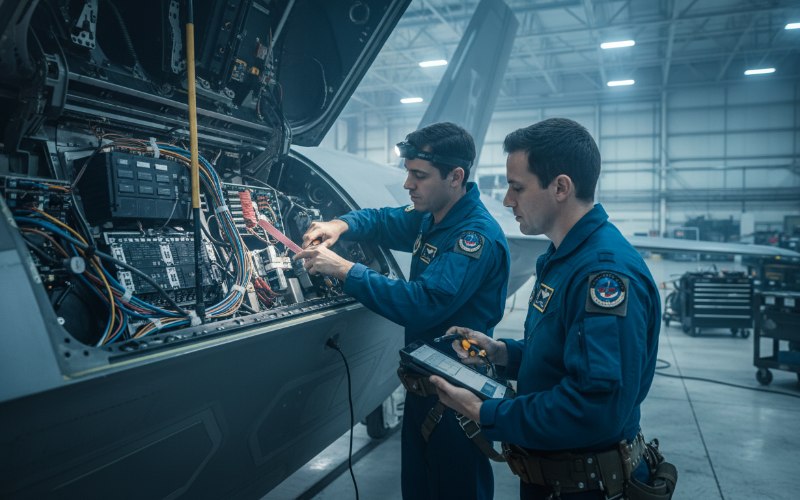
Training and Simulation: As cockpits transition from analog gauges to large-area displays and helmet-mounted cueing systems (HMCS), pilot training relies increasingly on high-fidelity simulators. Procurement contracts now routinely include comprehensive simulator packages as deliverable line items.
Future Trends in Aerial Combat Systems
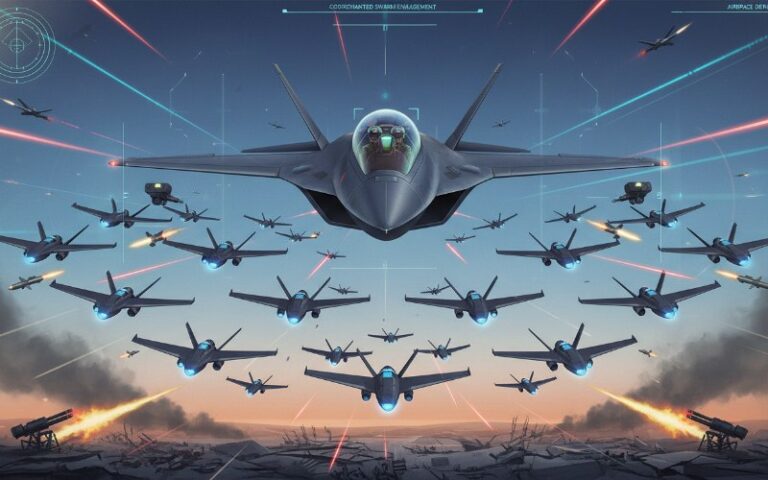
The categorization of fighter jets is evolving rapidly with the introduction of Unmanned Combat Aerial Vehicles (UCAVs). The “Loyal Wingman” concept involves a manned fifth or sixth-generation fighter controlling a team of semi-autonomous drones. These drones act as sensor nodes, weapons trucks, or decoys.
This shift suggests that future classifications may not be based solely on the airframe, but on the Combat Cloud capability—the ability of the jet to act as an edge server in a decentralized network of assets.
Frequently Asked Questions
Air superiority fighters are engineered specifically to destroy other aircraft, prioritizing speed, climb rate, and specialized air-to-air radar modes. Multirole fighters are designed to perform both air-to-air combat and ground attack missions, offering greater operational flexibility but often compromising slightly on pure kinematic performance compared to dedicated air superiority platforms.
Supercruise allows a fighter jet to sustain supersonic speeds without using afterburners. This reduces infrared heat signature (making it harder to track with heat-seeking missiles) and significantly extends the aircraft’s fuel range, allowing it to stay in the fight longer while maintaining high kinetic energy.
No aircraft is truly invisible. Stealth, or Low Observable technology, delays detection and tracking by reducing the range at which an enemy radar can lock onto the aircraft. It turns a “barn door” signature into a “marble” signature, allowing the stealth fighter to engage the enemy before the enemy is aware of its presence.
A 5th generation fighter is defined by the combination of all-aspect stealth (internal weapons bays, aligned edges), high-performance airframe features (often including supercruise), and advanced sensor fusion that networks data from multiple sources to provide the pilot with superior situational awareness.