
In the rapidly evolving landscape of modern warfare, the question “Can military drones be detected by radar?” yields a complex answer: Yes, but not by the radars of the past.
From the conflict in Nagorno-Karabakh to the skies over Ukraine, Unmanned Aerial Vehicles (UAVs) have fundamentally altered the battlefield. The challenge lies not in the existence of radar technology, but in the physics of LSS targets (Low, Slow, Small).
This analysis synthesizes data from industry leaders like Robin Radar, Spotter Global, and Airsight, augmented with specific insights into active defense systems like the Chinese Type 625E and US M-LIDS, to provide a comprehensive look at the reality of drone detection.
The Failure of Legacy Air Defense
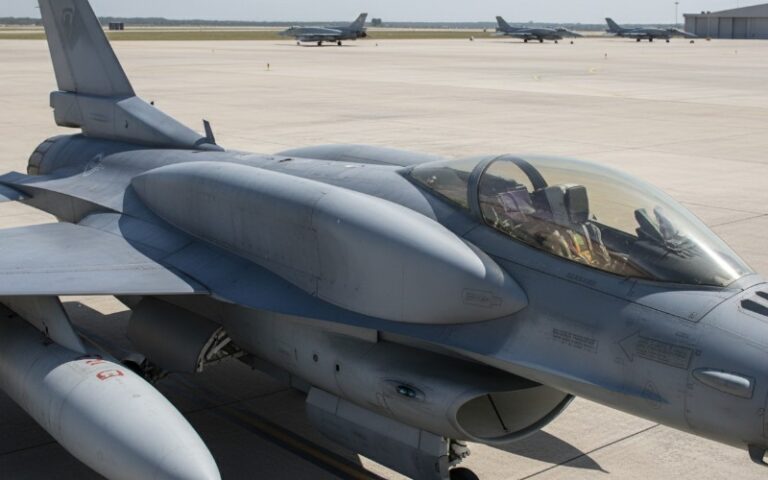
For decades, military air defense doctrines were designed to track fighter jets (like the F-16 or J-11) and ballistic missiles. These targets share common characteristics: they are large, fast, and metallic.
According to insights from Robin Radar and standard radar theory, legacy systems fail against modern drones for three critical reasons:
A. The RCS Paradox
A fighter jet has a significant Radar Cross Section (RCS). In contrast, small tactical drones (Class I UAVs) or loitering munitions often have an RCS smaller than $0.01 m^2$, similar to a bird.
- Technical Reality: Traditional surveillance radars operating in lower frequencies (like L-band or S-band) often lack the resolution to distinguish a plastic quadcopter from background noise.
B. The Velocity Gate & Doppler Filtering
To prevent screens from being cluttered by flying birds, swaying trees, or clouds, legacy radars use MTI (Moving Target Indication) filters. These filters ignore anything moving below a certain speed (e.g., 80 knots).
- The Gap: A rotary-wing drone hovering or moving at 30 km/h is effectively “filtered out” by the radar’s own logic, rendering it invisible to the operator until it is too late.
C. Ground Clutter
Drones often fly “Nap-of-the-Earth” (NOE), hugging the terrain. Traditional radars struggle to separate a low-flying drone from the radar returns of hills, buildings, and vegetation.
Analyst Note: This limitation is why we see the emergence of specialized Short-Range Air Defense (SHORAD) systems. For example, the PLA’s Type 625E AA Gun/Missile system integrates specialized radar specifically tuned to ignore ground clutter while picking up low-altitude threats.
The Solution: Next-Gen Radar Technologies
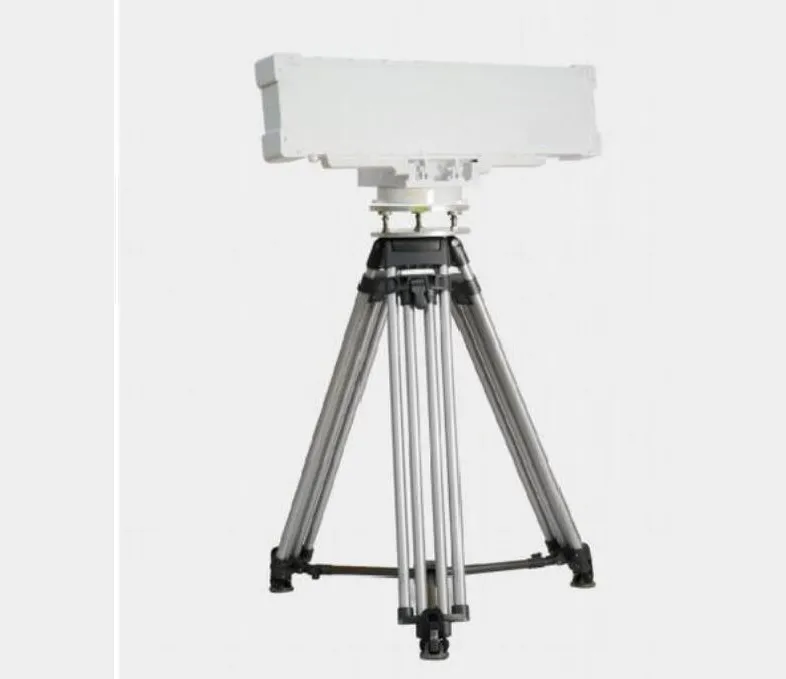
As highlighted by Spotter Global and Airsight, the industry has pivoted to dedicated C-UAS (Counter-Unmanned Aircraft Systems) radars. These systems employ specific technologies to overcome the LSS challenge.
Micro-Doppler Signatures
This is the game-changer. Even if a drone is hovering (zero body velocity), its propellers are spinning at high RPM.
- How it works: Modern C-UAS radars (often FMCW – Frequency Modulated Continuous Wave) can detect the specific frequency modulation caused by the spinning blades.
- Classification: This allows the system to distinguish between a biological target (a bird flapping wings) and a mechanical target (propeller rotation), significantly reducing false positives.
3D Tracking & Phased Arrays
Modern systems, such as AESA (Active Electronically Scanned Array) radars, offer 3D tracking.
- Capability: They provide range, azimuth, and elevation data simultaneously.
- Strategic Value: Knowing the exact altitude is crucial for deploying countermeasures, whether it be electronic jamming or kinetic interception (e.g., programmable air-burst ammunition).
Frequency Selection: X-Band vs. Ku/K-Band
- X-Band (8-12 GHz): Good for medium range, balances rain attenuation with resolution. often used in systems like the Chinese HQ-17AE.
- Ku/K-Band (12-18+ GHz): As noted by Airsight, higher frequencies offer shorter wavelengths, providing much higher resolution for detecting small phantom drones, though they suffer more range degradation in heavy rain.
Strategic Integration: The “Sensor Fusion” Doctrine
Standalone radar is rarely enough. Spotter Global emphasizes that radar is now the “tip of the spear” in a multi-sensor ecosystem.
In a modern defensive perimeter (e.g., a Forward Operating Base or a naval vessel like the Type 052D Destroyer), the workflow operates as follows:
- Detection (Radar): A 360-degree AESA radar detects an anomaly at 3km.
- Verification (EO/IR): The radar cues an Electro-Optical/Infrared camera to slew to the target coordinates. The operator visually confirms it is a hostile drone, not a seagull.
- Identification (RF): RF sensors analyze the communication link frequency (e.g., 2.4GHz/5.8GHz) to pinpoint the drone model and pilot location.
- Neutralization: Activation of soft-kill (Electronic Jamming/Spoofing) or hard-kill (High Energy Lasers or guns).
Comparative Analysis: Global Hardware
It is valuable to look at how these principles are applied in fielded hardware:
| System | Origin | Radar Type | Detection Logic | Key Feature |
| ELM-2026B | Israel (ELTA) | X-Band Pulse Doppler | VSHORAD detection | Optimized for detecting hovering copters in high clutter. |
| Type 625E | China (CSGC) | Combined Radar/EO | Sensor Fusion | Integrates radar with Gatling guns and missiles for immediate kinetic response. |
| Gamekeeper | UK (Aveillant) | Holographic Radar | Continuous Stare | Unlike scanning radars, it looks everywhere simultaneously to prevent target loss. |
Conclusion: The Cat-and-Mouse Game
To answer the core question: Yes, radar can detect military drones, but only if it is the right kind of radar.
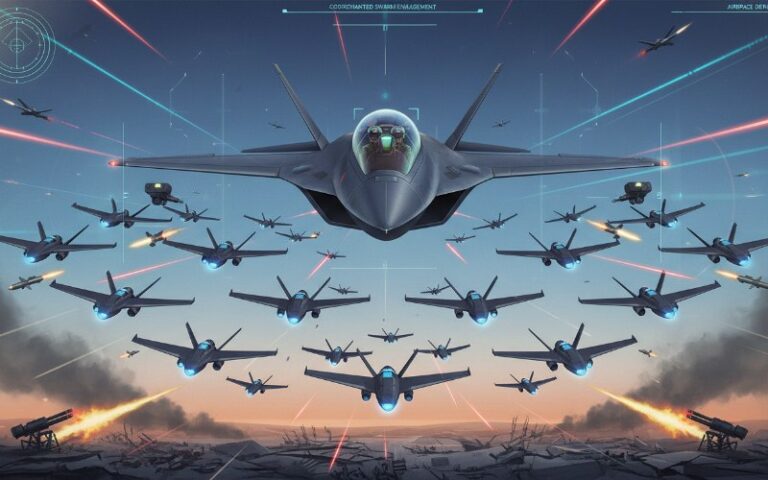
The integration of Micro-Doppler processing and AESA technology has closed the gap that existed just a decade ago. However, as radar improves, drone technology evolves—moving towards stealth coatings, autonomous (silent) flight, and swarm tactics.
For defense procurement officers and military strategists, the lesson is clear: Relying on legacy Early Warning radars for drone defense is a fatal error. The future belongs to integrated, multi-layered C-UAS architectures.