
Key Takeaways for Defense Procurement
- Strategic Distinction: Air Superiority fighters prioritize air-to-air dominance, speed, and altitude, while Multirole fighters balance air-to-ground and air-to-air capabilities for operational flexibility.
- Cost Implications: Multirole platforms generally offer lower lifecycle costs (LCC) and streamlined logistics chains compared to specialized air superiority airframes.
- Future-Proofing: Fifth and sixth-generation development (NGAD) is blurring lines, but the core distinction remains critical for fleet mix strategy.
- Procurement Volume: Defense forces typically adopt a “High-Low” mix, utilizing high-volume multirole fleets supported by elite air superiority squadrons.
In the landscape of modern aerial warfare, the distinction between air superiority fighters and multirole combat aircraft remains a fundamental consideration for defense procurement agencies and military strategists. While the convergence of avionics and stealth technology in fifth-generation platforms has narrowed the gap, the operational doctrine and engineering priorities of these two categories differ significantly. For defense contractors and system integrators, understanding these nuances is critical for aligning subsystem development, maintenance, repair, and overhaul (MRO) strategies, and bid proposals with government requirements.
Defining the Operational Scope
To evaluate Air Superiority vs Multirole Fighter procurement strategies, one must first define the rigid engineering constraints and mission profiles that dictate their design. The choice between these platforms is rarely binary; rather, it is a strategic calculation of budget, threat environment, and force projection requirements.
The Air Superiority Fighter: Doctrine of Dominance
An air superiority fighter is designed with a singular objective: to seize and maintain control of the airspace, denying the enemy the ability to fly or conduct operations. These aircraft are engineered for kinematic performance, usually prioritizing thrust-to-weight ratios greater than 1:1, high-altitude ceilings, and extreme maneuverability.
From a procurement standpoint, these assets are often termed “silver bullets”—high-cost, low-density assets. Key engineering traits include:
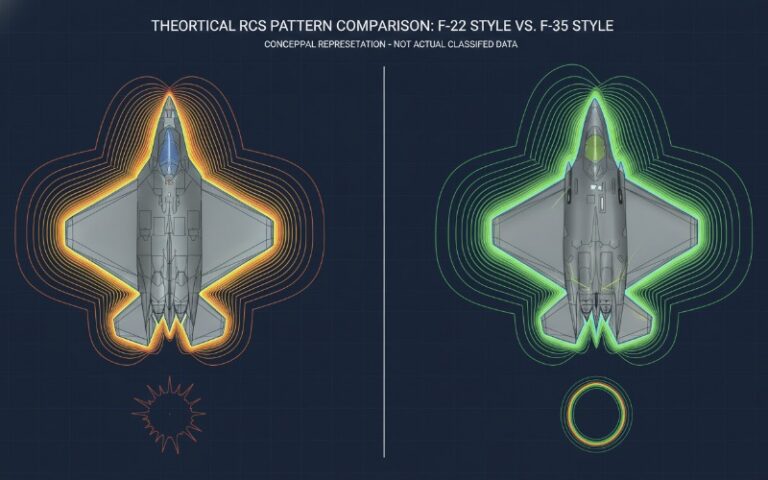
- Advanced Sensors: Priority on long-range Active Electronically Scanned Array (AESA) radars optimized for air-to-air tracking of low-RCS (Radar Cross Section) targets.
- Kinematics: Supercruise capabilities (supersonic flight without afterburner) to close distances rapidly.
- Payload: Internal weapons bays configured primarily for BVRAAM (Beyond Visual Range Air-to-Air Missiles) like the AIM-120 AMRAAM or Meteor.
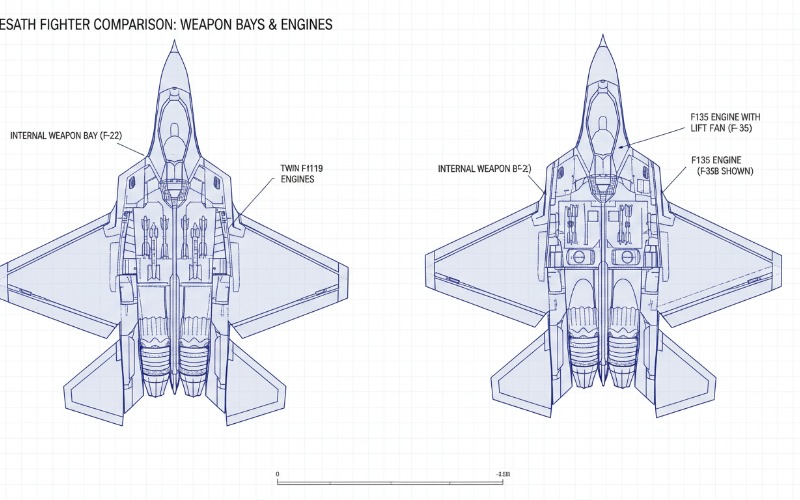
The Multirole Fighter: Operational Versatility
The multirole fighter (often referred to as a “swing-role” aircraft) is the backbone of most modern air forces. It is designed to switch mission parameters mid-flight, transitioning from air interdiction to Close Air Support (CAS) or Suppression of Enemy Air Defenses (SEAD). While they may lack the extreme kinematic edge of a dedicated air superiority platform, they compensate with versatility and cost-efficiency.
For B2B integrators, the multirole segment represents the largest market share for subsystems such as targeting pods, external hardpoint adaptors, and diverse munition guidance kits. Key traits include:
- Ordnance Flexibility: High capacity for air-to-ground munitions (JDAMs, Paveway) alongside defensive air-to-air missiles.
- Avionics Suites: Integrated ground-mapping radar modes (SAR/GMTI) and electro-optical targeting systems.
- Logistics: Designed for higher sortie generation rates and easier field maintenance.
Technical Comparison: Performance Metrics
When analyzing Air Superiority vs Multirole Fighter performance, technical specifications reveal the trade-offs inherent in each design philosophy. Defense contracts often hinge on these specific performance metrics.
Thrust-to-Weight and Maneuverability
Air superiority fighters like the F-22 Raptor or Su-35 Flanker-E emphasize energy maneuverability logic. They are designed to sustain high G-forces while retaining energy, allowing them to out-turn opponents in Within Visual Range (WVR) engagements. This requires larger engines and airframes, increasing the overall footprint and fuel consumption.
Conversely, multirole fighters like the F-35 Lightning II or F-16 Fighting Falcon accept kinematic compromises. While capable of dogfighting, their primary defense is situational awareness and BVR engagement. The airframe is often optimized for payload capacity and fuel efficiency at subsonic cruise speeds, essential for loitering during ground support missions.
Avionics and Sensor Fusion
The battle for contracts is increasingly fought in the software domain.
- Air Superiority Sensor Suites: Focus on wide-volume search, Infrared Search and Track (IRST) for stealth detection, and strictly passive sensing to avoid electronic detection. The data link architecture prioritizes rapid target sharing between wingmen.
- Multirole Sensor Suites: Require complex sensor fusion capable of overlaying ground threats (SAM sites, armor) with aerial threats. Integrators must account for the processing power required to run synthetic aperture radar maps simultaneously with electronic warfare jamming suites.
Procurement and Lifecycle Cost Analysis
For government procurement officers, the decision often comes down to the “High-Low” mix strategy. This doctrine advocates for a small number of expensive, high-performance aircraft (Air Superiority) complemented by a larger fleet of lower-cost, versatile aircraft (Multirole).
| Metric | Air Superiority Fighter (e.g., F-22, F-15EX) | Multirole Fighter (e.g., F-35, Rafale) |
|---|---|---|
| Primary Mission | Air Dominance, CAP (Combat Air Patrol) | Interdiction, CAS, SEAD, Strike |
| Unit Cost (Approx.) | $100M – $300M+ | $70M – $110M |
| Cost Per Flight Hour (CPFH) | High ($40,000 – $80,000) | Moderate ($25,000 – $35,000) |
| Payload Configuration | Internal (Stealth) or Heavy Air-to-Air | Mixed Internal/External, Heavy Air-to-Ground |
| Sortie Generation Rate | Lower (Complex Maintenance) | Higher (Designed for Tempo) |
| Market Availability | Restricted (Export Controls) | Widely Exported |
Maintenance and Sustainment
Multirole fighters are generally designed with modularity in mind, facilitating easier upgrades and component swaps. This is a critical selling point for nations with smaller defense budgets or limited domestic MRO capabilities. Air superiority fighters, particularly stealth variants, require climate-controlled hangars to maintain Low Observable (LO) coatings, significantly driving up infrastructure costs.
Strategic Fleet Composition: The Integration Challenge
Modern defense strategy rarely relies on a single platform. The trend is toward interoperability. System integrators must focus on Link 16 and MADL (Multifunction Advanced Data Link) connectivity. The current doctrine involves the Air Superiority fighter acting as the “quarterback,” penetrating denied airspace to clear threats, while Multirole fighters follow as “bomb trucks” to neutralize ground assets.
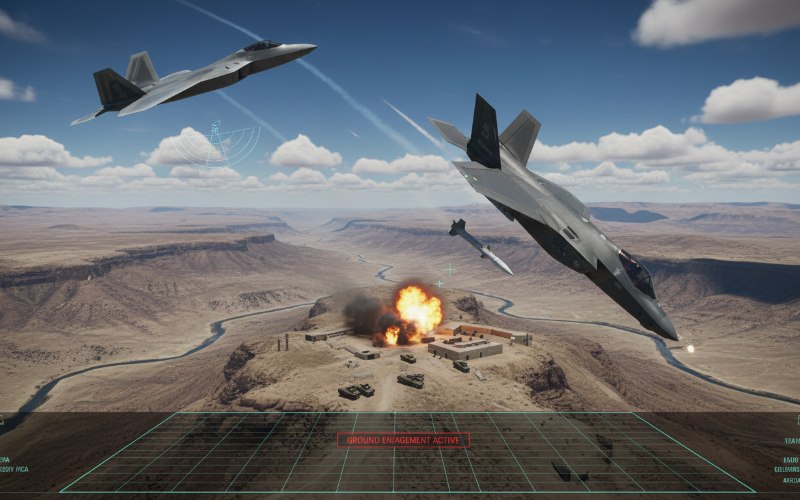
This connectivity requirement creates opportunities for third-party contractors to provide secure, high-bandwidth communication nodes and cryptographic hardware that allows legacy 4th-generation multirole fighters to communicate with 5th-generation air superiority assets.
Future Trends: The Erosion of Categories
As we look toward 6th-generation initiatives like the NGAD (Next Generation Air Dominance) and FCAS (Future Combat Air System), the line between Air Superiority vs Multirole Fighter is blurring further. The future lies in:
- Loyal Wingmen: Unmanned Combat Aerial Vehicles (UCAVs) that fly alongside manned fighters. A manned fighter might focus on air superiority command, while deploying multirole drones for ground attacks.
- Software-Defined Roles: Platforms where the mission role is determined purely by the software load and pod configuration rather than the airframe’s physical limitations.
- Directed Energy Weapons: The power requirements for future lasers may necessitate larger airframes typical of air superiority fighters, even if used for multirole defense.
Frequently Asked Questions
The F-35 Lightning II is a quintessential multirole fighter. While it possesses advanced stealth and sensor capabilities that allow it to engage in air-to-air combat effectively, its design prioritizes ground attack, sensor fusion, and networking over the raw kinematic performance (speed and maneuverability) found in dedicated air superiority fighters like the F-22.
Nations procure air superiority fighters to ensure access to contested airspace. In a peer-conflict scenario against an adversary with advanced air defenses, specialized fighters are required to neutralize enemy aircraft before multirole aircraft can safely operate. They provide the “umbrella” of protection required for all other operations.
Generally, multirole fighters have lower lifecycle costs. By consolidating multiple missions (reconnaissance, strike, interception) into a single airframe, air forces reduce the logistical burden of maintaining separate supply chains, training pipelines, and support equipment.
For detailed consultation on military aviation procurement and subsystem integration, contact our defense advisory team.