
Key Features and Capabilities
-
Primary Mission: Anti-Ship Warfare (AShW):
-
This is the system’s standout feature. The WS-64 is one of the world’s first MLRS specifically designed to target ships at sea.
-
Its rockets are equipped with terminal seekers, likely an active radar homing seeker, allowing them to locate, track, and hit moving maritime targets.
-
-
Precision Land Attack:
-
While optimized for anti-ship roles, it retains a highly accurate land-attack capability.
-
It uses a combination of Inertial Navigation System (INS), Global Positioning System (GPS), and China’s BeiDou Navigation Satellite System (BDS) for mid-course guidance, ensuring precision strikes against fixed land targets.
-
-
Exceptional Range:
-
The WS-64 has a significantly longer range than earlier WS systems. Public reports and estimates suggest a maximum range of 120 to 180 kilometers for its standard rounds. Some sources indicate potential for even longer ranges with specific rocket types.
-
-
Large Caliber and Warhead:
-
It uses a 400 mm caliber rocket, similar to the WS-3A, which allows it to carry a large and powerful warhead sufficient to inflict significant damage on ships or hardened land targets.
-
-
Launch Platform:
-
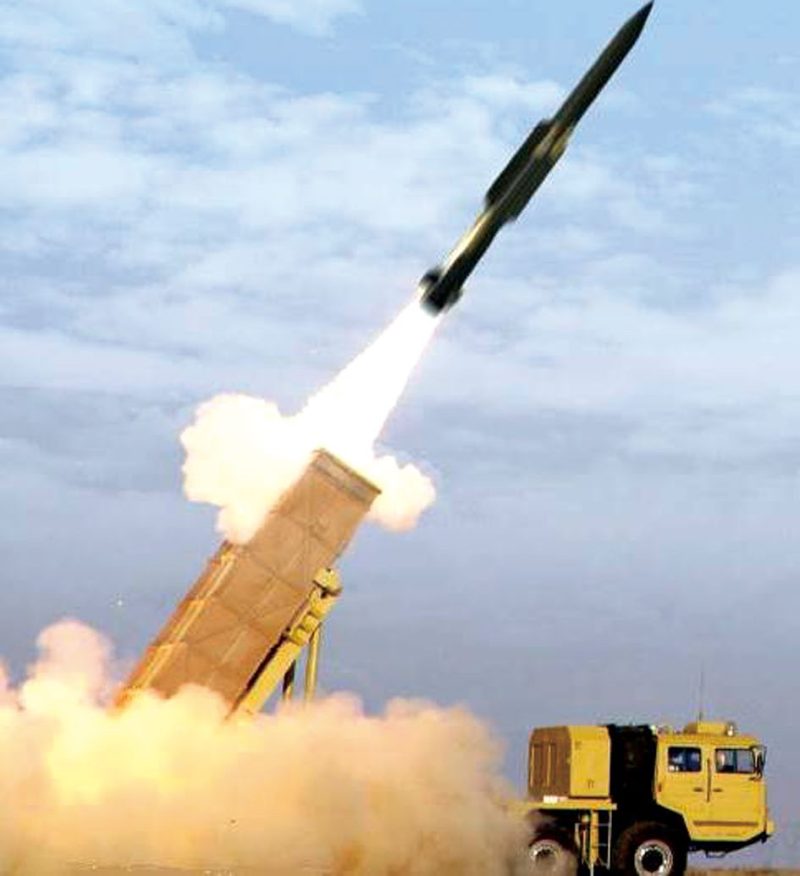
The system is integrated onto a high-mobility 8×8 truck (similar to the WS-3A), providing excellent strategic and tactical mobility.
-
The launcher carries 8 rockets in two pods of 4.
-
Technical Specifications (Estimated)
| Feature | Specification |
|---|---|
| System Name | WS-64 |
| Developer | China Aerospace Science and Industry Corporation (CASIC) |
| Caliber | 400 mm |
| Rockets per Launcher | 8 (2 x 4 pods) |
| Range | 120 – 180 km (estimated) |
| Guidance | Mid-course: INS + GPS/BeiDou (BDS) Terminal: Active Radar Seeker (for anti-ship role) |
| Primary Role | Anti-Ship and Land Attack |
| Warhead Types | Unified Blast-Fragmentation or Armor-Piercing (likely optimized for maritime targets) |
| Launch Vehicle | 8×8 Tactical Truck |
Strategic Role and Purpose
The WS-64 is designed for a very specific and strategic role:
-
Maritime Denial and Coastal Defense: Its primary purpose is to threaten enemy naval forces operating near China’s coast. By launching salvos of precision-guided rockets, it can saturate a fleet’s defenses and pose a serious threat to destroyers, frigates, and even aircraft carriers within its range.
-
A2/AD Enabler: It is a classic “ship-killer” system that contributes to denying an adversary freedom of navigation in contested waters, a cornerstone of China’s A2/AD doctrine.
-
Strategic Land Strike: It can be used to precisely attack high-value, fixed land targets like airfields, command centers, and logistics hubs from a great distance.
Comparison to Other Systems
-
vs. WS-3A: The WS-3A is a pure long-range land-attack system, often with a longer range (200-300km) but lacking a terminal seeker for moving targets. The WS-64 trades some maximum range for its critical anti-ship capability.
-
vs. U.S. Systems (HIMARS/GMLRS): The standard GMLRS rocket (M30/M31) is land-attack only with a shorter range (~70km). The U.S. does not currently field a ground-launched anti-ship rocket. The WS-64 occupies a unique niche.
-
vs. Ballistic Anti-Ship Missiles (e.g., DF-21D): The DF-21D is a much larger, faster, and longer-range ballistic missile. The WS-64 provides a more flexible, salvo-fired, and potentially more numerous complementary layer of naval defense.
Conclusion
The WS-64 is not just another artillery rocket system; it is a strategic multi-role weapon that blurs the lines between rocket artillery, cruise missiles, and anti-ship missiles. Its development highlights a trend in modern warfare where traditionally imprecise systems are being transformed into networked, precision-guided tools capable of engaging the most challenging targets, including moving ships at sea. It is a potent symbol of China’s focus on asymmetric capabilities to control its near seas.