
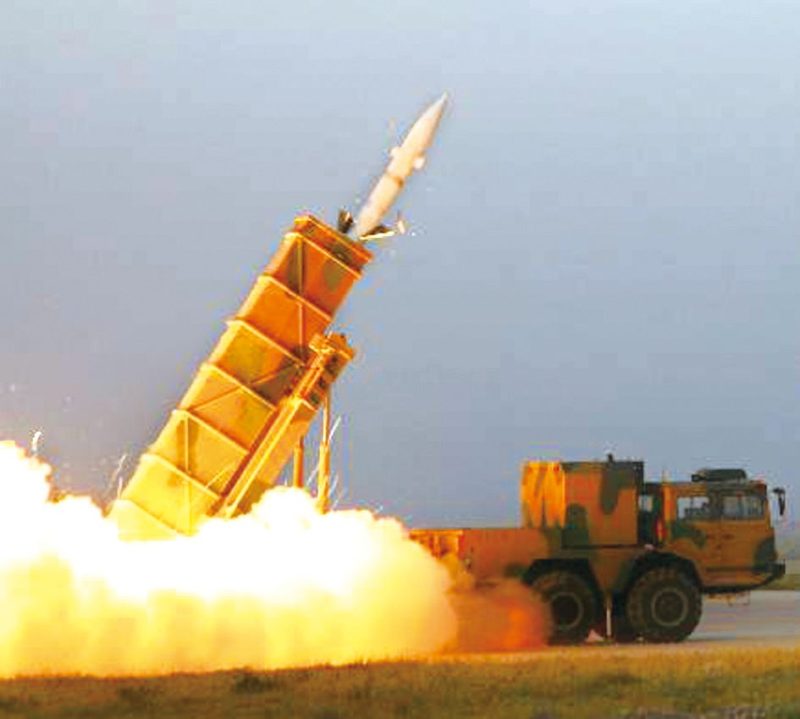
Key Features and Capabilities
-
Precision Guidance: This is the defining feature of the WS-3A. Unlike its unguided predecessors, it uses a combination of guidance systems, typically:
-
Inertial Navigation System (INS): For mid-course guidance.
-
Global Positioning System (GPS) / BeiDou (BDS): For highly accurate terminal guidance, giving it a Circular Error Probable (CEP) of reportedly less than 30 meters. Some sources suggest it may also have a terminal seeker for even greater accuracy against moving targets.
-
-
Exceptional Range: The WS-3A is renowned for its extreme engagement range.
-
Standard Rockets: Approximately 200 kilometers.
-
Extended-Range Rockets: With a reduced warhead, its range can be extended to an estimated 280-300 kilometers or even more. This places it in the category of a short-range ballistic missile (SRBM), blurring the line between traditional artillery and missile systems.
-
-
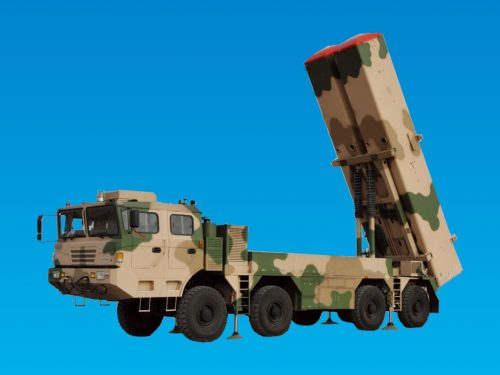
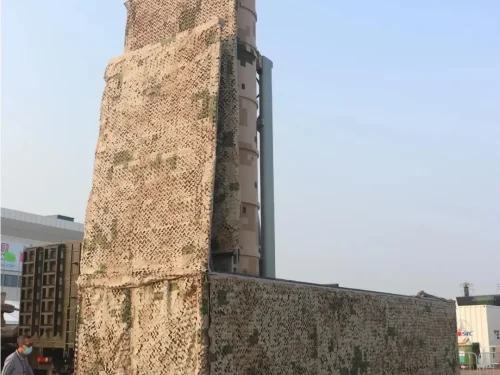
Modular Launch System: The system is typically mounted on an 8×8 high-mobility truck (like the Taian TAS5380), which carries two pods of four rockets each, for a total of 8 rockets per vehicle. This provides significant firepower with rapid salvo capability.
-
Variety of Warheads: The WS-3A can be equipped with different types of warheads to suit various tactical and strategic needs, including:
-
High-Explosive Fragmentation (HE-Frag): For soft targets, infantry, and unarmored vehicles.
-
Submunition / Cluster Munitions: To engage area targets like airfields, concentrations of troops, or light vehicles.
-
Armor-Piercing (Tandem Warhead): Designed to penetrate the top armor of tanks and other armored fighting vehicles.
-
Thermobaric / Fuel-Air Explosive (FAE): For use against fortified positions, structures, and personnel in confined spaces.
-
-
Network-Centric Warfare: The launcher vehicle is integrated with command, control, communications, and reconnaissance systems. It can receive targeting data from drones, satellites, or other assets, fire its rockets, and “shoot-and-scoot” to avoid counter-battery fire.
Technical Specifications (Estimated)
| Feature | Specification |
|---|---|
| System Name | WS-3A (WeiShi-3A / 卫士-3A) |
| Developer | China Aerospace Science and Industry Corporation (CASIC) |
| Caliber | 400 mm |
| Rockets per Launcher | 8 (2 x 4 pods) |
| Range | ~200 km (standard); up to ~300+ km (extended) |
| Guidance | INS + GPS/BeiDou (BDS) Satellite Guidance |
| Accuracy (CEP) | < 30 meters |
| Warhead Types | HE-Frag, Cluster, Armor-Piercing, Thermobaric |
| Launch Vehicle | 8×8 Tactical Truck (e.g., Taian TAS5380) |
Strategic Role and Purpose
The WS-3A is designed to fulfill several critical roles on the modern battlefield:
-
Deep Strike: Its primary role is to engage high-value targets deep behind enemy lines, such as:
-
Command and control (C2) centers
-
Logistics hubs and supply depots
-
Air defense and radar sites
-
Airfields and parked aircraft
-
Critical infrastructure
-
-
Area Denial: By threatening a large area with precise and devastating fire, it can deny the enemy freedom of movement and operation.
-
Coastal Defense: The system is particularly effective in a maritime context. Deployed along a coastline, it can threaten large naval vessels, amphibious landing groups, and carrier battle groups operating within its vast range, forming a key part of Anti-Access/Area Denial (A2/AD) strategies.
Comparison to Other Systems
-
vs. U.S. M270 MLRS / M142 HIMARS: The American systems fire the GPS-guided M30/M31 GMLRS rockets with a range of 70+ km and the longer-range ATACMS (300 km) and Precision Strike Missile (PrSM) (500+ km). The WS-3A’s role and performance sit between the standard GMLRS and the ATACMS/PrSM. A key difference is that HIMARS/M270 are more versatile, modular systems that can fire a wider family of munitions from a single launcher.
-
vs. Earlier WS Systems (WS-1, WS-2): The WS-3A is a quantum leap in capability over its unguided, shorter-range, and less accurate predecessors. It moves the series from pure area bombardment to precision engagement.
Export and Operators
The WS-series is primarily marketed for export. The WS-3A has been displayed at international defense expos like IDEX in Abu Dhabi. While specific operator details are often confidential, various nations seeking a cost-effective long-range precision strike capability are considered potential customers.
In summary, the WS-3A is a potent symbol of the modernization of China’s defense industry. It transforms a traditional artillery rocket system into a precise, long-range strategic weapon capable of shaping the battlefield and challenging adversaries at sea and on land.