
Key Characteristics and Capabilities:
-
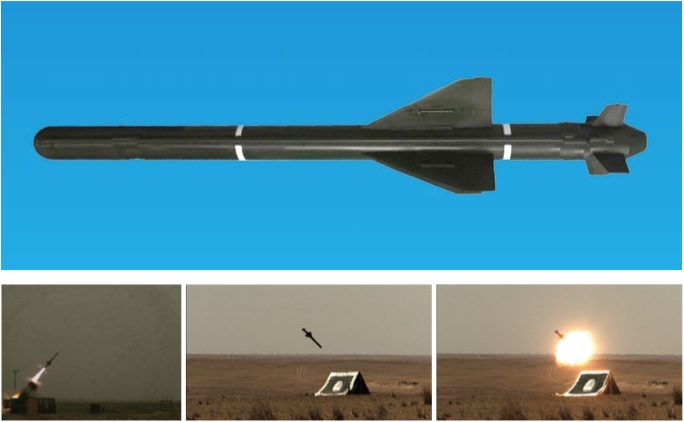
Guidance System: This is the most critical aspect of the WS-33. It features an advanced multi-mode guidance system:
-
INS/GPS (Inertial Navigation System/Global Positioning System): For mid-course navigation. It uses China’s BeiDou satellite navigation system for high accuracy and jamming resistance.
-
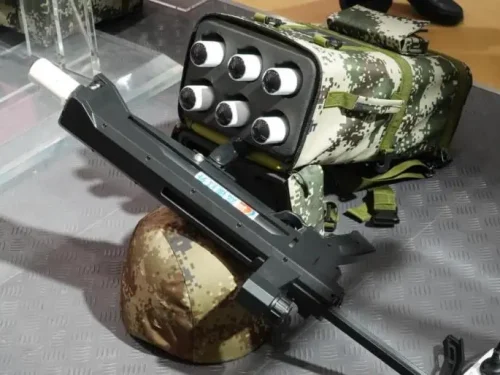
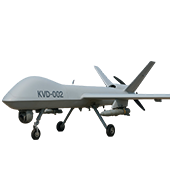
Semi-Active Laser (SAL) Seeker: This is the key differentiator. In the terminal phase of flight, the rocket can home in on a laser spot illuminated on the target by a forward observer, special forces team, or a drone (like the ubiquitous Chinese CH-4 or Wing Loong UAV).
-
-
Warhead: It carries a unitary high-explosive (HE) warhead. The combination of long range and laser-guided precision means this single warhead can be delivered directly onto a specific target, such as a particular window of a building or a single vehicle in a convoy, with minimal collateral damage.
-
Range and Accuracy: The WS-33 is defined by its impressive combination of reach and precision:
-
Range: It has a reported maximum range of approximately 70 kilometers (43 miles). This allows it to strike targets deep behind the front lines.
-
Accuracy: With its laser seeker, the WS-33 achieves an astounding degree of accuracy, with a Circular Error Probable (CEP) of less than 1 meter. This makes it one of the most precise artillery rockets in the world.
-
-
Launch Platform: The WS-33 is integrated with a high-mobility launch vehicle.
-
It is typically mounted on an 8×8 military truck.
-
The launch pod contains 4 rockets, making it a system designed for engaging a small number of critically important targets with supreme accuracy.
-
Comparison with Similar Weapons:
The WS-33’s laser guidance sets it apart from other precision rocket systems.
| Feature | Chinese WS-33 | US M142 HIMARS (GMLRS) | Chinese WS-22 | Precision-Guided Artillery (e.g., WS-35) |
|---|---|---|---|---|
| Guidance | GPS/INS + Semi-Active Laser | GPS/INS | GPS/INS | GPS/INS + (Glide) |
| Accuracy (CEP) | < 1 meter | < 5 meters | < 10 meters | < 10 meters |
| Range | ~70 km | ~70+ km | ~70-100 km | ~100 km (WS-35 shell) |
| Warhead | Unitary HE | Unitary HE / Alternative | Unitary HE | Unitary HE |
| Key Feature | Laser-Homing for Extreme Precision | GPS for All-Weather Strike | GPS for Precision Strike | Cannon-Launched, Very Long Range |
| Targets | Specific Points on Hard Targets | Fixed Point Targets | Fixed Point Targets | Fixed Point Targets |
-
vs. the US GMLRS (HIMARS): The standard GMLRS uses only GPS/INS guidance, which is highly accurate (~5m CEP) and all-weather. The WS-33 aims for even greater precision (<1m CEP) through its laser seeker, but this comes at the cost of requiring a laser designator to be active on the target, making it weather-dependent and requiring more coordination.
-
vs. the WS-22: Both are precision rockets. The key difference is the terminal seeker. The WS-22 relies solely on GPS/INS, while the WS-33 adds a laser seeker for potentially surgical, target-of-opportunity strikes, such as hitting a moving vehicle if a laser can be maintained on it.
-
vs. Precision Artillery (e.g., WS-35 shell): The WS-33 rocket delivers a larger payload at a similar range. The WS-35 artillery shell is cheaper and can be fired from howitzers at a higher rate, but the WS-33 can deliver a more concentrated blow on a target with arguably better accuracy.
Strategic Significance:
The WS-33 is significant because it:
-
Provides Surgical Strike Capability: It offers field commanders the ability to destroy specific, high-value point targets with near-zero collateral damage from dozens of kilometers away. Examples include a specific radar unit, a command vehicle, or a critical piece of infrastructure.
-
Enables Dynamic Targeting: The laser guidance option means it can theoretically be used against moving targets if a designator can maintain a lock, a capability rare for rocket artillery.
-
Complements Other Systems: It fits into a layered precision-strike arsenal. Commanders can choose between the all-weather, fire-and-forget WS-22 (GPS) and the ultra-precise, weather-dependent WS-33 (Laser) depending on the mission requirements.
-
Leverages UAV Integration: Its design perfectly complements China’s extensive fleet of armed and reconnaissance drones. A drone can identify a target, laser-designate it, and a WS-33 battery can engage it within minutes, creating a rapid, lethal kill chain.
In summary, the WS-33 is an ultra-precision, laser-guided rocket system that represents a specialized high-end capability within China’s rocket forces. It is not a weapon for area saturation but a tool for executing surgical strikes against critical targets with an unparalleled level of accuracy for a system of its range and class.