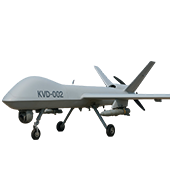

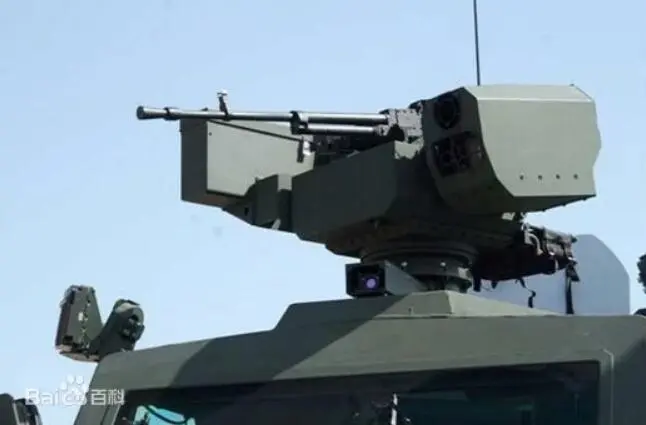
The Chinese UW4 remotely operated weapons station consists of a 30-mm automatic gun, a 7.62-mm machine gun, 12 smoke grenade launchers and common sensors. Originally advertised for “anti-terrorist” missions, the UW4 remote-controlled weapon system is intended for use in vehicles or as a ground-based gun mount.
The latest version of the Chinese UW4 Remotely Controlled Weapon Station is the UW4B RCWS
Key Features and Capabilities
-
Remote Operation:
-
The core feature of any RCWS. The operator controls the weapon from inside the vehicle using a video screen, joystick, and controls, significantly improving crew survivability by avoiding exposure to enemy fire and the elements.
-
-
Stabilized Platform:
-
The weapon station is electrically stabilized on both axes (azimuth and elevation). This allows the gunner to fire accurately while the vehicle is moving over rough terrain, a major tactical advantage.
-
-
Integrated Sensor Suite:
-
Daylight Camera: High-resolution color camera for target acquisition and surveillance during the day.
-
Thermal Imager: Uncooled or cooled thermal camera for night operations, poor visibility conditions (fog, smoke, dust), and detecting hidden targets.
-
Laser Rangefinder: Precisely measures the distance to the target, improving first-round hit probability, especially at longer ranges.
-
Optional: Some variants may integrate a laser dazzler for counter-personnel purposes.
-
-
Armament Flexibility:
-
The UW4 is typically configured to mount a 12.7mm Heavy Machine Gun (QJC-88 or similar). This provides effective firepower against light armored vehicles, infantry in cover, and even low-flying helicopters.
-
The design can often be adapted for other weapons like 7.62mm General Purpose Machine Guns (Type 80) or 40mm Automatic Grenade Launchers (AGS-30 type).
-
-
Traverse and Elevation:
-
Offers full 360-degree traverse and high angles of elevation, enabling it to engage ground targets, low-flying aircraft, and threats from upper-story buildings in urban environments.
-
-
Ammunition Capacity:
-
Typically includes a ready-use ammunition box holding 100-200 rounds of 12.7mm ammunition, reducing the need for reloads during short engagements.
-
Technical Specifications (Estimated)
| Feature | Specification |
|---|---|
| Designation | UW4 (Other common Chinese RWS designations include QL-87, QL-90, etc.) |
| Role | Remote Controlled Weapon Station (RCWS) |
| Primary Armament | 12.7mm Heavy Machine Gun (e.g., QJC-88) |
| Secondary Armament | Optional co-axial 7.62mm machine gun (on some models) |
| Stabilization | 2-axis electrical |
| Sensors | Daylight Camera, Thermal Imager, Laser Rangefinder |
| Traverse | 360° continuous |
| Elevation | Typically -10° to +60° to +70° |
| Weight | ~200-250 kg (unloaded, estimated) |
Strategic Role and Purpose
The UW4 RCWS is a force multiplier that enhances a vehicle’s capabilities in several key ways:
-
Enhanced Crew Survivability: This is the primary advantage. By allowing the gunner to fight “buttoned up” inside the armored vehicle, it protects them from snipers, shrapnel, and small arms fire.
-
Improved Accuracy and Situational Awareness: The stabilized platform and advanced optics allow for accurate fire on the move and better target identification day or night.
-
24/7 Operational Capability: The thermal imager enables effective operations in total darkness and adverse weather conditions.
-
Platform Flexibility: It can be installed on a wide range of platforms:
-
Armored Personnel Carriers (APCs) and Infantry Fighting Vehicles (IFVs)
-
Main Battle Tanks (MBTs) as a secondary weapon
-
Light Tactical Vehicles (e.g., MRAPs, JLTV equivalents)
-
Patrol Boats for naval use
-
Fixed Sites for base defense
-
Comparison to Other Systems
-
vs. Traditional Cupola: A traditional weapon station requires a soldier to be exposed. The UW4 offers far superior protection, stability, and night-fighting capability.
-
vs. Western RWS (e.g., Kongsberg Protector, Rafael SAMSON): The UW4 occupies a similar role and offers comparable core capabilities (stabilization, sensors, remote operation) to established Western systems. It is part of a global trend toward remote weaponry.
-
vs. Simpler RWS: It is more capable than very basic, unstabilized remote stations that lack thermal imagers and laser rangefinders.
Conclusion
The UW4 represents the modernization and automation of vehicle-mounted firepower. It is part of a broader shift in modern militaries towards protecting the soldier while enhancing their combat effectiveness through technology. While not a flashy platform like a jet or tank, the widespread adoption of systems like the UW4 significantly improves the tactical capabilities and survivability of ground forces, making them a crucial component of any modern army’s inventory. It reflects China’s ability to produce capable, cost-effective defense systems that are competitive on the global market.