


Showing all 4 results


Tethered Unmanned Aerial Vehicles (UAVs): A New Era of Persistent Surveillance
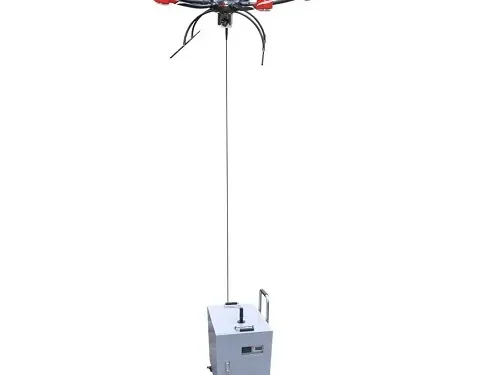
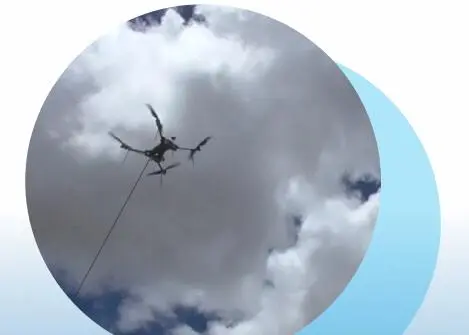
A military tethered drone, sometimes called a tethered UAV or Unmanned Aerial System (UAS), represents a significant advance in persistent aerial technology. This aerial platform connects to a ground station via a robust, flexible cable, or tether. Crucially, the tether performs a dual function: it supplies a continuous power source to the drone and enables high-bandwidth data transmission. This physical connection allows the drone to ignore the typical flight time limits of battery-powered systems, remaining airborne and operational for hours or even days on end. Consequently, military tethered drones provide an ideal solution for long-duration missions demanding uninterrupted aerial observation, communication relay, or stringent security monitoring in both defense and civilian sectors.
The system’s standout benefit is its practically unlimited flight time. Since the tether provides continuous power, the drones eliminate the need for frequent battery changes or refueling, enabling true 24/7 operation in critical scenarios. Furthermore, the integrated fiber-optic or hybrid power-data cable ensures a highly secure communication link. This physical connection resists signal interference, jamming, or sophisticated hacking attempts far better than purely wireless systems. Consequently, tethered drones deliver exceptional reliability for sensitive operations like border surveillance, military base protection, and public event security, where constant situational awareness proves indispensable.
Defense forces and law enforcement agencies widely deploy tethered drones for critical missions. They use the systems for perimeter security, tactical overwatch, and effective crowd monitoring at major events. Moreover, tethered systems prove invaluable during emergency response, providing real-time aerial views for search and rescue operations, wildfire management, or natural disaster assessments. Specifically in communications, these platforms act as mobile aerial communication towers. They effectively extend LTE, 5G, or radio signals in remote areas, over difficult terrain, during network outages, or at military forward operating bases. Their elevated position significantly enhances signal range and line-of-sight coverage, greatly surpassing traditional ground-based relay systems.
Modern tethered drone systems prioritize portability and speed. Small teams, or often just a single operator, can deploy them within minutes. These platforms typically operate at altitudes ranging from 100 to 400 feet, carrying a variety of advanced payloads, including high-resolution Electro-Optical/Infrared (EO/IR) cameras, thermal imagers, communication repeaters, or compact radar. Therefore, operators gain powerful, real-time intelligence gathering capability. Advanced models integrate automatic winch systems to manage tether length, robust wind-resistant stabilization, and essential emergency release mechanisms for safety. As the demand for reliable, persistent, and secure aerial operations increases globally, tethered drones are fast becoming an essential strategic tool.