

Showing 49–56 of 56 results


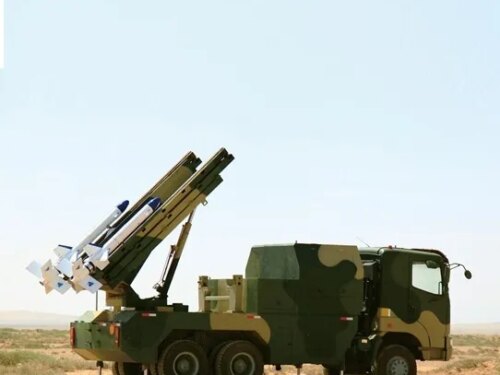


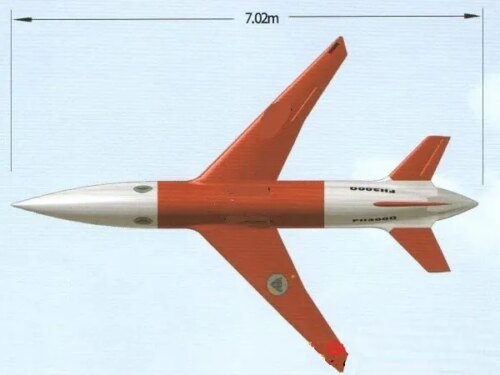

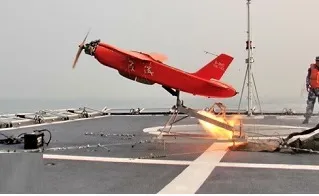
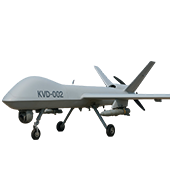
Target drones are indispensable assets for validating the People’s Liberation Army’s (PLA) air defense capabilities. These specialized Unmanned Aerial Vehicles (UAVs) provide an essential, high-fidelity platform. They rigorously test and certify new weapon systems, ensuring the accuracy and effectiveness of the nation’s missile and anti-aircraft artillery assets. Therefore, military target drones are crucial for maintaining the combat readiness and technological superiority of naval, air force, and ground units.
A target drone is a highly capable UAV specifically engineered to simulate a wide array of aerial threats during military testing and training. Unlike reconnaissance or strike drones, its primary mission is to replicate enemy platforms—from high-speed fighter jets and cruise missiles to advanced stealth aircraft. China’s defense industry produces variants, like the , which accurately mimic sophisticated radar, infrared, and maneuverability characteristics. Consequently, these platforms provide the PLA Air Force and surface-to-air missile units with a realistic, measurable opponent. This realism is essential for live-fire exercises, validating complex missile guidance algorithms, and certifying the operational readiness of air defense crews.
Chinese target drones excel at mimicking complex, high-stress threat profiles. They come in various powerful configurations, including jet-powered and rocket-assisted models, enabling flights from subsonic to supersonic speeds and across low-to-high altitudes. Specifically, high-performance platforms perform realistic enemy maneuvers. These include extreme G-force turns, evasive S-shaped trajectories, and sea-skimming flight paths to challenge naval defenses. To enhance training realism, operators often equip them with sophisticated augmentation devices. These devices, such as Luneburg lenses and specialized infrared emitters, convincingly replicate the radar cross-section (RCS) or heat signature of larger, more menacing aircraft. Moreover, the PLA utilizes older converted fighters, such as the , as large-scale, expendable targets. This demonstrates a flexible, layered approach to threat simulation.
Manufacturers build these systems for rugged performance, using composite, impact-resistant materials to ensure durability against near-misses. Many modern target drones are recoverable and reusable; they deploy parachutes or utilize mid-air retrieval systems to minimize operational costs. However, safety remains paramount. Operators control these drones via secure data links or precise, pre-programmed flight plans, constantly monitoring telemetry in real time. For maximum airspace control, most systems feature redundant communication channels and self-destruct mechanisms. Thus, forces confidently employ aerial target drones to train pilots in aerial combat and drill ground crews on rapid launch and recovery protocols. As threats evolve, China’s research focuses on developing next-generation target systems that simulate hypersonic glide vehicles and large-scale drone swarms, guaranteeing the PLA’s preparedness for all emerging challenges on the modern battlefield.