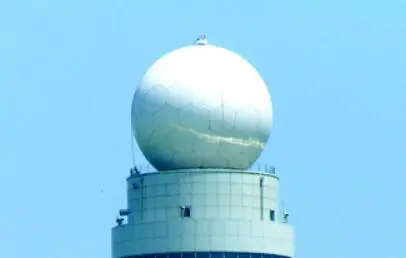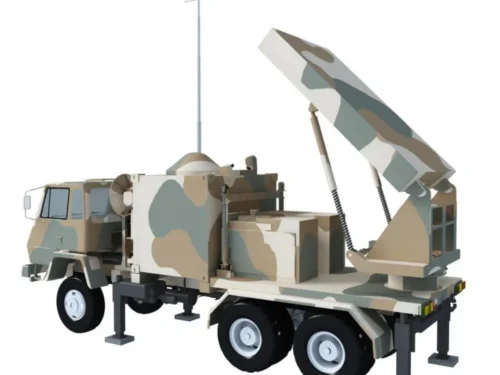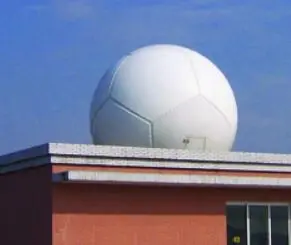

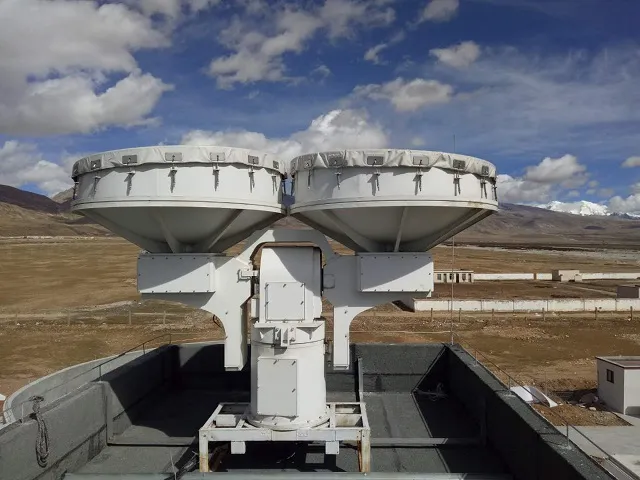
GR-342CW dual-band dual-polarization all-solid-state FM continuous wave radar works in Ka and W bands, adopts all-solid-state transmitter, dual-antenna system with transceiver isolation and FM continuous wave technology. The main application goals of radar are to observe the three-dimensional dynamic structure of non-precipitating cloud systems and weak precipitation clouds, identify the phase state, water content, and airflow distribution in the cloud, and then infer the microphysical structure parameters in the cloud. The radar is not only suitable for meteorological departments at all levels, but also has a wide range of applications in aviation, agriculture, transportation, water conservancy, atmospheric physics research and other fields.
Features
GR-342CW dual-band dual-polarization all-solid-state FM continuous wave radar works in Ka and W bands, adopts all-solid-state transmitter, dual-antenna system with transceiver isolation and FM continuous wave technology. The main application goals of radar are to observe the three-dimensional dynamic structure of non-precipitating cloud systems and weak precipitation clouds, identify the phase state, water content, and airflow distribution in the cloud, and then infer the microphysical structure parameters in the cloud. The radar is not only suitable for meteorological departments at all levels, but also has a wide range of applications in aviation, agriculture, transportation, water conservancy, atmospheric physics research and other fields.
Main Feature
• Independent dual-antenna system for transmitting and receiving;
• Dual-band shared parabolic antenna;
• FM continuous wave technology;
• All solid-state transmitter;
• High gain, low sidelobe antenna;
• Low noise, large dynamic digital receiver;
• Continuous operation around the clock;
• Remote monitoring, unattended.
Main Specifications
working frequency:
35GHz±0.1GHz (Ka band);
94GHz±0.1GHz (W band);
Peak power:
≥50W (Ka band);
≥15W (W band);
Detection distance: ≥30km;
Distance resolution: 5m/10m/30m;
Output parameter measuring range:
Intensity: -40dBZ ~ +40dBZ;
Speed: -20m/s ~ +20m/s (Ka band);
-9m/s ~ +9m/s (W band);
Spectrum width: 0m/s ~ 8m/s;
Antenna scanning range: azimuth: 0°~360°;
Pitch: 0°~+90°;
Power supply voltage: single-phase 220V±10%, 50Hz±5%;
Power consumption of the whole machine: ≤5kW;
Output products: reflectivity (Z), radial velocity (V), velocity spectral width (W), differential reflectivity factor (ZDR), differential propagation phase shift (ΦDP), horizontal linear depolarization rate (LDRH), vertical linear Depolarization rate (LDRV) and zero correlation coefficient (ρOHV), etc.
Representative Specifications (indicative)
| Parameter | Value / Range | Notes |
|---|---|---|
| Frequency Bands | Ka-Band (26–40 GHz), W-Band (75–110 GHz) | Dual-band operation for multi-resolution detection |
| Polarization | Dual-linear (Horizontal & Vertical) | Hydrometeor classification and target discrimination |
| Radar Type | All-solid-state FMCW | Continuous wave operation with high precision |
| Maximum Range | ~50–100 km | Depending on atmospheric conditions and frequency |
| Range Resolution | <1 m | High-resolution target detection |
| Antenna Type | Parabolic reflector or phased array | Rotating or fixed scanning options |
| Beamwidth | ~0.5°–1° | High angular resolution |
| Scan Modes | PPI, RHI, volumetric | Configurable for different applications |
| Data Output | Real-time digital | Compatible with meteorological, aviation, or research software |
| Power Supply | AC 220/380 V or mobile generator | Site-dependent |
| Environmental Rating | -30°C to +50°C; waterproof & wind-resistant | Suitable for field deployment |
| Mobility | Fixed, tower-mounted, or vehicle-mounted | Modular and adaptable to different platforms |
Key Features
-
Dual-Band Operation (Ka/W): Enables flexible detection across multiple frequency ranges for improved resolution and penetration.
-
Dual-Polarization: Measures horizontal and vertical components of backscattered signals, allowing differentiation between target types and hydrometeors.
-
All-Solid-State Design: High reliability, low maintenance, and continuous operation without warm-up delays.
-
FM Continuous Wave Technology: Provides precise range resolution, Doppler velocity measurement, and continuous monitoring capabilities.
-
High-Resolution Scanning: Detects fine structures in precipitation, clouds, and atmospheric disturbances.
-
Compact & Mobile Deployment: Suitable for fixed installations, mobile platforms, or experimental research stations.
-
Advanced Signal Processing: Supports clutter suppression, target classification, and volumetric scanning.
-
User-Friendly Interface: Integrated software for visualization, control, data analysis, and reporting.
-
Remote Operation: Optional networked monitoring for centralized data collection and integration.