
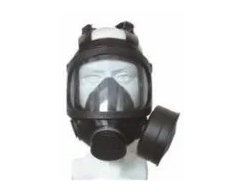
The Gas Mask, also known as a respirator or CBRN mask, is a critical personal protective device designed to safeguard military personnel, law enforcement, first responders, and civilians from hazardous airborne threats — including chemical, biological, radiological, and nuclear (CBRN) agents, tear gas (CS/CN), pepper spray (OC), smoke, toxic industrial chemicals (TICs), and airborne pathogens.
Used in environments where the air itself becomes a weapon — from riot control operations and chemical spills to biological outbreaks and warfare zones — the gas mask serves as the final barrier between life and lethal exposure. It filters contaminated air through advanced cartridges while maintaining clear vision, voice communication, and operational endurance.
Modern gas masks are engineered for maximum seal integrity, comfort during prolonged use, and seamless integration with other protective gear such as helmets, body armor, night vision devices, and communication systems. No longer just emergency equipment, today’s gas masks are mission-essential tools that enable tactical units to operate effectively in the most hostile atmospheres.
From SWAT entries and prison riots to battlefields and disaster response, the gas mask remains a universal symbol of preparedness and survival.
Key Features
1. Facepiece Design
- Material:
- Silicone or butyl rubber for flexibility, durability, and skin compatibility.
- Hypoallergenic and resistant to degradation from chemical agents.
- Seal Type:
- Full-face seal around nose, mouth, cheeks, and forehead.
- Designed to fit all face shapes (often includes sizing kits).
- Weight:
- 1.5–3 lbs (0.7–1.4 kg) — lightweight for extended wear.
- Field of View:
- Dual or panoramic lenses (typically 60°–90° horizontal view).
- Some models feature wide-angle or wrap-around optics.
2. Filter System (Canister / Cartridge)
- Filter Types:
Type Protection P100 Particulates (dust, smoke, pathogens) CLOR Chlorine gas AMMONIA Ammonia-based compounds CBRN Chemical, Biological, Radiological, Nuclear Multi-Threat Broad-spectrum (CS, OC, TICs, particulates) - Filtration Mechanism:
- Mechanical filtration (HEPA-grade for particles).
- Chemical adsorption (activated carbon layers).
- Catalytic conversion (breaks down toxic gases).
- Service Life:
- Varies by contaminant concentration:
- Tear gas (CS): 60–120 minutes
- Pepper spray (OC): 30–60 minutes
- Industrial chemicals: 15–120 minutes (depends on agent)
- No re-use after exposure — must be replaced.
- Varies by contaminant concentration:
3. Threat Protection Levels
- Chemical Agents:
- Resists nerve agents (Sarin, VX), blister agents (Mustard gas), choking agents (Chlorine).
- Biological Threats:
- Filters bacteria, viruses, spores (e.g., anthrax) down to 0.3 microns (HEPA efficiency).
- Radiological Particles:
- Traps radioactive dust and aerosols.
- Riot Control Agents (RCAs):
- Blocks CS (tear gas), CN, CR, OC (pepper spray).
- Toxic Industrial Chemicals (TICs):
- Protects against ammonia, chlorine, hydrogen sulfide, phosgene.
4. Integrated Accessories
- Drinking System:
- Integrated straw or hydration port allows water intake without removing mask.
- Voice Diaphragm / Speech Transmission Device (STDM):
- Enhances clarity for radio communication and team coordination.
- Eyeglass Insert (EGI):
- Mount for prescription lenses inside the mask.
- Helmet Compatibility:
- Designed to integrate with tactical helmets and night vision mounts (NVG shroud).
- Filter Mounting:
- Front-, side-, or bottom-mounted canisters depending on design (e.g., M50 = front, FM12 = side).
5. Comfort & Usability
- Internal Harness:
- Adjustable head straps with padded crown and nape support.
- Anti-Fog Coating:
- Internal lens coating prevents condensation.
- Exhalation Valve:
- Reduces heat and moisture buildup; some have protective covers.
- Decontamination Capability:
- Wipe-down safe with mild soap, water, or decon solutions (e.g., DS2).
Technical Specifications (Standard CBRN Gas Mask)
| Parameter | Specification |
|---|---|
| Facepiece Material | Medical-grade silicone or butyl rubber |
| Lenses | Polycarbonate, anti-scratch, UV-protected |
| Filter Standard | NATO STANAG 4155, EN 148-1, NIOSH CBRN |
| Protection Level | CBRN certified (military-grade) |
| Filter Thread | 40mm (NATO standard) or 60mm |
| Weight (mask only) | 1.8–2.5 lbs (0.8–1.1 kg) |
| Fit Test Required | Yes (qualitative or quantitative) |
| Service Life | 10+ years (mask); filters: single-use after exposure |
| Operating Temp | -30°C to +70°C (-22°F to 158°F) |
| Certification | U.S. Army MIL-PRF-32278, UK MOD DEF-STAN 23-02-06 |
| Common Brands | Avon Protection (now Avon), MSA Safety, Honeywell (North), Dräger (Germany), Scott Safety, Gentex |
Operational Roles
- Riot Control: Protection against tear gas and pepper spray during crowd dispersal.
- SWAT & Hostage Rescue: Entry into barricaded rooms with chemical hazards.
- CBRN Response Teams: Hazardous materials (HazMat) incidents.
- Military Combat: Defense against chemical warfare agents.
- Prison Operations: Cell extractions involving homemade chemical sprays.
- Disaster Relief: Volcanic ash, industrial fires, or chemical spills.
- Pandemic Response: Filtration of airborne pathogens (when P100/HEPA filters used).
- Border Security: Cross-border chemical threats or smuggling of TICs.
Evolution & Future Trends
- Historical Milestones:
- World War I (1915): First crude cloth-and-charcoal masks vs. chlorine gas.
- 1940s–60s: Rubber full-face masks with screw-on canisters.
- 1980s: Introduction of silicone seals and panoramic lenses.
- 1990s: CBRN certification and voice diaphragms.
- 2000s: M40/M50 (U.S. Military), FM12 (UK), SG1 (Germany).
- 2020s: Integration with smart comms, AR displays, biometrics.
- Future Innovations:
- Smart Masks: Embedded CO₂/O₂ sensors, vital sign monitoring, GPS.
- Self-Powered Filtration: Miniaturized fans for active airflow.
- AI-Assisted Threat Detection: Real-time air analysis via onboard chip.
- Augmented Reality Lenses: Overlay maps, comms, or thermal vision.
- Nanofiber Filters: Higher efficiency, lower breathing resistance.
- 3D-Printed Custom Fit: Personalized facial interface for perfect seal.