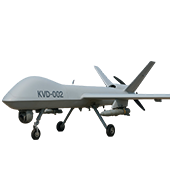


The FT-3 (Fei Teng , meaning “Soar” or “SkyRocket”) is a Chinese precision-guided munition (PGM) kit. It is designed to convert a standard, low-cost 250 kg (550 lb) unguided bomb (similar to the US Mk-82) into a accurate smart weapon. It is considered one of the earlier members of the FT series and laid the groundwork for more advanced variants like the FT-3A.
Key Characteristics and Capabilities:
-
Guidance System: The FT-3 utilizes an INS (Inertial Navigation System) as its primary guidance, likely supplemented by GPS for mid-course updates and improved accuracy in its later versions. This provides a significant improvement over unguided bombs, allowing it to hit fixed coordinates.
-
Its accuracy is less than that of modern GPS/INS kits, with a Circular Error Probable (CEP) estimated to be in the 20-30 meter range, making it suitable for area targets rather than pinpoint strikes.
-
-
Warhead: It is a guidance kit attached to a standard 250 kg (550 lb) high-explosive general-purpose bomb warhead. This is a versatile warhead size capable of damaging buildings, bunkers, and soft-skinned vehicles.
-
Range: As an early glide bomb, it features basic fins that provide some lift. Its effective glide range is relatively short, likely under 10 kilometers (6 miles), depending on the release altitude and speed. It lacks the large, long-span wings of dedicated “range-extended” versions like the FT-6.
-
Launch Platform: It was integrated on various Chinese tactical aircraft, including:
-
Xian JH-7 Flying Leopard: A dedicated fighter-bomber.
-
Shenyang J-8: An interceptor adapted for ground attack.
-
Chengdu J-10: Earlier variants of the multirole fighter.
-
Comparison with Similar Weapons:
The FT-3 represents an early generation of Chinese PGMs. The “A” in FT-3A likely denotes a significant improvement, most notably the integration of GPS for much greater accuracy.
| Feature | Chinese FT-3 (Early) | Chinese FT-3A (Improved) | US Paveway II (Laser-Guided) | US JDAM (GPS-Guided) |
|---|---|---|---|---|
| Guidance | INS (likely basic GPS) | GPS/INS | Semi-Active Laser | GPS/INS |
| Accuracy (CEP) | ~20-30 meters | <10 meters | ~5-10 meters | ~5-10 meters |
| Weather | All-Weather (INS) | All-Weather | Weather Dependent (Clear) | All-Weather |
| Range | Short (<10 km) | Medium (~20 km) | Short (<10 km) | Medium (~15 km) |
| Role | Basic Area Precision | Accurate Point Strike | Precise Point Strike | All-Weather Point Strike |
-
vs. the FT-3A: The standard FT-3 is an earlier, less accurate version. The FT-3A represents a major upgrade, incorporating a full GPS/INS guidance system for modern, JDAM-level accuracy. The FT-3 is the prototype; the FT-3A is the mature, mass-produced product.
-
vs. a Laser-Guided Bomb: The FT-3’s INS guidance gives it an all-weather advantage over laser-guided bombs like the Paveway, which require clear visibility for the laser to work. However, a laser-guided bomb can be more accurate against a specific point if the weather is good.
-
vs. a JDAM: The basic FT-3 is a less capable precursor to the JDAM concept. A modern JDAM (or the Chinese FT-3A) has far superior accuracy due to integrated GPS guidance. The FT-3 represents the initial step China took toward achieving that capability.
Strategic Significance and Current Role:
The FT-3 was significant because it:
-
Bridged a Critical Technology Gap: It provided the PLAAF with its first domestically produced, all-weather precision strike capability, a crucial step away from total reliance on unguided bombs.
-
Built a Foundation: The experience gained from the FT-3’s development and deployment was directly applied to creating the more advanced and accurate FT-3A, FT-6, and other munitions in the family.
-
Enhanced Older Platforms: It extended the operational relevance of older Chinese fighter-bombers by giving them a limited precision attack role.
Current Status: The basic FT-3 is now considered a first-generation, obsolete system. It has been completely superseded by the FT-3A and other more advanced PGMs like the FT-8 and the long-range FT-6. It is likely no longer in front-line service but was historically important in the evolution of Chinese precision strike technology.
In summary, the FT-3 is a historically important, early-generation precision guidance kit for 250 kg bombs. It provided the PLAAF with foundational experience in developing and fielding all-weather smart weapons, paving the way for the highly capable and diverse family of precision munitions China fields today.
-500x375.webp "X-29 Missile (KH-29 Missile )")