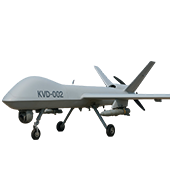


The FT-1 (Fei Teng , meaning “Soar” or “SkyRocket”) is a Chinese precision-guided munition (PGM). It is characterized by its large 500 kg (1,100 lb) warhead and its use of laser guidance. It is considered the foundational member of the FT series and was one of China’s first successful attempts to develop a domestic smart bomb.
Key Characteristics and Capabilities:
-
Guidance System: The FT-1 uses Semi-Active Laser Homing (SALH) guidance.
-
How it works: The target must be illuminated by a laser designator until the moment of impact. The laser can be provided by the launch aircraft, another aircraft, or ground forces.
-
Implication: This makes it highly accurate (with a Circular Error Probable (CEP) of likely less than 10 meters) but also weather-dependent (smoke, fog, or rain can obscure the laser) and requires the designator to remain exposed to the target area.
-
-
Warhead: It is a complete weapon built around a 500 kg (1,100 lb) high-explosive warhead (similar to the US Mk-84). This massive warhead is designed to destroy hardened targets like bunkers, bridges, buildings, and naval vessels.
-
Range: It has minimal glide capability. Its effective range is very short, essentially the same as a conventional dumb bomb, highly dependent on the release altitude and speed of the aircraft. The launching aircraft must fly directly towards the target to maintain the laser lock.
-
Launch Platform: It was integrated on various Chinese tactical aircraft and bombers, including:
-
Xian H-6 Bomber: To give the old bomber a precision strike capability.
-
Xian JH-7 Flying Leopard: A dedicated fighter-bomber.
-
Shenyang J-8: An interceptor adapted for ground attack.
-
Comparison with Similar Weapons:
The FT-1 is a first-generation laser-guided bomb (LGB), directly comparable to early Western systems.
| Feature | Chinese FT-1 | US Paveway II (GBU-10) | Chinese FT-2 (500kg) | Russian KAB-500L |
|---|---|---|---|---|
| Guidance | Semi-Active Laser | Semi-Active Laser | GPS/INS + Glide Wings | Semi-Active Laser |
| Warhead | 500 kg (1,100 lb) | ~900 kg (2,000 lb) | 500 kg (1,100 lb) | 500 kg (1,100 lb) |
| Key Feature | China’s 1st Gen LGB | Mature LGB Technology | All-Weather, Stand-Off | Russian LGB |
| Range | Short (Ballistic) | Short (Ballistic) | Long (~90 km Glide) | Short (Ballistic) |
| Weather | Weather Dependent | Weather Dependent | All-Weather | Weather Dependent |
-
vs. a Paveway II: The FT-1 is China’s equivalent to the US Paveway II LGB series. They are nearly identical in concept, function, and limitations. Both are highly accurate in good weather but require the launch platform to fly directly to the target.
-
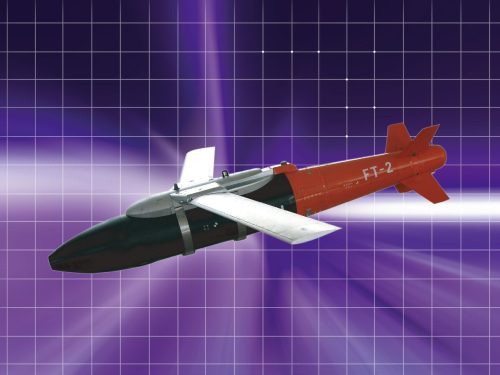
vs. the FT-2: This comparison highlights a generational leap. The FT-1 is a simple laser-guided bomb with no stand-off range. The FT-2 is a modern GPS/INS-guided glide bomb with enormous range and all-weather capability. The FT-2 allows the aircraft to stay safe; the FT-1 requires it to fly into danger.
-
vs. the KAB-500L: They are direct analogues from different countries. The Russian KAB-500L is also a 500kg laser-guided bomb, showing that China’s FT-1 was developed to match the capabilities of other major military powers.
Strategic Significance and Current Role:
The FT-1 was profoundly significant because it:
-
Bridged a Critical Technology Gap: It provided the PLAAF with its first domestically produced precision strike capability, moving beyond total reliance on unguided “dumb” bombs. This was a monumental step forward.
-
Built a Foundation: The experience gained from the FT-1’s development and deployment was directly applied to creating the more advanced and capable GPS-guided munitions that followed (FT-2, FT-3, FT-5, etc.).
-
Enhanced Legacy Platforms: It extended the operational relevance of older Chinese aircraft like the H-6 bomber by giving them a limited but potent precision attack role.
Current Status: The basic FT-1 is now considered a first-generation, obsolete system. It has been completely superseded by GPS/INS-guided bombs like the FT-2, FT-12, and other members of the FT series. Laser-guided weapons are still useful for specific missions (e.g., close air support with moving targets), but they are no longer the primary precision strike tool. The FT-1’s role has been entirely taken over by all-weather, fire-and-forget, stand-off weapons.
In summary, the FT-1 is a historically important, first-generation laser-guided bomb. It was a foundational technology that provided the PLAAF with its initial precision strike capability and paved the way for the highly capable and diverse family of modern precision munitions China fields today. It is a relic of a previous technological era but was crucial for China’s military modernization.


-500x375.webp "X-29 Missile (KH-29 Missile )")