
TRDD-50-A-Turbofan-Engine-1-800x649.webp "CTF-9 Turbofan Engine(400kgf)(TRDD-50 A Turbofan Engine)")
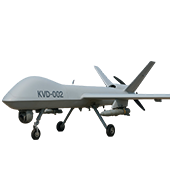
CTF-9 turbofan engine (TRDD-50 A turbofan engine) is an engine with the thrust of 400kg and dual rotors turbofan independently developed by China, which is used for small high-speed UAV. With the outstanding characteristics of high performance and compact structure, the engine is equipped with advanced electrical, control and health management, and can meet the power needs of small UAV with high elevation and large range.
Main performance indicators
Ceiling: 12.5km
Flying Mach number: 0~0.9
Maximum take-off thrust of engine: ≥400kgf (H=0, Ma=0, ISA)
Engine fuel rate: ≤0.65kg/ (kgf. h) (H=0, Ma=0, 1SA)
Engine inlet diameter/outer diameter: 279mm/330mm
Engine length: ≤855mm
Weight: ≤82kg (body net weight)
Cycle of the first restoration :500h
Power supply capacity :8kW
This engine is believed to be of Russian origin or design influence, potentially derived from or inspired by earlier Soviet/Russian small turbofan technology used in systems like the Kh-31 or Kh-59 air-to-surface missiles. The designation “TRDD” stands for TurboReaktivnyy Dvigatel’ s Dvoynym Kompresorom (ТРДД) — Russian for “Turbofan Engine”.
Key Specifications (Estimated)
| Parameter | Specification |
|---|---|
| Designation | CTF-9 / TRDD-50A |
| Type | Small axial-flow low-bypass turbofan |
| Thrust Class | 400 kgf (~3.92 kN) |
| Thrust Specific Fuel Consumption (TSFC) | ~0.08–0.09 kg/(kgf·h) (~0.78–0.88 kg/N·h) |
| Overall Pressure Ratio (OPR) | Estimated 6:1 to 8:1 |
| Bypass Ratio | Low (~0.3:1 to 0.5:1) |
| Airflow | ~10–12 kg/s |
| Length | ~1.8 – 2.2 m |
| Diameter | ~400 – 450 mm |
| Dry Weight | ~120 – 140 kg |
| Inlet Type | Axisymmetric circular |
| Combustor Type | Annular or can-annular |
| Compressor | Axial-flow, multi-stage (HP + LP spools likely) |
| Turbine | Two-stage (High-pressure + Low-pressure) |
| Starting System | Pneumatic or electric starter |
| Control System | Full Authority Digital Engine Control (FADEC) – modern variants likely |
| Operating Altitude | Up to 18,000 m (59,000 ft) |
| Cruise Speed Compatibility | Mach 0.6 – 0.8 (optimized for subsonic UAVs/missiles) |
Design & Operational Features
- Compact and Lightweight: Designed for integration into medium-range UAVs, target drones, and cruise missiles where space and weight are critical.
- High Fuel Efficiency: As a turbofan, it offers significantly better specific fuel consumption than older turbojet engines (e.g., RD-36 series), extending mission range.
- High-Altitude Performance: Optimized for sustained operation at high altitudes, making it ideal for reconnaissance UAVs and long-range strike systems.
- Modular Design: Allows for easier maintenance and potential adaptation across multiple platforms.
- Robust Construction: Built to withstand harsh operational environments and rapid throttle transients typical in combat scenarios.
Typical Applications
- Medium-Altitude Long-Endurance (MALE) UAVs
- Target Drones (e.g., replacements for La-17 or modern equivalents)
- Subsonic Cruise Missiles
- Unmanned Combat Aerial Vehicles (UCAVs)
- Technology demonstrators and testbeds
It may serve as an alternative or upgrade to engines like the Microturbo TRI 60 (used in Exocet AM39), Williams F107 (used in Tomahawk), or Ivchenko AI-25 class engines in certain drone applications.
Comparison with Similar Engines
| Engine | Thrust (kgf) | Weight (kg) | TSFC (kg/kgf·h) | Application Example |
|---|---|---|---|---|
| CTF-9 / TRDD-50A | 400 | ~130 | ~0.085 | UAVs, cruise missiles |
| Williams F107-WR-400 | 2.72 kN (277 kgf) | 58 | 0.082 | AGM-86 ALCM, RQ-4 Global Hawk (test) |
| Microturbo TRI 60-5 | 4.6 kN (470 kgf) | 58 | 0.095 | Exocet missile, Banshee Jet 80+ drone |
| MTU F404-based micro | ~450 kgf | ~150 | ~0.080 | Experimental UAVs |
| Ivchenko AI-25 | 1,650 kgf | ~560 | 0.75 | L-39 trainer (not comparable scale) |
Note: The CTF-9/TRDD-50A offers a balance between thrust and weight, though it is heavier than Western micro-turbofans—likely due to less advanced materials or manufacturing techniques.
Strategic Significance
Engines like the CTF-9/TRDD-50A play a crucial role in enabling indigenous development of long-range UAVs and precision strike systems. For countries seeking to reduce reliance on Western or Chinese propulsion systems, such engines represent a strategic capability in building autonomous defense industries.
While not as advanced as Western counterparts in terms of weight-to-thrust ratio or stealth integration, the TRDD-50A-class engine provides a proven, cost-effective solution for mid-tier military platforms.
Conclusion
The CTF-9 (TRDD-50A) 400 kgf turbofan engine is a capable small-scale propulsion system designed for tactical UAVs, drones, and cruise missiles. With an estimated thrust of 400 kgf (3.92 kN), it fills a critical niche between micro-turbojets and larger turbofans, offering improved fuel efficiency and endurance over pure turbojet designs.
Though exact performance data remains limited and likely classified, its existence underscores ongoing global interest in developing compact, reliable turbofan engines for next-generation unmanned systems. As drone warfare evolves, engines like the CTF-9 will continue to play a vital—but often overlooked—role in shaping modern aerial combat.


-500x375.webp "CTF-3 Turbofan Engine (650 kgf)")