
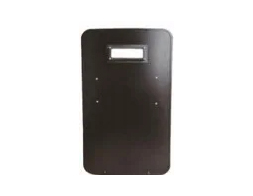
The Bulletproof Shield, also known as a ballistic shield or tactical shield, is a portable, human-rated barrier designed to protect law enforcement, military, and security personnel from firearms, explosives, and blunt trauma during high-risk operations. Unlike body armor, which protects the wearer, a bulletproof shield provides full-body or torso-level mobile cover, enabling teams to advance under fire, rescue hostages, or breach hostile environments with dramatically reduced risk.
Used by SWAT teams, counter-terrorism units, riot police, and special operations forces, these shields are engineered for maximum protection, controlled mobility, and mission-critical durability. From active shooter interventions to hostage rescues and urban combat, the bulletproof shield is the ultimate tool for controlled aggression.
Modern shields are categorized by:
- Threat Level (NIJ 0101.06 compliance)
- Size & Coverage (Type I to Type IV)
- Mobility (hand-held, wheeled, or vehicle-mounted)
- Specialization (ballistic, blast, chemical, or multi-threat)
With advancements in lightweight composites and ergonomic design, today’s shields offer unprecedented protection-to-weight ratios, allowing operators to move quickly while remaining fully shielded from handgun, rifle, and fragmentation threats.
Key Features
- NIJ Protection Levels (0101.06 Standard):
- Level II: Stops 9mm FMJ, .357 Magnum
- Level IIIA: Stops .44 Magnum, .357 SIG
- Level III: Stops 7.62×51mm NATO M80 Ball
- Level IV: Stops .30-06 M2 AP (armor-piercing)
- Shield Types (Based on Size & Use):
- Type I (Hand-Held): Small, one-handed; for close-quarters (CQB) use.
- Type II (Torso): Covers from neck to thighs; standard for SWAT entries.
- Type III (Full Body): Covers entire body; used in high-fire zones.
- Type IV (Wheeled / Mobile): Motorized or push-cart style; used in riots or prolonged standoffs.
- Materials:
- Transparent Armor:
- Polycarbonate (PC): Lightweight, impact-resistant (used in windows).
- Laminated Glass-PC Composite: High clarity, multi-hit capable.
- Acrylic (PMMA): Scratch-resistant, often layered.
- Opaque Armor:
- Kevlar® / Aramid Laminates
- UHMWPE (Dyneema®, Spectra®)
- Ceramic-Fiberglass Hybrids
- Transparent Armor:
- Weight Range:
- Type I: 8–15 lbs (3.6–6.8 kg)
- Type II: 20–35 lbs (9–16 kg)
- Type III: 40–60 lbs (18–27 kg)
- Type IV (wheeled): 80–150+ lbs (36–68+ kg)
- Ballistic Window:
- Transparent viewport for visibility.
- Typically 12″ x 18″ to 18″ x 24″.
- Multi-layered for scratch resistance and optical clarity.
- Can be replaced if damaged.
- Ergonomic Design:
- Adjustable forearm straps and handle grips.
- Shock-absorbing padding to reduce user fatigue.
- Quick-release mechanisms for emergency drop.
- Mobility & Deployment:
- Single-operator or two-person models.
- Wheeled variants with 360° casters for urban pursuit.
- Vehicle-mounted shields for armored rescue.
- Optional Features:
- Tactical Light Mounts
- Camera Systems (remote viewing, recording)
- Bulletproof Microphones (for negotiation)
- Ram Integration (shield doubles as breaching tool)
- Chemical/Blast Protection (for CBRN scenarios)
- Anti-Slash Skirts (bottom edge to stop knives)
- Durability & Maintenance:
- Resists UV, moisture, and temperature extremes.
- Transparent layers require anti-fog and anti-scratch coatings.
- Service life: 5–10 years (inspect annually).
- Certification:
- Must meet NIJ 0101.06 for ballistic performance.
- Some models tested to UL 752 or STANAG 4569 (military).
Technical Specifications (Standard Tactical Ballistic Shield)
| Parameter | Specification |
|---|---|
| Type | Type II (Torso) or Type III (Full Body) |
| Protection Level | NIJ 0101.06 Level III or IV |
| Threat Coverage | Front panel + transparent window |
| Materials | Laminated polycarbonate + Kevlar®/UHMWPE backing |
| Shield Dimensions | Height: 36–60 in (91–152 cm); Width: 18–24 in (46–61 cm) |
| Ballistic Window Size | 12″ x 18″ to 18″ x 24″ (30 x 46 cm to 46 x 61 cm) |
| Weight | 20–60 lbs (9–27 kg) |
| Handle System | Adjustable forearm strap + pistol grip |
| Mobility | Hand-carried or wheeled (Type IV) |
| Operating Temperature | -20°C to +50°C (-4°F to +122°F) |
| Service Life | 5–10 years (subject to inspection) |
| Certification | NIJ 0101.06 Compliant |
| Common Manufacturers | Safariland, Med-Eng (now part of Smiths Detection), Ballistic Shields USA, Shield Works, Sheldahl, SK Shieldtech |
| Fielded By | FBI HRT, LAPD SWAT, NYPD ESU, UK SAS, Israeli YAMAM, German GSG 9, Australian Tactical Response Groups |
Operational Roles
- Active Shooter Response: Shield teams advance to neutralize threats and extract victims.
- Hostage Rescue: Used in coordinated entries to protect rescuers and hostages.
- High-Risk Warrants: Breach doors while protected from ambush fire.
- Riot Control: Full-body and wheeled shields protect officers from projectiles and Molotovs.
- Explosive Ordnance Disposal (EOD): Blast shields protect technicians during IED disposal.
- Executive Protection: Mobile cover for VIPs during evacuations.
- Prison & Corrections: Used during cell extractions or inmate riots.
- Disaster Response: Protection in unstable environments (e.g., active looting zones).
- Military Urban Warfare: Clear buildings in conflict zones (e.g., Ukraine, Gaza).
Evolution & Real-World Impact
- Historical Milestones:
- 1970s: First ballistic shields developed for counter-terrorism.
- 1980s: Used in Munich Olympics aftermath and Iran Hostage Crisis planning.
- 1990s: Adopted by U.S. SWAT teams post-Waco and Ruby Ridge.
- 2000s: Digital integration (cameras, comms) begins.
- 2020s: Rise of smart shields with AI-assisted threat detection.
- Documented Saves:
- 2017 Las Vegas Shooting: SWAT teams used shields to rescue over 100 victims.
- 2018 Parkland School Shooting: Shielded officers entered while gunman fired.
- 2023 Nashville School Shooting: Officers advanced under fire using ballistic shields.
- Future Trends:
- Exoskeleton Integration: Reduces user fatigue during prolonged operations.
- Augmented Reality (AR) Displays: Overlay threat data on shield window.
- Autonomous Mobility: AI-guided wheeled shields for remote operations.
- Energy-Absorbing Nanomaterials: Next-gen composites for lighter, stronger shields.
- Drone-Deployed Shields: For rapid insertion into active zones.