
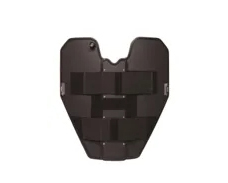
Ballistic Equipment refers to a broad category of personal and tactical protective systems designed to deflect, absorb, or stop high-velocity projectiles such as bullets, shrapnel, and fragmentation. From the battlefield to urban patrol, this equipment forms the last line of defense for those facing life-threatening ballistic threats.
Unlike general protective gear, ballistic equipment is scientifically engineered, rigorously tested, and certified to meet international standards — primarily the NIJ 0101.06 (National Institute of Justice) in the U.S., VPAM in Europe, and STANAG 4569 for military vehicles.
Modern ballistic systems are no longer limited to vests and helmets. Today’s ecosystem includes:
- Body Armor (soft and hard)
- Ballistic Plates
- Tactical Shields
- Helmets
- Vehicle Armor
- Ballistic Bags & Barriers
- Protective Apparel (gloves, groin guards, neck protection)
Used by military personnel, law enforcement, private security, journalists, and civilians, ballistic equipment is now a critical component of force protection, emergency response, and personal safety in an increasingly unpredictable world.
With advancements in material science, ergonomics, and threat modeling, today’s ballistic gear offers unprecedented levels of protection, mobility, and concealability — transforming survival rates in active shooter events, combat zones, and high-risk operations.
Key Components of Ballistic Equipment
1. Body Armor (Soft & Hard)
- Soft Armor:
- Made from Kevlar®, Twaron®, or Dyneema®
- Protects against handguns and knives (NIJ Levels IIA, II, IIIA)
- Worn concealed under clothing
- Weight: 2–4 lbs (0.9–1.8 kg)
- Hard Armor (Plate Carriers):
- Uses ceramic, UHMWPE, or steel plates
- Stops rifle rounds (NIJ Levels III, IV)
- Worn externally with MOLLE webbing
- Weight: 8–15+ lbs (3.6–6.8+ kg) with plates
2. Ballistic Plates
- Function: Inserted into plate carriers to stop rifle threats
- Materials:
- Ceramic: Lightweight, high energy absorption (Level III/IV)
- UHMWPE: Ultra-light, flexible, excellent trauma reduction
- Steel: Durable, cost-effective, but heavy and prone to spall
- Sizes: 10″x12″ (SAPI), 8″x10″, 11″x14″
- Cuts: SAPI, Shooter’s, Swimmer’s
3. Ballistic Helmets
- Protection Level: NIJ IIIA or military PASGT/ACH/ECH standards
- Threats Stopped: 9mm, .44 Magnum, fragmentation
- Materials: Aramid fibers, UHMWPE, or hybrid composites
- Weight: 3–4.5 lbs (1.4–2.0 kg)
- Features: Mounting rails for NVGs, comms, lights
4. Ballistic Shields
- Types: Hand-held, wheeled, full-body
- Use: Active shooter response, hostage rescue, riot control
- Protection: Levels II to IV
- Visibility: Transparent polycarbonate viewport
- Mobility: Ergonomic handles, forearm straps, or motorized wheels
5. Ballistic Barriers & Bags
- Ballistic Doors & Windows: Installed in schools, banks, and embassies
- Ballistic Backpacks & Briefcases: For civilians and executives
- Portable Barriers: Used in bank teller zones or school classrooms
6. Ancillary Protection
- Ballistic Gloves: Protect hands from fragmentation and gunfire
- Neck & Shoulder Protectors: Vital area coverage (popular with SWAT)
- Groin Protection: Tactical add-on for full-threat defense
- Throat Guards (Trauma Plates): Mini-plates for neck defense
7. Vehicle Armor
- Retrofitted or factory-installed in armored cars, ambulances, and military vehicles
- Levels: B4/B6/B7 (Europe), UL 752 Level 3–8
- Components: Ballistic glass, reinforced doors, run-flat tires
Technical Specifications (Overview of Ballistic Equipment Categories)
| Equipment Type | Protection Level | Weight Range | Key Materials | Certification | Typical Users |
|---|---|---|---|---|---|
| Soft Body Armor | NIJ IIA, II, IIIA | 2–4 lbs (0.9–1.8 kg) | Kevlar®, Dyneema®, Twaron® | NIJ 0101.06 | Police, Security, Civilians |
| Hard Armor Plates | NIJ III, IV | 3–10 lbs per plate (1.4–4.5 kg) | Ceramic, UHMWPE, Steel (AR500/550) | NIJ 0101.06 | Military, SWAT, Preppers |
| Ballistic Helmet | NIJ IIIA, PASGT, ECH | 3–4.5 lbs (1.4–2.0 kg) | Aramid, UHMWPE | NIJ, NATO STANAG | Soldiers, Tactical Teams |
| Tactical Shield | NIJ II–IV | 20–150 lbs (9–68+ kg) | Polycarbonate + Kevlar®/UHMWPE | NIJ 0101.06 | SWAT, Riot Police, EOD |
| Ballistic Backpack | NIJ IIIA or III | 3–6 lbs (1.4–2.7 kg) | UHMWPE panels | NIJ or UL 752 | Students, Teachers, Civilians |
| Vehicle Armor | B4–B7 (EU), UL 752 L3–L8 | Varies (adds 500–2000+ lbs) | Laminated glass, steel, composites | VPAM, UL 752, STANAG 4569 | Diplomats, Executives, Armored Units |
| Ballistic Gloves | Fragmentation / Low-velocity | 0.3–0.6 lbs per pair (140–270 g) | Dyneema®, Kevlar® thread | VPAM Hand, NIJ (limited) | EOD, Special Ops |
Operational Roles & Applications
- Military Combat: Full-spectrum protection in urban and open warfare (e.g., Ukraine, Gaza).
- Law Enforcement: Active shooter response, high-risk warrants, VIP escorts.
- Counter-Terrorism: Hostage rescue (e.g., Israeli YAMAM, French RAID).
- Executive Protection: Armored vehicles, concealed vests, emergency shields.
- School Safety: Ballistic backpacks, classroom barriers, teacher vests.
- Civilian Preparedness: Home defense kits, bug-out bags, prepper armor.
- Journalism & Aid Work: Protection in war zones (e.g., Syria, Sudan).
- Private Security: Bank guards, event security, cash-in-transit teams.
- Emergency Medical Services: Ballistic ambulances and EMT vests in active zones.
Standards & Certification
- NIJ 0101.06 (USA): The gold standard for body armor testing.
- VPAM (Germany): European ballistic standard (e.g., VPAM PR1–PR3).
- UL 752 (Underwriters Laboratories): Commercial and architectural armor.
- STANAG 4569 (NATO): Vehicle armor levels (Levels 1–4).
- HOSDB (UK): Home Office Scientific Development Branch standards.
- GOST R (Russia): Russian military and police standards.
Note: Always verify equipment on official compliance lists (e.g., NIJ CPL).
Future Trends in Ballistic Equipment
- Smart Armor:
- Impact sensors, GPS tracking, biometric monitoring.
- Real-time health alerts to command centers.
- Exoskeleton Integration:
- Reduces fatigue when carrying heavy plates or shields.
- Advanced Materials:
- Graphene-reinforced composites, self-healing polymers, nanocellulose armor.
- AI & AR Integration:
- Heads-up displays in helmets, threat prediction algorithms.
- 3D-Printed Custom Fit:
- Shields and carriers tailored to individual body geometry.
- Sustainable Armor:
- Recycled UHMWPE, bio-based aramid alternatives.