
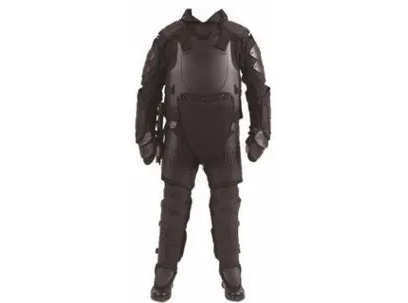
The Anti-Riot Suit, also known as a riot protection suit or crowd control armor, is a full-body protective ensemble designed to shield law enforcement, military police, and tactical units during civil unrest, protests, riots, and high-risk public order operations. Unlike standard body armor, the anti-riot suit provides comprehensive coverage against a wide spectrum of threats — from blunt force trauma and edged weapons to thrown projectiles, chemical agents, and fire.
Used globally by police tactical units, gendarmerie, paramilitary forces, and correctional officers, these suits are engineered for maximum protection, controlled mobility, and psychological deterrence. In volatile environments where crowds may turn violent in seconds, the anti-riot suit enables officers to maintain formation, advance under pressure, and de-escalate conflict while minimizing injury risk.
Modern anti-riot suits are not just passive barriers — they are integrated systems combining ballistic-grade materials, ergonomic design, and mission-critical accessories to ensure operational effectiveness in the most hostile urban environments.
Key Features
1. Protection Zones & Coverage
- Head: Full helmet with face shield (polycarbonate visor), often with anti-fog and anti-scratch coating.
- Neck & Throat: Reinforced collar or throat guard (trauma plate).
- Torso: Hard armor chest and back plates (Level IIA/IIIA ballistic or impact-rated).
- Shoulders & Arms: Multi-segmented rigid panels for mobility and impact resistance.
- Groin: Protective flap or apron.
- Legs: Thigh and shin guards (impact-resistant polymer or composite).
- Hands: Cut-resistant gloves, often with reinforced knuckles.
- Feet: Heavy-duty combat boots with steel toe and puncture-resistant sole.
2. Threat Protection Levels
- Blunt Force Trauma: Resists batons, bricks, bottles, and kicks (tested to EN 14021 or NIJ STD-0117.00).
- Edged Weapons: Slash and stab resistance (meets VPAM EDORA, UK Home Office HOSDB, or ISO 14116).
- Ballistic Threats: Some models include NIJ Level II or IIIA soft armor to stop handgun rounds.
- Chemical Agents: Fabric treated with CBRN-resistant coating to resist tear gas (CS/CN), pepper spray (OC), and acids.
- Fire & Heat: Flame-retardant materials (e.g., Nomex®, PBI) protect against Molotov cocktails.
- Electrical Hazards: Insulated layers prevent conduction from stun devices or electrified objects.
3. Materials
- Outer Shell:
- Kevlar®, Twaron®, or Dyneema® for cut/stab resistance.
- Reinforced PVC-coated fabric for chemical and water resistance.
- Impact Padding:
- Closed-cell foam, EVA, or TPU (thermoplastic polyurethane) in joints and vital zones.
- Armor Plates:
- Polyethylene (UHMWPE), aramid laminates, or hybrid composites.
- Visor:
- 10–12mm polycarbonate with UV and scratch protection.
- Some models feature flip-up dual-pane design to reduce fogging.
4. Weight & Mobility
- Total Weight: 15–30 lbs (7–14 kg) depending on configuration.
- Articulated Joints: Segmented armor allows walking, kneeling, and shield use.
- Ventilation: Mesh lining or air channels to reduce heat stress.
- Ergonomic Fit: Adjustable straps, Velcro closures, and modular sizing.
5. Integrated Accessories
- Helmet Mounts: For tactical lights, cameras, or communication headsets.
- Shield Compatibility: Designed to be used with Type II/III ballistic shields.
- MOLLE Webbing: Attach pouches, radios, or restraints.
- Reflective Strips: High-visibility markings for command identification.
- Name Tags / Unit ID: Clear labeling for accountability.
6. Certification Standards
- EN 14021 (Europe): Personal protective equipment against mechanical risks in riot control.
- NIJ STD-0117.00 (USA): Standard for personal armor system for extreme blunt trauma.
- VPAM EDORA (Germany): Stab and impact protection for police.
- HOSDB BK1 (UK): Ballistic and impact standards for UK police.
- NFPA 1992 (USA): Standard for structural firefighting proximity suits (for fire-resistant variants).
Technical Specifications (Standard Anti-Riot Suit Configuration)
| Component | Material / Specification |
|---|---|
| Helmet | ABS plastic shell + 10mm polycarbonate visor |
| Face Shield | Anti-fog, anti-scratch, UV-protected |
| Chest & Back Plates | UHMWPE or aramid laminate (NIJ IIIA or VPAM EDORA Class 1–3) |
| Shoulder Guards | TPU segmented armor |
| Arm Guards | Flexible aramid + hard caps |
| Thigh & Shin Guards | Molded HDPE or composite |
| Gloves | Cut-resistant Kevlar®/leather blend |
| Boots | Leather/PVC, steel toe, puncture-proof midsole |
| Overall Weight | 20–25 lbs (9–11 kg) average |
| Operating Temp | -10°C to +50°C (14°F to 122°F) |
| Service Life | 3–5 years (inspect annually for wear/damage) |
| Certification | EN 14021, NIJ STD-0117.00, or HOSDB BK1 |
| Common Brands | Safariland, SK Shieldtech, Dupont (Kevlar®), Honeywell, Ansell, ULMA, MKU Ltd |
Operational Roles
- Crowd Control: Maintain lines during protests and demonstrations.
- Riot Suppression: Advance into hostile crowds using shield formations.
- Hostage Situations: Approach barricaded suspects with reduced exposure.
- Prison & Jail Operations: Cell extractions, inmate transport, gang interventions.
- Disaster Response: Secure areas during looting or civil breakdown.
- VIP Protection: Escort dignitaries through unstable zones.
- Counter-Terrorism: Support roles in active threat environments.
- Border Security: Manage migrant surges or border clashes.
Evolution & Real-World Impact
- Historical Milestones:
- 1960s–70s: First rudimentary riot gear used during civil rights protests.
- 1980s: Introduction of Kevlar® helmets and vests.
- 1990s: Standardization of full-body suits in Europe and North America.
- 2000s: Integration of communication systems and cameras.
- 2020s: Rise of lightweight composites and modular designs.
- Documented Use Cases:
- 2011 London Riots: Officers in full anti-riot gear contained widespread looting.
- 2019 Hong Kong Protests: Tactical units deployed in advanced CBRN-capable suits.
- 2021 U.S. Capitol Breach: Police used riot gear to repel violent insurgents.
- 2023 France Riots: National Gendarmerie deployed armored units with integrated optics.
- Future Trends:
- Smart Suits: Embedded sensors for vital signs, impact detection, GPS.
- Exoskeleton Assistance: Reduce fatigue during prolonged deployments.
- Augmented Reality Visors: Overlay tactical data onto the officer’s view.
- Self-Cleaning Fabrics: Nanocoatings that resist chemical residue.
- Solar-Powered Cooling Systems: Internal ventilation to combat heat stress.