
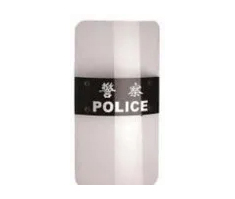
The Anti-Riot Shield, also known as a tactical riot shield or crowd control barrier, is a critical defensive tool used by law enforcement, military police, SWAT teams, and correctional units to protect personnel, maintain formation, and regain control during protests, riots, prison disturbances, and high-risk public order operations.
Unlike standard ballistic shields used in hostage rescue, anti-riot shields are designed for sustained crowd engagement, offering full-body or partial coverage against blunt force trauma, edged weapons, thrown projectiles, chemical agents, and fire. These shields serve not only as personal protection but also as tactical tools — enabling officers to advance safely, create safe zones, and de-escalate volatile situations.
Modern anti-riot shields are engineered for durability, visibility, and team coordination, forming the physical and psychological front line between law enforcement and hostile crowds. From peaceful demonstrations turning violent to coordinated attacks with Molotov cocktails, these shields provide the mobile armor needed to restore order without escalating force.
Used globally from Europe to Asia, North America to Africa, the anti-riot shield remains one of the most visible and effective symbols of controlled authority in civil unrest.
Key Features
1. Shield Types & Coverage
| Type | Coverage | Use Case |
|---|---|---|
| Hand-Held (Partial) | Covers upper torso to waist | Patrol, quick response, mobility |
| Full-Body Shield | Covers entire body from head to knees | High-threat riots, prison assaults |
| Wheeled Shield | Full-body + wheels for heavy loads | Long-duration operations, EOD support |
| Tactical Push Shield | Reinforced front edge for advancing through crowds | Crowd dispersal, barricade breaking |
| Transparent Barrier | Large polycarbonate panel for visibility | Command observation, non-confrontational stance |
2. Materials & Construction
- Transparent Panel:
- 10–30mm multi-layer polycarbonate or laminated acrylic.
- Resists 9mm bullets (NIJ IIIA), knife stabs, impact from bricks/bottles, and Molotov cocktails.
- Frame & Edges:
- Reinforced aluminum, ABS plastic, or composite polymers.
- Some models feature steel-reinforced edges for breaching.
- Fire Resistance:
- Coatings or laminates resist ignition from incendiary devices.
- Chemical Resistance:
- Sealed surfaces prevent penetration by tear gas (CS), pepper spray (OC), acids.
3. Threat Protection Levels
- Blunt Force Trauma:
- Meets EN 14021 (Europe) or NIJ STD-0117.00 (USA).
- Withstands repeated baton strikes, kicks, and falling debris.
- Stab & Slash Resistance:
- Complies with VPAM EDORA Class 1–3 or HOSDB BK1.
- Ballistic Protection:
- Rated NIJ Level II, IIIA, or higher (optional).
- Stops handgun rounds (9mm, .44 Magnum).
- Thermal Protection:
- Resists direct flame exposure for 5–15 seconds (critical for Molotov defense).
4. Ergonomic Design
- Handle System:
- Dual forearm straps with padded grips.
- Allows secure hold during pushing or shoving.
- Weight Range:
- 8–50+ lbs (3.6–22.7+ kg) depending on size and protection level.
- Full-body shields often include shoulder rests or wheeled bases.
- Mobility Features:
- Articulated joints (for full-body models).
- Wheels and handles (for transport over long distances).
- Ventilation Holes:
- Small perforations allow airflow while blocking liquids and solids.
5. Integrated Accessories
- Viewport (for Full-Body Shields):
- Removable or flip-up polycarbonate window for clear vision.
- Weapon Ports:
- Slits for deploying pepper spray, batons, or less-lethal launchers.
- Mounting Rails:
- Picatinny or MOLLE for attaching:
- Tactical lights
- Body cameras
- Communication antennas
- Picatinny or MOLLE for attaching:
- Reflective Strips & Unit ID:
- Enhances visibility and command identification.
- Less-Lethal Integration:
- Some shields have built-in bean bag launchers or TASER® mounts.
Technical Specifications (Standard Anti-Riot Shield Models)
| Parameter | Partial Shield | Full-Body Shield | Wheeled Shield |
|---|---|---|---|
| Height | 30–40 in (76–102 cm) | 60–72 in (152–183 cm) | 60–72 in (152–183 cm) |
| Width | 18–24 in (46–61 cm) | 24–30 in (61–76 cm) | 24–30 in (61–76 cm) |
| Thickness | 10–20 mm | 20–30 mm | 20–30 mm |
| Material | Polycarbonate + ABS frame | Multi-layer polycarbonate | Polycarbonate + steel wheel base |
| Protection Level | NIJ IIIA / EN 14021 | NIJ IIIA / VPAM EDORA 3 | NIJ IIIA + fire resistance |
| Weight | 8–15 lbs (3.6–6.8 kg) | 25–40 lbs (11.3–18.1 kg) | 40–60 lbs (18.1–27.2 kg) |
| Operating Temp | -10°C to +50°C (14°F–122°F) | Same | Same |
| Service Life | 5–7 years | 5–7 years | 7–10 years (with maintenance) |
| Certification | NIJ STD-0117.00, EN 14021 | VPAM EDORA, HOSDB BK1 | Custom military specs |
| Common Brands | Safariland, SK Shieldtech, ULMA, MKU Ltd, Federal Labs, Dragon Skin |
Operational Roles
- Shield Lines (Turtle Formation): Officers link shields to form an impenetrable wall.
- Crowd Dispersal: Advance into hostile groups using push shields.
- Protecting VIPs: Create mobile safe zones for dignitaries.
- Medical Evacuation: Shield injured personnel during extraction.
- Prison Riot Control: Breach cells or corridors under attack.
- CBRN Response: Used with gas masks in chemical environments.
- Border Security: Control migrant surges or cross-border clashes.
- Disaster Zones: Protect rescue teams in looting-prone areas.
Tactical Formations Using Anti-Riot Shields
- Line Formation:
- Officers stand side-by-side, shields touching.
- Used to block advances or hold a perimeter.
- Wedge (Arrowhead) Formation:
- Lead officer pushes forward with flanking support.
- Effective for breaking through crowds.
- Box (Square) Formation:
- 360° protection for escorting personnel or vehicles.
- Turtle (Testudo):
- Overlapping shields above and in front.
- Maximum protection during retreat or static defense.
- Flank & Clear:
- One side advances while the other holds position.
- Used to isolate and apprehend agitators.
Evolution & Future Trends
- Historical Milestones:
- Ancient Rome: Testudo formation with wooden shields.
- 1960s–70s: First modern plastic/polycarbonate shields.
- 1990s: Standardization of NIJ/EN-compliant models.
- 2010s: Introduction of transparent full-body shields.
- 2020s: Integration of cameras, lights, and comms.
- Future Innovations:
- Smart Shields: Embedded impact sensors, GPS, biometrics.
- Augmented Reality (AR) Overlays: Real-time threat data on viewport.
- Active Defense Systems: Non-lethal pulse emitters or sound projectors.
- Lightweight Composites: Graphene or nanocellulose for reduced weight.
- Solar-Powered Lighting & Cameras: Extended operational endurance.