
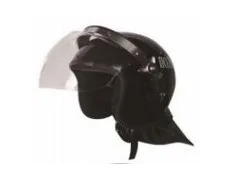
The Anti-Riot Helmet is a critical component of riot protection gear, engineered to safeguard law enforcement, tactical units, and security personnel during protests, civil unrest, prison disturbances, and high-risk crowd control operations. Unlike standard combat or motorcycle helmets, the anti-riot helmet is specifically designed to withstand blunt force trauma, edged weapons, chemical agents, and environmental hazards encountered in chaotic urban environments.
Serving as the first point of defense for officers facing flying debris, baton strikes, and improvised weapons, the anti-riot helmet combines rigid structural integrity with ergonomic functionality. It not only protects the wearer but also enhances tactical awareness, communication, and command visibility through integrated features.
Used globally by SWAT teams, gendarmerie, correctional officers, and riot police, modern anti-riot helmets are engineered for maximum protection, prolonged wear comfort, and seamless integration with other protective systems such as ballistic shields, body armor, and communication devices.
From the streets of Paris and Hong Kong to Los Angeles and Nairobi, the anti-riot helmet is a universal symbol of order in chaos — a shield for the senses, enabling officers to operate effectively under extreme duress.
Key Features
1. Structural Design
- Shell Construction:
- Made from high-impact thermoplastics (e.g., ABS, polycarbonate) or composite materials (aramid, UHMWPE).
- Designed to absorb and disperse energy from strikes and impacts.
- Weight:
- 2.5–4.5 lbs (1.1–2.0 kg) — lightweight for extended wear.
- Ventilation:
- Strategically placed vents with debris guards to prevent object entry.
- Internal airflow channels reduce heat buildup.
- Adjustable Fit System:
- Ratchet dial or padded harness for secure, customizable fit.
- Accommodates various head sizes (typically 54–63 cm).
- Retention Chin Strap:
- Quick-release, padded strap with anti-slip grip.
- Often includes D-rings for attaching face shields or communication headsets.
2. Face Protection (Visor / Shield)
- Full-Face Visor:
- 10–12mm polycarbonate transparent shield.
- Resists 9mm bullets (NIJ IIIA), knife slashes, and impact from bricks or bottles.
- Anti-Fog & Anti-Scratch Coating:
- Ensures clear vision in humid or high-sweat conditions.
- UV Protection:
- Blocks harmful sunlight during prolonged outdoor operations.
- Flip-Up Mechanism:
- Allows quick transition between protected and open states.
- Some models feature dual-pane design to reduce internal fogging.
- Alternative Options:
- Wire mesh visors (for better airflow, less visibility protection).
- Removable clear shields for modular use.
3. Threat Protection Levels
- Blunt Force Trauma:
- Meets EN 14021 (Europe) or NIJ STD-0117.00 (USA) for impact resistance.
- Withstands strikes from batons, rocks, and kicks.
- Stab & Slash Resistance:
- Complies with VPAM EDORA or HOSDB BK1 standards.
- Protects against knives, broken glass, and improvised weapons.
- Ballistic Protection:
- Some models rated for NIJ Level IIIA (stops 9mm and .44 Magnum).
- Chemical Resistance:
- Sealed edges and coated surfaces resist tear gas (CS/CN), pepper spray (OC), and acids.
- Fire Resistance:
- Materials like Nomex® lining protect against Molotov cocktails and flash fires.
4. Integrated Accessories
- Helmet Mounts:
- Picatinny rails or MOLLE loops for attaching:
- Tactical lights
- Body cameras (e.g., Axon, GoPro)
- Night vision goggles (NVGs)
- Communication headsets
- Picatinny rails or MOLLE loops for attaching:
- Voice Enhancement:
- Some models include vocal transmission ports or microphone integration for clear radio comms.
- High-Visibility Elements:
- Reflective strips, unit insignia, or LED indicators for command identification.
- Name Tags / ID Windows:
- Clear panel for officer identification during operations.
5. Comfort & Wearability
- Internal Padding:
- Moisture-wicking, antimicrobial foam for hygiene and comfort.
- Removable and washable liners.
- Noise Reduction:
- Acoustic design minimizes ambient noise while allowing voice clarity.
- Compatibility:
- Works with ear protection, gas masks, and ballistic hoods.
Technical Specifications (Standard Anti-Riot Helmet)
| Parameter | Specification |
|---|---|
| Shell Material | ABS plastic, polycarbonate, or aramid composite |
| Visor Material | 10–12mm polycarbonate (optical grade) |
| Protection Standards | EN 14021, NIJ STD-0117.00, VPAM EDORA, HOSDB BK1 |
| Ballistic Rating | NIJ Level IIIA (optional) |
| Weight | 2.5–4.5 lbs (1.1–2.0 kg) |
| Head Circumference | 54–63 cm (adjustable) |
| Operating Temperature | -10°C to +50°C (14°F to 122°F) |
| Service Life | 5–7 years (inspect annually) |
| Maintenance | Clean with mild soap; avoid solvents |
| Common Brands | Safariland, SK Shieldtech, ULMA, MKU Ltd, Honeywell, Ansell |
Operational Roles
- Crowd Control Formations: Worn in shield lines during protests.
- Prison Riot Response: Protects officers during cell extractions.
- Hostile Arrests: Used in high-risk warrant service.
- CBRN Incidents: Paired with gas masks in chemical environments.
- VIP Escort: Ensures head protection during unstable movements.
- Disaster Zones: Guards against debris in looting or collapse scenarios.
Evolution & Future Trends
- Historical Milestones:
- 1960s: Basic steel or fiberglass helmets.
- 1980s: Introduction of Kevlar®-reinforced and polycarbonate visors.
- 2000s: Standardization of modular mounting systems.
- 2020s: Integration of body cameras and comms.
- Future Innovations:
- AR Visors: Overlay tactical data, thermal imaging, or comms.
- Impact Sensors: Detect and log head trauma in real time.
- Active Cooling: Micro-fans or phase-change materials.
- Smart Helmets: GPS, biometrics, and AI-assisted threat alerts.
- 3D-Printed Custom Fit: Personalized helmets for optimal comfort.