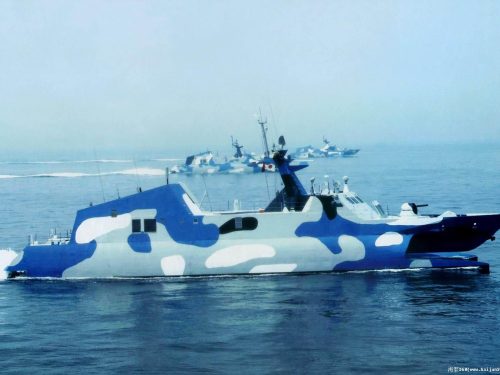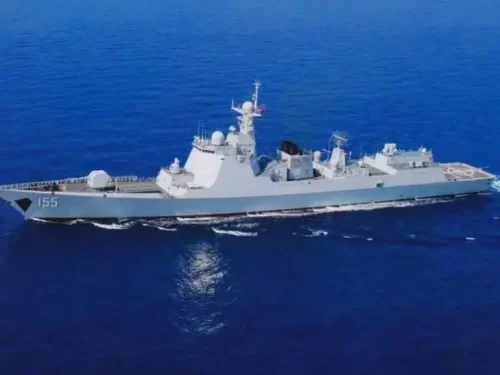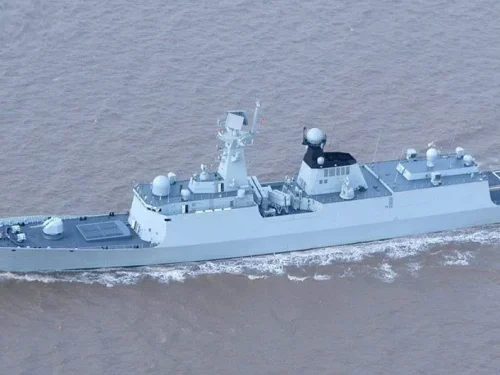

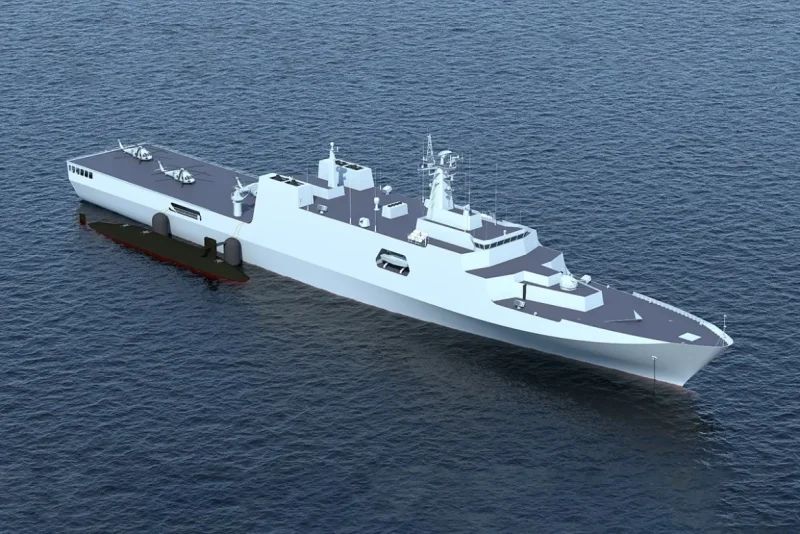
A frigate of this size is a versatile surface combatant designed for a wide range of missions, primarily focused on anti-submarine warfare (ASW) and anti-surface warfare (ASuW), while also possessing credible point air defense capabilities to protect itself and nearby vessels. It is a key asset for both blue-water (open ocean) and green-water (littoral/coastal) operations.
Key Characteristics and Design Philosophy
-
Balance: The design is a balance between capability, endurance, crew size, and cost. It is large enough to carry a powerful sensor suite and a versatile weapon loadout but remains more affordable and easier to crew than a larger destroyer.
-
Multi-Role Focus: Unlike more specialized vessels, a modern 3,000-ton frigate is designed to handle multiple threats simultaneously.
-
Global Presence: This size is ideal for prolonged patrols, presence missions, and showing the flag around the world.
Armament (Typical Loadout)
A frigate of this class would typically be equipped with a balanced mix of weapons:
| System Type | Examples & Purpose |
|---|---|
| Main Gun | A 76mm (e.g., Oto Melara Super Rapid) or 57mm (Bofors MK3) naval gun for surface engagement, shore bombardment, and anti-aircraft use. |
| Surface-to-Air Missiles (SAMs) | Point Defense: A VLS (Vertical Launching System) or launcher for short-to-medium range missiles (e.g., Raytheon RIM-162 ESSM, MBDA Sea Ceptor/CAMM, HQ-16) to defend against aircraft and anti-ship missiles. |
| Anti-Ship Missiles (AShMs) | 8-16 canister-launched missiles (e.g., RGM-84 Harpoon, MBDA Exocet, YJ-83, Naval Strike Mission) for engaging enemy ships. |
| Anti-Submarine Warfare (ASW) | Torpedoes: Twin or triple lightweight torpedo launchers (e.g., MK32, YU-7) for engaging submarines. ASW Rocket Launcher: Sometimes a forward-fired ASW rocket system. |
| Close-In Weapon System (CIWS) | A last-ditch defensive system like the Phalanx 20mm CIWS, RIM-116 Rolling Airframe Missile (RAM), or a 30mm CIWS like the Type 730/1130 to destroy leakers that pass the SAM screen. |
| Helicopter Facilities | A hangar and flight deck to operate one or two medium-sized helicopters (e.g., SH-60 Seahawk, AW159 Wildcat, Harbin Z-9C). The helicopter is critical for extending the ship’s ASW and surface search range. |
Sensors and Electronics
A modern frigate’s effectiveness is defined by its sensors:
-
Multi-Function Radar (MFR): An AESA (Active Electronically Scanned Array) or PESA (Passive) radar, often mounted on the mast (e.g., Thales APAR, CEA FAR, Type 382 Radar). This radar simultaneously searches for targets and guides missiles.
-
Air Search Radar: A longer-range radar for volume air search (e.g., SMART-S, Sea Giraffe, Type 364 Radar).
-
Hull-Mounted Sonar (HMS): The primary sonar for detecting and tracking submarines.
-
Towed Array Sonar (TAS): A passive sonar array towed behind the ship, crucial for detecting quiet submarines at long ranges. This is a hallmark of a capable ASW platform.
-
Electronic Warfare (EW) Suite: Includes ESM (Electronic Support Measures) to detect radar signals and ECM (Electronic Countermeasures) to jam enemy sensors and missiles.
-
Combat Management System (CMS): The “brain” of the ship that integrates data from all sensors to present a unified tactical picture and manage weapons engagement.
Propulsion
Most modern frigates use a Combined Diesel and Diesel (CODAD) or Combined Diesel-Electric or Gas (CODLAG/CODLOG) propulsion system for efficiency and quiet operation, which is vital for ASW missions.
Notable Examples of ~3,000-Ton Frigates
| Class Name | Navy | Key Features |
|---|---|---|
| Type 054A | People’s Liberation Army Navy (PLAN) | 32-cell VLS for HQ-16 SAMs, YJ-83 AShMs, strong ASW suite with TAS. The definitive modern Chinese frigate. |
| Admiral Gorshkov-class | Russian Navy | A larger (~4,500t) but conceptually similar “frigate,” featuring AESA radar and powerful missile armament. |
| FREMM-class | Italian/French Navy | A larger (~6,000t) European multi-mission frigate, showcasing high-end capabilities. |
| İstif-class | Turkish Navy | A modern design with a large VLS farm for a ship of its size, emphasizing air defense. |
| Formidable-class | Republic of Singapore Navy | Based on the French La Fayette design, featuring advanced AESA radar and Sylver VLS for Aster missiles. |
Strategic Role and Purpose
A 3,000-ton frigate is designed for:
-
Task Group Escort: Protecting high-value assets like aircraft carriers, amphibious assault ships, and replenishment vessels from submarine and surface threats.
-
Anti-Submarine Warfare (ASW): This is often its primary role. It hunts enemy submarines using its sonars and helicopter.
-
Maritime Security: Conducting patrols, interdiction, anti-piracy, and embargo enforcement operations.
-
Presence and Sovereignty: Deploying independently to show presence in a region and assert sovereignty claims.
-
Limited Area Air Defense: Providing local air defense for itself and other ships in its immediate vicinity (point defense).
Conclusion
The 3,000-ton frigate is the backbone of most medium and large navies. It offers a “sweet spot” of capability, affordability, and flexibility. It is powerful enough to operate confidently in contested environments and handle a wide spectrum of threats, yet it is not so expensive that a navy can only afford a handful. This makes it the essential multi-role platform for global sea power projection and control.